
You are here
Afrique
Von Uhren über Möbel bis zum Whirlpool: Diese Gaben schnappen sich Giger, Staudenmann und Co.
Vom Siegermuni über einen Rasenmähertraktor bis zum Whirlpool: Das haben die Topschwinger am Samstag mit nach Hause genommen.
Categories: Afrique, Swiss News
Avez-vous les bons numéros du tirage de 11H ?
LES RÉSULTATS DE LOTO STAR SONT LÀ !
TIRAGE N°107/26
Dimanche 06 septembre 2026 (11H)
36 •46 • 10• 75• 28
Félicitations aux heureux gagnants !
– -Pas encore cette fois ? Gardez le sourire.
– -Une nouvelle chance vous attend à 14H pour le prochain tirage.
– -Jouez dans les centres de jeux ou en ligne.
– -Tapez *590# ou lnbloto.bj
Jouez avec modération et responsabilité. Le jeu doit rester un plaisir.
Categories: Afrique, Swiss News
Explosion neben Torpfosten: Spielabbruch! Holland greift wegen Fan-Eklat durch
Beim Eredivisie-Spiel zwischen Utrecht und Go Ahead Eagles werfen die Heim-Fans wiederholt Feuerwerkskörper und andere Gegenstände auf das Spielfeld. Nach rund einer Stunde muss das Spiel deshalb abgebrochen werden.
Categories: Afrique, Swiss News
Satisfaction au Bénin, regrets au Mexique après le match
Après le nul (2-2) entre le Bénin et le Mexique, samedi 5 septembre 2026, dans le cadre du premier match du groupe A à la Coupe du monde féminine U-20, les sélectionneurs béninois et mexicain ainsi que l'attaquante des Amazones du Bénin ont réagi.
Menées au score, les Amazones du Bénin ont trouvé les ressources pour revenir dans la partie et arracher le nul (2-2) face au Mexique, samedi 5 septembre, pour leur entrée en lice à la Coupe du monde féminine U-20.

Pour le sélectionneur béninois Ouzérou Abdoulaye, le déclic est intervenu en seconde période. « En deuxième mi-temps, nous avons su trouver la solution et, à partir de ce moment-là, le match a changé de physionomie », a-t-il expliqué à l'issue de la rencontre, dans une réaction publiée par la FIFA.
Le technicien béninois met notamment cette entame délicate sur le compte de l'expérience. Pour la majorité de ses joueuses, il s'agissait d'une première participation à une compétition de cette dimension. « Il ne faut pas oublier qu'en matière d'expérience, c'est la première fois que ces filles participent à une telle compétition. Cela les a peut-être inhibées en début de partie », analyse-t-il.
Mais les Amazones ont progressivement pris confiance. « Lorsqu'elles ont pris la mesure de l'adversaire, elles ont compris qu'elles pouvaient rivaliser, qu'elles étaient au niveau et qu'il fallait lâcher les chevaux », a ajouté Ouzérou Abdoulaye. Une consigne que ses joueuses ont, selon lui, appliquée en seconde période.

Romaine Gandonou, auteure des deux buts a confié à la FIFA : « Je suis très contente d'avoir inscrit un doublé pour mon premier match », a-t-elle déclaré au micro de la FIFA.
L'attaquante ne compte toutefois pas s'arrêter à cette performance individuelle. « Nous allons continuer à travailler en vue de la deuxième rencontre. Avec mes coéquipières, nous donnerons tout pour gagner et prendre les trois points », a-t-elle promis.
Des regrets du côté mexicain
Le sélectionneur mexicain Dorival Bueno a reconnu les difficultés rencontrées par son équipe face aux Béninoises, notamment sur le plan physique. « Nous avons eu un peu de mal physiquement à cause du style de jeu des Béninoises », a-t-il confié à la FIFA.

« Nous avions le match en main et aurions pu marquer un autre but », a indiqué le technicien mexicain, tout en soulignant l'importance de l'efficacité à ce niveau de compétition.
M. M.
Categories: Afrique, Swiss News
Réseau routier : un vaste plan de modernisation lancé à travers ces 9 wilayas
L’effort de modernisation, d’entretien et de réhabilitation du réseau routier national se poursuit à travers neuf wilayas au titre du programme de l’année 2026. Cette […]
L’article Réseau routier : un vaste plan de modernisation lancé à travers ces 9 wilayas est apparu en premier sur .
Categories: Afrique, Swiss News
Mohand Bourai à la tête de la BA : ce que les dernières réformes réservent au nouveau gouverneur
Après l’installation de Mohand Bourai à la tête de la Banque d’Algérie, plusieurs dossiers déjà engagés arrivent désormais sur son bureau. Modernisation des paiements, gestion […]
L’article Mohand Bourai à la tête de la BA : ce que les dernières réformes réservent au nouveau gouverneur est apparu en premier sur .
Categories: Afrique, Swiss News
Pourquoi Cuba ne produit-il pas suffisamment de nourriture et dépend-il de l'étranger pour nourrir sa population ?
Cuba importe 80 % de ses denrées alimentaires malgré son potentiel agricole, en raison de décennies de mauvaise planification, de sa dépendance vis-à-vis du sucre et des sanctions américaines.
Categories: Afrique, Swiss News
« Prolongation des horaires jusqu’à 22h » : Les nouveautés de Baddari pour la rentrée universitaire 2026
Le ministre de l’Enseignement supérieur et de la Recherche scientifique, Kamel Baddari, a confirmé ce samedi la prolongation des horaires d’ouverture des infrastructures universitaires jusqu’à […]
L’article « Prolongation des horaires jusqu’à 22h » : Les nouveautés de Baddari pour la rentrée universitaire 2026 est apparu en premier sur .
Categories: Afrique, Swiss News
Visa Schengen pour l’Espagne : BLS International lance un nouveau système de rendez-vous
Du changement majeur pour vos demandes de visa Schengen ! Pour simplifier les démarches des demandeurs algériens et fluidifier l’accès aux créneaux, le prestataire officiel […]
L’article Visa Schengen pour l’Espagne : BLS International lance un nouveau système de rendez-vous est apparu en premier sur .
Categories: Afrique, Swiss News
Quand un préavis de quatre minutes ne suffit pas : les nouvelles tactiques de tir incessant de la Russie épuisent les habitants de Kiev
L'intensification et la violence croissante des attaques russes contre Kiev ont épuisé de nombreux civils et les ont mis à rude épreuve.
Categories: Afrique, European Union
Quand un préavis de quatre minutes ne suffit pas : les nouvelles tactiques de tir incessant de la Russie épuisent les habitants de Kiev
L'intensification et la violence croissante des attaques russes contre Kiev ont épuisé de nombreux civils et les ont mis à rude épreuve.
Categories: Afrique, Swiss News
Les États-Unis et la Russie plus petits, l’Afrique plus grande : l’ONU redessine la carte du monde
L’Afrique est-elle sous-dimensionnée sur nos cartes ? Vendredi, l’ONU étudie le projet de résolution « Correct the Map », porté par le Togo et l’Union […]
L’article Les États-Unis et la Russie plus petits, l’Afrique plus grande : l’ONU redessine la carte du monde est apparu en premier sur .
Categories: Afrique, Határon túli magyar portálok összesített hírei
S.E Hazzah Mohammed Al-Qahtani présente ses lettres de créance au président Romuald Wadagni
Le nouvel Ambassadeur extraordinaire et plénipotentiaire des Émirats arabes unis près la République du Bénin, Son Excellence Hazzah Mohammed Al-Qahtani, a présenté ses lettres de créance au Président de la République du Bénin, SEM. Romuald Wadagni, jeudi 3 septembre 2026, au Palais de la Marina, à Cotonou.

Son Excellence Hazzah Mohammed Al-Qahtani a présenté ses lettres de créance à Son Excellence Romuald Wadagni, Président de la République du Bénin, en qualité d'Ambassadeur des Émirats arabes unis auprès de la République du Bénin.
La cérémonie officielle s'est tenue, jeudi dernier, au Palais de la Présidence à Cotonou.
Le diplomate émirati a transmis au Président de la République du Bénin les salutations de Son Altesse Cheikh Mohamed bin Zayed Al Nahyan, Président des Émirats arabes unis, ainsi que ses vœux de progrès et de prospérité pour la République du Bénin et son peuple ami.

Après la réception des lettres de créance, Son Excellence le Président Romuald Wadagni a chargé l'Ambassadeur de transmettre ses salutations à Son Altesse le Président des Émirats arabes unis, lui adressant ses meilleurs vœux de progrès et de prospérité pour les Émirats arabes unis et leur peuple.

Son Excellence Hazzah Mohammed Al-Qahtani vient succéder à l'Ambassadeur Mohammed Saeed Al-Kaabi, qui a beaucoup œuvré au renforcement de la coopération entre les deux pays au cours des trois dernières années.
L'arrivée de Son Excellence Hazzah Mohammed Al-Qahtani va réactiver et consolider les axes de partenariat technique, économique et politique entre Cotonou et Abou Dabi.


Categories: Afrique
DIGITAL 08H : les 5 numéros tirés ce dimanche
DIGITAL 08H : Avez-vous tenté votre chance ?
Le tirage DIGITAL 08H N°151 a livré son verdict !
Dimanche 06 Septembre 2026
Avez-vous joué ?
Avez-vous misé sur vos numéros porte-bonheur ?
RÉSULTAT : 28 • 54 • 17 • 31 • 13
Félicitations aux heureux gagnants !
Pas encore cette fois ? Gardez le sourire.
Rendez-vous à 11H pour le prochain tirage.
Jouez dans les points de vente ou : Tapez *590# ou rendez-vous sur lnbloto.bj
Jouez avec modération et responsabilité. Le jeu doit rester un plaisir.
LA CROIX DU DIMANCHE 6 SEPTEMBRE 2026

Categories: Afrique
DIGITAL 00H : les numéros gagnants
DIGITAL 00H : Avez-vous tenté votre chance ?
Le tirage DIGITAL 00H N°150 a livré son verdict !
Dimanche 06 Septembre 2026
Avez-vous joué ?
Avez-vous misé sur vos numéros porte-bonheur ?
RÉSULTAT : 48 • 69 • 38 • 42 • 75
Félicitations aux heureux gagnants !
Pas encore cette fois ? Gardez le sourire.
Rendez-vous à 08H pour le prochain tirage.
Jouez dans les points de vente ou : Tapez *590# ou rendez-vous sur lnbloto.bj
Jouez avec modération et responsabilité. Le jeu doit rester un plaisir.
Categories: Afrique
Keynote speech by President António Costa at the Intelligence on the World, Europe, and Italy – Cernobbio Forum
On 5 September 2026, European Council President António Costa delivered a keynote speech at the Intelligence on the World, Europe, and Italy – Cernobbio Forum, in Cernobbio, Italy.
Categories: Afrique, European Union
Press statement by President Costa following the meeting with Prime Minister of Slovenia, Janez Janša
European Council President, António Costa, had a meeting with Prime Minister of Slovenia, Janez Janša, on 4 September 2026, in Ljubljana, Slovenia. The meeting is part of President Costa's annual "Tour des Capitales".
Categories: Afrique, European Union
Weekly schedule of President António Costa
Weekly schedule of President António Costa, 7-13 September 2026
Categories: Afrique, European Union
Press statement by President Costa following the meeting with President of Cyprus, Nikos Christodoulides
European Council President, António Costa, had a meeting with President of Cyprus, Nikos Christodoulides, on 4 September 2026, in Nicosia, Cyprus. The meeting is part of President Costa's annual "Tour des Capitales".
Categories: Afrique, European Union
Press statement by President Costa following the meeting with Prime Minister of Greece, Kyriakos Mitsotakis
European Council President, António Costa, had a meeting with Prime Minister of Greece, Kyriakos Mitsotakis, on 3 September 2026, in Athens, Greece. The meeting is part of President Costa's annual "Tour des Capitales".
Categories: Afrique, European Union
Pages
the old site is here


© 2012-2015 Europa Varietas Foundation © 2015-2020 Europa Varietas Association
www.europavarietas.org | info(@)europavarietas(dot)org | Switzerland
This is a GDPR ready site


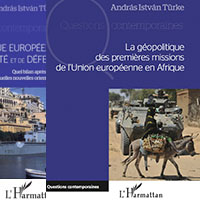
We are looking for sponsors for the English translation of these books, please contact turkeandras(at)gmail(dot)com