
You are here
European Union
Für spontanes Grillieren: 3 einfache Marinaden für Fleisch, Fisch und Gemüse
Keine Zeit zum Marinieren? Kein Problem. Mit diesen drei Blitz-Marinaden werden Fleisch, Fisch und Gemüse auch ohne stundenlanges Einlegen zum Grill-Hit. Die raffinierten Mischungen sorgen in wenigen Minuten für überraschend viel Geschmack.
Categories: European Union, Swiss News
Spanische Medien berichten: Barça-Goalie ter Stegen scheint neuen Klub gefunden zu haben
Marc-André ter Stegen könnte in Kürze zu Ajax Amsterdam wechseln. Der deutsche Nationaltorhüter würde den FC Barcelona nach zwölf Jahren verlassen, um in Holland eine neue Herausforderung anzunehmen.
Categories: European Union, Swiss News
Qui est le buteur africain de la Coupe du monde plus âgé que Ronaldo et Messi ?
Alors que Cristiano Ronaldo et Lionel Messi semblent mener une bataille personnelle pour réécrire le livre des records de la Coupe du monde, un point de repère apparaît au-delà d'eux.
Categories: Afrique, European Union
Entwurf der Tagesordnung - Montag, 29. Juni 2026 - PE790.149v02-00 - Ausschuss für auswärtige Angelegenheiten
Quelle : © Europäische Union, 2026 - EP
Categories: Europäische Union, European Union
Schweizer Traditionsfirma vor dem Aus: Nachlassstundung für Schuhmarke Bally – was ist da los?
Vermutungen um ein baldiges Ende des Schweizer Traditionsunternehmens Bally verdichten sich: Über der einstigen Erfolgsfirma wurde die provisorische Nachlassstundung verhängt. Droht dem 175 Jahre alten Luxuslabel nun endgültig das Aus?
Categories: European Union, Swiss News
Richtig entspannen lernen: Freizeitstress im Sommer? «Zu viel des Guten nimmt einem die Luft»
Viele freuen sich im Sommer auf ihre Freunde, Grillieren am See und Freizeitaktivitäten in der Natur. Die Erholung kommt dabei oft zu kurz. Wer sich bei all den Terminen gestresst fühlt, kann folgende Experten-Tipps beherzigen.
Categories: European Union, Swiss News
Tipps für die Sommerhitze: So löschst du deinen Pflanzen den Durst
Was wir bei so hohen Temperaturen Gutes für unsere Pflanzen tun können – und wie das Grün auf dem Balkon und ums Haus auch uns Menschen vor Hitze schützt.
Categories: European Union, Swiss News
100’000 Jobs sollen wegfallen!: VW steckt noch tiefer in der Krise als gedacht
Der Sparkurs bei Volkswagen nimmt offenbar noch grössere Ausmasse an als bisher bekannt. Laut einem Medienbericht könnten weltweit bis zu 100’000 Stellen wegfallen. Sogar mehrere Werke sollen bald geschlossen werden.
Categories: European Union, Swiss News
Qu'est-ce que le « doublet sismique » qui a secoué le Venezuela et pourquoi a-t-il causé autant de dégâts ?
Deux séismes quasi consécutifs ont secoué le nord du Venezuela ce mercredi, précisément au niveau du système de failles où se rencontrent les plaques des Caraïbes et d'Amérique du Sud. Les scientifiques observent avec attention cette séquence qui, bien que peu fréquente, a déjà eu lieu dans la région et dans différentes parties du monde.
Categories: Afrique, European Union
Shitstorm folgt sofort: Deutscher Comedy-Star macht sich über Gewalt an Frauen lustig
Dieter Nuhr ist für seinen trockenen und sarkastischen Humor bekannt. Diesmal geht der Satiriker aber etwas zu weit. Als er über Femizide spricht, schiebt er den Opfern die Schuld an ihrem eigenen Schicksal zu. Der Shitstorm lässt nicht lange auf sich warten.
Categories: European Union, Swiss News
Council moves ahead on updating the EU workplace pensions framework
The Council today agreed its negotiating position on the review of the EU’s framework for occupational pension funds.
MFF 2028-2034: Council agrees its position on Horizon Europe, the new and ambitious framework programme for research and innovation
Council reaches an agreement on its partial negotiating position on the main components of the Horizon Europe package in the framework of the next multi-annual budget (MFF) 2028-2034.
Jetzt kommt der Besucher-Stopp: Erste Badis ziehen die Notbremse
Die hohen Temperaturen führen zum Grossandrang in den Badis, einige der Anstalten laufen am Limit. Aus Sicherheitsgründen und wegen Hygienebedenken führen erste Badis jetzt Besucherobergrenzen ein.
Categories: European Union, Swiss News
Bereits zum dritten Mal: Tennis-Ikone hat wieder Krebs
Die Tennis-Legende Chris Evert hat bekanntgegeben, dass ihr Eierstockkrebs zurückgekehrt ist. Die 71-Jährige hat bereits eine Operation hinter sich und startet bald mit der Chemotherapie.
Categories: European Union, Swiss News
Russia’s war of aggression against Ukraine: Council extends economic sanctions for another year
The Council renewed the EU restrictive measures in view of the Russian Federation’s continuing actions destabilising the situation in Ukraine for a further 12 months, until 31 July 2027, following EU leaders’ agreement at the European Council of 18-19 June 2026.
Categories: Afrique, European Union
Council and Parliament agree on more effective enforcement of passenger rights
Council and Parliament have reached a provisional agreement on a regulation aimed at strengthening the enforcement of EU passenger rights across the EU.
Categories: Afrique, European Union
Media advisory - Transport, Telecommunications and Energy Council (Energy) 26 June 2026
Main agenda items, approximate timing, public sessions and press opportunities.
Categories: Afrique, European Union
Kheireddine Zetchi enfin fixé sur son jugement, après 19 mois de détention
Le tribunal de Sidi M’hamed a programmé pour le 30 juin prochain l’ouverture du procès relatif à l’ancien mode de gestion de la Fédération algérienne de […]
L’article Kheireddine Zetchi enfin fixé sur son jugement, après 19 mois de détention est apparu en premier sur .
Categories: Afrique, European Union
UNCTAD: A Shift of Risk, Geopolitical Tension Weighs on Global Markets Heavier than Trade Policy
As of now, geopolitics overtook trade policy uncertainty as the primary concern for countries. Credit: Unsplash / Sajimon Sahadevan
By Maximilian Malawista
UNITED NATIONS, Jun 25 2026 (IPS)
Amidst increased geopolitical tensions, the risk of volatile energy markets, trade corridors, and regional stability in the Middle East has garnered more attention than trade policy in terms of its power to alter the global economy, according to new findings from the United Nations Conference on Trade and Development (UNCTAD).
In their report on trade and development, “Global Economy Faces a Geopolitical Challenge”, UNCTAD says that a protracted escalation “raises the likelihood of deeper disruptions in global trade and finance, potentially, foreshadowing a cascading crisis”.
Credit: UN Conference on Trade and Development (Trade and Development Foresights 2026)
Daily crude oil prices in the Middle East since the beginning of the conflict have risen from around USD 60-70, to a fluctuating rate between a high of over USD 110-. With oil prices surging more than 60 percent, and gas doubling in price, many markets have been left in an inflating scenario as higher energy prices increase macroeconomic pressure and overall slow and contract the economy.
The increase per barrel is largely due to a constriction of supply, where most Gulf economies can barely output oil due to a lack of transport ability through the strait of Hormuz. The International Monetary Fund (IMF) records a spike in the price of Brent crude rising over USD 100 per barrel and remaining at elevated levels, with European gas also jumping roughly “60 percent amid disruptions to LNG exports”.
The numbers are impacted by an estimated loss of capacity of 10 million barrels per day of oil and “about 500 million cubic meters per day of natural gas”. This is roughly 10 percent of global oil production, and roughly 5 percent of global natural gas production for every single day.
The IMF records the following:
Daily Traffic through the Strait of Hormuz (in number of vessels) between 26 February and 6 April 2026. Credit: IMF
Oil being an inelastic good means that consumers won’t be able to curb their spending. Rather, they have to pay more for as long as the conflict lasts as fuels are needed for many essential routine tasks, from driving your car, to taking your vitamins, to growing your food, and having your Amazon packages shipped.
In their April 2026 Regional Economic Outlook Update for the Middle East and Central Asia, the IMF details that a continued conflict will likely for every 10 percent rise in the average oil price lead to a loss of about 0.5 percent of GDP and an inflation increase of around 1 percent in Gulf economies, ultimately affecting global markets heavily.
As the report notes, “Longer trade disruptions or greater damage to oil production capacity raises the possibility of higher and more sustained oil prices and a larger risk premium than is currently embedded in oil futures prices”.
However, for developing countries higher energy prices hit a lot harder to consumers in developing countries, which in this case don’t have the same money to spare. The IMF warns that “Low-income countries and other fragile and conflict-affected states in the MENAP region are especially vulnerable to higher energy, fertilizer, and food prices”.
Due to the conflict, estimates stand that vulnerable economies, mostly least developed countries (16.1 billion) and small island developing states (4.3 billion), could incur a USD 20 billion a year increase in spending, representing a huge composition of their GDP expenditure.
Among least-developed nations, Mauritania is recorded to have their bill increase by 7.3 percent, The Gambia 6.3 percent, Burkina Faso 5.0 percent, Liberia and Zambia 4.3 percent, with 17 other least developed countries also estimating to increase their spending by at least 0.5 percent in terms of GDP points.
Similarly for small-island developing states, Vanuatu is recorded to have an increase of 5.8 percent, Maldives 5.2 percent, Tonga 4.4 percent, Mauritius 4.2 percent, and Fiji 3.2 percent, with 18 other small developing states recording an increase of at least 0.6%.
UNCTAD also expects this conflict to take away capital investment into developing nations, as these assets are perceived as riskier. The UNCTAD report states that “the start of the Middle East conflict triggered a sell-off of developing countries’ assets, with equity markets of emerging markets sliding by more than 12 per cent between 28 February and 29 March.” Likely such effects will trigger a compacting of issues, contributing to an economic downturn that could take years to recover from depending on the length of the conflict.
IPS UN Bureau Report
Follow @IPSNewsUNBureau
!function(d,s,id){var js,fjs=d.getElementsByTagName(s)[0],p=/^http:/.test(d.location)?'http':'https';if(!d.getElementById(id)){js=d.createElement(s);js.id=id;js.src=p+'://platform.twitter.com/widgets.js';fjs.parentNode.insertBefore(js,fjs);}}(document, 'script', 'twitter-wjs');
Categories: Africa, European Union
The Overlooked Impact of Flooding on Crops, Soils and Food Systems
When agricultural crops are lost to flooding, food costs rise, food systems are weakened, and our ability to meet our food security needs is threatened. Credit: Shutterstock
By Esther Ngumbi and Christy Gibson
URBANA, Illinois, US, Jun 25 2026 (IPS)
Across the United States, record breaking extreme weather events have already occurred, including severe storms and Tornadoes in the State of Illinois to flooding in Texas, southern Wisconsin and the South. Throughout the summer, and the remainder of the growing season, additional severe weather events will come through including several hurricanes and tropical storms beginning with Tropical Storm Arthur.
While the impacts of severe weather on people, communities, and infrastructure dominate headlines, the damage flooding inflicts on agricultural systems, crop productivity, and food security often goes unnoticed and underestimated.
Equally concerning is the noticeable lack of focused dialogue among researchers, policymakers, and other key stakeholders in agricultural crop production and food systems, including farmers, about whether current best management practices and innovations are keeping pace with efforts to mitigate the negative impacts of severe weather and flooding on agriculture.
The impacts of flooding on crops and soils, as well as the beneficial web of microbes, can persist long after floodwaters have receded. Research shows that even after floodwaters have receded, plants continue to grow slowly and remain highly vulnerable to pests and diseases, further exacerbating crop damage and yield losses
Flooding can affect agricultural crops, including corn and vegetables like tomatoes, in many ways. These effects range from altered growth patterns and the wiping out of millions of acres of crops to tons of unsellable vegetables due to potential contamination from floodwaters.
I have seen this firsthand in my research at the University of Illinois Urbana-Champaign. In just a few days, due to a lack of oxygen, crops like tomatoes and corn visibly stop growing, and when flooding is severe, they suffocate to death.
Belowground, flooding is also harmful to beneficial soil microbes that provide many benefits to plants, including improving nutrient availability and uptake, fixing nitrogen, promoting growth, boosting resilience to biotic and abiotic threats, and improving soil health and fertility.
By harming beneficial microbes and other organisms, including earthworms, flooding can disrupt the belowground ecosystem that sustains healthy soils, crop growth, resilient agricultural production systems, and food security.
Disturbingly, the impacts of flooding on crops and soils, as well as the beneficial web of microbes, can persist long after floodwaters have receded. Research shows that even after floodwaters have receded, plants continue to grow slowly and remain highly vulnerable to pests and diseases, further exacerbating crop damage and yield losses.
Alarmingly, current studies show that agricultural losses from flooding do parallel those caused by drought, and future projections indicate that the intensity, frequency, and severity of flooding events will continue to increase.
Ultimately, flooding causes systemic issues and disruptions across food systems, affecting all stakeholders connected to agriculture, a trillion-dollar industry. These impacts that come along with flooding can increase food costs, trigger higher insurance claims, and place additional mental burden on farmers and agricultural workers.
The question then becomes: What can be done to prepare for this future? What best practices and innovations can be implemented? What can farmers, researchers, policymakers, and all stakeholders in agriculture do to ensure that the crops we depend on to meet food security, along with the practices and flooding mitigating innovations in place, can withstand flooding?
First, there is a need for more investment in flooding research in the United States and globally. Compared with drought, we know far less about the full extent of flood impacts on agricultural crops, from the onset of flooding through the post-flood recovery phase.
Additionally, we do not know whether the current best management practices and innovations that farmers are deploying to cope with flooding are effective.
Investing in research will enable researchers to build a comprehensive understanding of flood impacts on plants, soils, and microbiomes in current and projected future climates, while uncovering the many strategies plants use to resist, adapt, and thrive.
Notably, our understanding of flooding impacts to crops, microbes, agroecosystems, and agricultural productivity remains siloed and fragmented across disciplines. Yet flooding impacts span multiple disciplines, including plant biology, entomology, agronomy, microbial and soil ecology, predictive modelling, and climate systems biology and engineering.
Arguably, there is a need to collaborate across disciplines to develop a more integrated and holistic understanding of how flooding affects crops and agroecosystems. In doing so, we will advance scientific knowledge and lay the groundwork for developing solutions to address and conquer flooding and its negative impacts on agriculture.
Necessarily so, there is an urgent need to conduct field-based research across a spectrum of climates, soils, and management practices. Although researchers have made great strides in building foundational knowledge about flooding impacts on crops, most of this research has been conducted in controlled settings, primarily in greenhouses.
To capture the complexity and inherent variability of agricultural systems, soils, and environments, field experiments are necessary. These experiments can offer insights and help determine the factors that determine crop resilience.
A metric of success for researchers is collaborating with farmers and using farms as living laboratories to understand flooding and co-build flooding solutions. These collaborations offer many benefits, as farmers are the ones who suffer most, but also have on the ground intelligence that research may not have.
When researchers and farmers co-build solutions, the resulting insights, solutions, and innovations become more practical, trusted, and embraced by farmers and in turn, these can be quickly integrated and translated into the suite of strategies and solutions farmers are deploying to mitigate flooding.
Research alone would still not go very far. Policymakers, governments, philanthropists, the private sector, and the media are equally needed if we are to make strides in addressing flooding and its negative impacts.
Media outlets such as NBC, CNN, local TV news channels, and major outlets, including The New York Times, The Washington Post, USA Today, and The News-Gazette, can expand public understanding of flooding by discussing and sharing the rarely highlighted consequences of flooding for agricultural production. Greater visibility can raise awareness and highlight the need to invest in flooding research.
In the end, we cannot solve a problem we do not fully understand. Only by acknowledging and demonstrating the impacts of flooding through research and having the media and other stakeholders share widely about the consequenses of severe weather including flooding on agriculture can we begin to identify the sustainable short- and long-term solutions needed to protect our agricultural systems.
When agricultural crops are lost to flooding, food costs rise, food systems are weakened, and our ability to meet our food security needs is threatened. It’s time to paint a realistic picture of flooding and acknowledge its full impact. In doing so, we can begin to develop solutions that help us withstand flooding and the extreme weather-related challenges ahead. Time is of the essence.
Esther Ngumbi, PhD is Assistant Professor, Department of Entomology, African American Studies Department, University of Illinois at Urbana-Champaign.
Christy Gibson is an Illinois Distinguished Postdoctoral Scholar in the Department of Crop Sciences at the University of Illinois Urbana-Champaign, where she studies how floods and droughts reshape farming systems and the ecosystems that sustain them.
Categories: Africa, European Union
Pages
the old site is here


© 2012-2015 Europa Varietas Foundation © 2015-2020 Europa Varietas Association
www.europavarietas.org | info(@)europavarietas(dot)org | Switzerland
This is a GDPR ready site


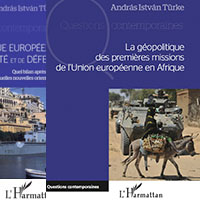
We are looking for sponsors for the English translation of these books, please contact turkeandras(at)gmail(dot)com