
You are here
European Union
Ignorance triumphs over concerns | Hospodářské noviny - Czech Republic
Categories: European Union, Swiss News
Debate: Consequences of the migration debate in Europe?
In the wake of the Ceuta crisis, migration policy is once again at the top of the agenda among Europe's political leaders. The prime ministers of Italy and Denmark, Giorgia Meloni and Mette Frederiksen, have now issued a joint statement warning of the consequences of uncontrolled migration and calling for a tougher stance. At the same time, however, Europe's media point to new rifts over how to deal with migrants.
Categories: European Union, Swiss News
Values are of secondary importance | Diário de Notícias - Portugal
Categories: European Union, Swiss News
Debate: Is the Kremlin afraid of a tiny party?
Russia's Supreme Court has barred the Yabloko party from standing in September's parliamentary elections, on the grounds of alleged breaches of electoral law. Yabloko is pushing for an immediate end to Russia's war against Ukraine. Many opposition figures recently called on the population to vote for the party, which has not had a parliamentary group in the Duma since 2003.
Categories: European Union, Swiss News
The results are fabricated anyway | Konstantin Sonin - Russia
Categories: European Union, Swiss News
Whipping boy had become a threat | Viktor Shenderovich - Russia
Categories: European Union, Swiss News
Debate: What does the new Sunni military pact portend?
Amid ongoing tensions in the Persian Gulf, Saudi Arabia, Turkey and Pakistan signed a defence pact in Mecca on Friday. An armed attack on any of the member states would be regarded as an attack on all, according to statements. Following the signing of the document, Saudi Crown Prince Mohammed bin Salman, Turkish President Recep Tayyip Erdoğan and Pakistani Prime Minister Shehbaz Sharif attended Friday prayers together.
Categories: European Union, Swiss News
Fresh solutions for a more stable Middle East | The Times - United Kingdom
Categories: European Union, Swiss News
Obstetric Violence: Syrian Women Speak Out
Syrian women speak out about obstetric violence while giving birth. Credit: Sonia Al-Ali/IPS
By Sonia Al Ali
ALEPPO, Syria, Aug 11 2026 (IPS)
The abuse 30-year-old Nour Al-Badawi experienced in an Aleppo public hospital while giving birth resulted in her having two major follow-up operations and left her with depression and anxiety.
She is one Syrian woman who spoke out to IPS about “obstetric violence” – a term that refers to physical, verbal, or psychological abuse by healthcare providers; medical interventions performed without the pregnant woman’s informed consent; and violations of her dignity and privacy within healthcare facilities.
The experience of these women extends far beyond medical challenges and harsh humanitarian conditions.
Obstetric violence encompasses all forms of abuse, neglect, violations of dignity and privacy, or the performance of medical interventions without informed consent.
Al-Badawi describes her most recent childbirth experience as one of the harshest chapters of her life.
“Poverty forces us to give birth in public hospitals and endure the mistreatment that takes place there. Because of the violence and abuse I experienced during childbirth, I no longer consider becoming pregnant again.”
Nour explains that her suffering was not limited to verbal insults and violations of her dignity but extended to violent practices during the delivery process, including forceful pressure on her abdomen, as well as an improperly performed procedure to widen the birth canal. This resulted in serious uterine complications that required two surgical operations to treat an obstetric urinary fistula.
The experience completely transformed Nour’s life. She developed severe depression and a constant desire for isolation. Her family also faced significant financial burdens to cover the costs of her treatment, forcing her to sell some of her belongings and resort to borrowing money.
Despite what happened to Nour, her husband chose not to make any comment and said he would not file a complaint or take legal action against the healthcare centre where the delivery took place, fearing further disputes and additional difficulties. Instead, he assumed responsibility for caring for his wife and covering her treatment expenses.
Farida Al-Hassoun (26), from Hama, also remembers the day she gave birth to her first child at a public hospital as one of the most difficult days of her life — not only because of the pain of labour, but also because of the way she was treated by nurses and midwives inside the hospital.
“I was screaming from the pain, but a nurse told me to be quiet and said I was exaggerating. No one explained what they were going to do. I was shocked when they stitched the wound resulting from childbirth without anaesthesia. At that moment, I felt indescribable pain,” Al-Hassoun said.
She points out that her fear increased as her questions were ignored and she received no psychological support during childbirth. After leaving the hospital, she was unable to forget the experience and continued to suffer from anxiety for months whenever she remembered the delivery room.
Al-Hassoun asks: “Can a Syrian woman give birth with dignity, or will violence inside delivery rooms remain a silent experience that no one steps forward to stop?”
Dr Ola Al-Omar (36), an obstetrician and gynaecologist, discusses the risks of obstetric violence, saying:
“In Syria, years of war and economic collapse have placed increasing pressure on the healthcare system, which has affected the quality of maternal care services. Shortages of medical staff, overcrowded hospitals, and declining resources have all contributed to creating an environment in which women are exposed to mistreatment during pregnancy and childbirth.”
She said that obstetric violence took many forms, including performing medical interventions without explaining them to the patient or obtaining her informed consent; using humiliating expressions; blaming women for crying out during labour; failing to respect privacy inside delivery rooms; depriving women of sufficient information about their health condition; ignoring their pain; or delaying the provision of necessary care.
She emphasises that every woman has the right to receive respectful maternity care, including the preservation of her dignity and privacy, obtaining informed consent before any medical intervention, receiving the necessary information to make decisions regarding her health, and being protected from humiliation, discrimination, or neglect.
Social and Psychological Counsellor Sereen Al-Sheikh (33), from the city of Idlib in northern Syria, speaks about the suffering of pregnant women, saying: “I have met many women who were subjected to artificial induction of labour to accelerate the delivery process, even though the mother’s cervix was already dilated, as well as repeated vaginal examinations that caused severe distress and trauma. In addition, patients are not allowed to have companions present during childbirth, and their movement is sometimes restricted.”
Al-Sheikh explains that these practices leave long-term psychological effects, including fear of becoming pregnant again, postpartum psychological disorders, and a loss of trust in healthcare institutions.
“Most women choose silence out of fear of social stigma, as well as because it is difficult to prove that violations or abuses have occurred. These incidents often take place without evidence or witnesses and, therefore, pass without accountability,” she says.
A childbirth experience may end with the arrival of a newborn into the world, but for some Syrian women, what follows is a long journey of fear and trauma.
At a moment that is supposed to be among the safest and most reassuring experiences in a woman’s life, some Syrian women find themselves facing an entirely different reality: cries that no one listens to, medical procedures carried out without explanation or consent, and harsh words that remain engraved in their memories for years after childbirth.
IPS UN Bureau Report
Follow @IPSNewsUNBureau
!function(d,s,id){var js,fjs=d.getElementsByTagName(s)[0],p=/^http:/.test(d.location)?'http':'https';if(!d.getElementById(id)){js=d.createElement(s);js.id=id;js.src=p+'://platform.twitter.com/widgets.js';fjs.parentNode.insertBefore(js,fjs);}}(document, 'script', 'twitter-wjs');
Related Articles
Categories: Africa, European Union
Resilience Is Not Enough: OCHA Sounds Alarm on Underfunded Humanitarian Crisis in Afghanistan
Repeated climate shocks, mounting debt and low employment prospects put greater pressures on families in Afghanistan that were “struggling to get by”. Credit: UN Photo/Luke Powell
By Shuli Wong
UNITED NATIONS, Aug 11 2026 (IPS)
“Mainly, people tell me they’re exhausted. They’re exhausted from being poor, from being hungry, from repeated climate shocks, mounting debt, and the daily struggle to provide for their families,” Olga Cherevko, Spokesperson for the UN Office for the Coordination of Humanitarian Affairs (OCHA) in Afghanistan, told UN reporters on August 4.
Traveling across Afghanistan, from Bamyan and Herat, Paktia, Khost, and most recently Nuristan after the devastating flash floods, Ms. Cherevko describes a country hit by multiple overlapping crises. These crises have created a humanitarian crisis in which food insecurity, disasters, displacement, and dwindling aid have converged.
Last week, Nuristan was hit by devastating flash floods where families lost loved ones, livelihoods, everything they owned, along with homes and infrastructure. Humanitarians moved quickly to deliver food, water, shelter, healthcare, protection, and psychosocial support; however, “when these floods hit, many people were already struggling to get by,” Ms. Cherevko said. Afghanistan is extremely vulnerable to climate shocks. “Communities barely have time to recover from one disaster when another one strikes…each shock pushes already vulnerable families deeper into poverty.
To help combat the compounding humanitarian crisis in Afghanistan, the 2026 humanitarian needs and response plan requested USD 1.71 billion to provide assistance to 17.5 million people in districts and communities facing the most acute and life-threatening conditions. However, the appeal has received only 26 percent of the required funding, creating a “very alarming” situation, “given the fact that we are seeing a lot of these indicators worsening, particularly malnutrition,” Ms. Cherevko warned. Afghanistan is encountering alarming rates of malnutrition, with OCHA’s nutrition partners noting that childhood wasting has worsened this year across three-quarters of the country.
These figures echo an alert from the World Food Programme (WFP) released last Tuesday. Nearly 14 million Afghans are facing acute hunger. However, funding cuts have resulted in only one in nine receiving WFP food assistance. Furthermore, 3.7 million children and 1.2 million pregnant and breastfeeding women are projected to be malnourished this year. In order to address the acute food needs across Afghanistan, WFP requires USD 900 million for emergency food assistance and nutrition programmes in 2026.
“We have not met needs in the first six months because we didn’t have money,” said John Aylieff, WFP Country Director for Afghanistan. “WFP still needs $500 million to address the acute food needs in the country.”
On top of the hunger crisis, restrictions on girls and women have compounded the humanitarian situation in Afghanistan. These restrictions shape “almost every aspect of daily life” and “with every new restriction, women are pushed even further out of public life…when people become invisible, they risk becoming dispensable,” said Ms. Cherevko. When humanitarian workers cannot reach girls and women and when women cannot work, or girls cannot go to school, “the consequences extend far beyond individuals,” Cherevko added, and that these consequences ultimately affect “the country’s ability to recover.”
The restrictions placed on women and girls also add a layer of complications for humanitarian workers to even reach those in need. Credit: UNHCR/Oxygen Empire Media
Violence and displacement further add to the crises. Since 2023, approximately 6 million Afghans have been forcibly expelled from neighboring countries like Pakistan and Iran. The returnees have increased the strain on Afghanistan’s fragile economy, and for the returnees, there are “simply not enough jobs to sustain them”, Mr. Aylieff said.
Ms. Cherevko emphasized how many of the returnees are “coming into a country that is completely new for them”, where there are also limited prospects for work. UNHCR estimates that almost 3.1 million Afghan refugees require international protection across the sub-region. For 2026, UNHCR has requested just over USD 450 million for its Afghanistan situation funding; however, similar to OCHA’s and the WFP’s appeals, funding is far from being met.
Despite the emphasis on the need for continued and increased funding, Ms. Cherevko stressed that “humanitarian assistance alone cannot resolve these challenges”. She called for investment in medium- and long-term solutions centering on jobs, education and poverty reduction, in addition to emergency humanitarian assistance. Having worked in Afghanistan for years, Ms. Cherevko has seen the Afghan people show “extraordinary resilience through endless hardship”. Yet, she noted that“resilience should never become a substitute for opportunity or an excuse for the world just to watch and expect people to endure indefinitely without the support they need”.
IPS UN Bureau Report
Follow @IPSNewsUNBureau
!function(d,s,id){var js,fjs=d.getElementsByTagName(s)[0],p=/^http:/.test(d.location)?'http':'https';if(!d.getElementById(id)){js=d.createElement(s);js.id=id;js.src=p+'://platform.twitter.com/widgets.js';fjs.parentNode.insertBefore(js,fjs);}}(document, 'script', 'twitter-wjs');
Categories: Africa, European Union
ÄNDERUNGSANTRÄGE 1 - 99 - Entwurf einer Stellungnahme Gesamthaushaltsplan der Europäischen Union für das Haushaltsjahr 2027 – alle Einzelpläne - PE791.057v01-00
ÄNDERUNGSANTRÄGE 1 - 99 - Entwurf einer Stellungnahme Gesamthaushaltsplan der Europäischen Union für das Haushaltsjahr 2027 – alle Einzelpläne
Ausschuss für auswärtige Angelegenheiten
Matjaž Nemec
Quelle : © Europäische Union, 2026 - EP
Ausschuss für auswärtige Angelegenheiten
Matjaž Nemec
Quelle : © Europäische Union, 2026 - EP
Categories: Europäische Union, European Union
Kenya bids to host 2029 World Athletics Championships
Kenya submits a bid to host the 2029 World Athletics Championships as it seeks to become the first African nation to stage the flagship event.
Categories: Africa, European Union
Nigeria 'still have hope' for 2027 World Cup spot
Nigeria must go "back to the drawing board" after missing out on automatic qualification for the 2027 Women's World Cup, says keeper Chiamaka Nnadozie.
Categories: Africa, European Union
Heute Auftakt in Birmingham: Der Zeitplan zur Leichtathletik-EM 2026 mit allen Wettkämpfen
Ab heute blicken Leichtathletikfans nach England, wo die europäische Elite während einer Woche um EM-Gold kämpft. Möglichst schnell, möglichst hoch und möglichst weit: In 23 Disziplinen werden neue Kontinentalchampions gesucht. Hier gehts zum Programm.
Categories: European Union, Swiss News
Asia’s Energy Progress Is Great, But Must Pick Up Pace
UN Indonesia Solar power is widely used on the islands of Java, Madura, and Bali. Credit: UN News
By Delia Paul
MELBOURNE, Australia, Aug 10 2026 (IPS)
In much of the Asia-Pacific region, energy is a success story. Electricity access has greatly increased and the use of clean cooking fuels is now widespread. The region has kept pace with the rest of the world in adopting renewable energy. Many countries have made energy efficiency gains; the Republic of Korea is one of those in the lead worldwide. Progress has continued even in the face of recent energy crises sparked by the war in Ukraine and conflict over the Strait of Hormuz.
Yet, this year’s High Level Political Forum on sustainable development (IHLPF) in New York— a yearly event to review progress on the global Sustainable Development Goals (SDGs) —sounded some warning bells.
With SDG 7 on energy, the international community agreed to ensure universal access to affordable, reliable and modern energy services. Clean cooking fuels are part of that transition. SDG 7 also set targets to increase substantially the share of renewable energy in the global energy mix, and double the rate of improvement in energy efficiency. On all these measures, Asia-Pacific countries have done well. This year’s HLPF, however, raised some important questions.
Firstly, success is a matter of definition. In 2010, Central and South Asian countries accounted for 36 per cent of the world’s electricity-access deficit; by 2024, that proportion had shrunk to just 3 per cent, a turnaround that the UN’s latest report of progress on SDG 7 attributes to rapid grid expansion, regional power market integration, and rising incomes. That achievement is nuanced, however, when we consider the livelihood dimension, where many countries still face challenges especially in rural areas.
Vijay Modi, a professor at Columbia University and director of its Laboratory for Sustainable Energy Solutions, addressing HLPF delegates on the first day of the talks, noted that access is not the same as affordability. Affordable energy is needed, for example, to run the water pumps for farm irrigation, and to light shops that may want to extend their opening hours — aspects of electricity access that are missed, if focusing only on household-level energy services.
Secondly, generalised statistics can mask the true scale of the challenge that still remains. The share of people using clean fuels and technologies for cooking has nearly doubled across most of Asia since 2010. Central, South, East and Southeast Asian countries have done especially well: India alone is responsible for about 40 percent of the worldwide reduction in the clean-cooking access deficit, China for roughly 30 percent, and Indonesia for about 10 percent.
In terms of percentage points, this all looks great. In terms of absolute numbers, though, India still has the largest numbers of people without access to electricity services and clean cooking fuels; China ranks third in the world; Indonesia ranks 16th. These are countries with large populations, where a percentage point gained in access represents many more people than a percentage point gained in a smaller country. While their progress should be applauded, the challenge is far from over.
Third is the question of financing. From 2023 to 2024, international financial flows for clean energy fell in Central, South, East and Southeast Asia. That is a troubling trend, given that much remains to be done. The role of public utilities remains crucial.
In the 1990s and 2000s, Cambodia’s state utility, Electricité du Cambodge, transformed the fragmented, war-torn nation’s power grid into a unified network, partnering with independent power producers, using foreign investment to build transmission lines and power stations, and prioritising electricity connections and financing for low-income households. Such success is not a given.
Damilola Ogunbiyi, Special Representative of the Secretary-General for Sustainable Energy for All and Co-Chair of UN-Energy, reminded the HLPF that in Africa, some utilities have not achieved viability and are facing bankruptcy. “It’s about finance, at the end of the day,” she said, while highlighting that renewable energy is the least-cost pathway to meeting energy needs worldwide.
The current geopolitical situation only strengthens the case for increasing uptake of renewables and decreasing reliance on traditional fossil fuels, said Francesco La Camera, Director-General of the International Renewable Energy Agency (IRENA). This process, he noted, could be accelerated through mini-grids, peak time management (strategies to reduce and shift electricity consumption away from peak demand times), and removal of trade barriers to renewable energy technologies. Some of this is already happening in Asia, but with just four years to go until the 2030 deadline for achieving the SDGs, UN monitoring shows that progress is insufficient.
Globally, four structural trends are holding back progress. They are explained in the 2026 UN report, “Tracking SDG 7: The Energy Progress Report.” Progress on reducing energy intensity has mainly been achieved in industry, and is now slowing. Energy efficiency standards don’t necessarily match the technology available in the marketplace. Demand for air conditioning has increased, pushing up electricity demand. Growth in electricity demand now outstrips the supply of renewable energy that is actually available. Tackling just one of these barriers — let’s say energy intensity, for example — would require tripling the rate of progress in the next four years.
For now, the UN has launched a new work programme to accelerate action leading up to the 2030 deadline for the SDGs. On the current rate of progress, the world will probably not meet all the SDG 7 targets. But, given the energy gains already made in this region, Asia-Pacific countries may do better than others.
Dr Delia Paul is an associate of the International Institute for Sustainable Development, and is affiliated with Monash University’s Global Peace and Security research hub in Australia.
IPS UN Bureau
Follow @IPSNewsUNBureau
!function(d,s,id){var js,fjs=d.getElementsByTagName(s)[0],p=/^http:/.test(d.location)?'http':'https';if(!d.getElementById(id)){js=d.createElement(s);js.id=id;js.src=p+'://platform.twitter.com/widgets.js';fjs.parentNode.insertBefore(js,fjs);}}(document, 'script', 'twitter-wjs');
Categories: Africa, European Union
Pages
the old site is here


© 2012-2015 Europa Varietas Foundation © 2015-2020 Europa Varietas Association
www.europavarietas.org | info(@)europavarietas(dot)org | Switzerland
This is a GDPR ready site


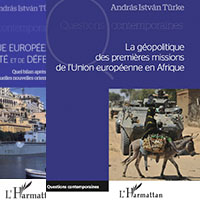
We are looking for sponsors for the English translation of these books, please contact turkeandras(at)gmail(dot)com