
You are here
Swiss News
En quoi le cerveau d'une mouche pourrait-il nous éclairer sur le comportement humain ?
Une comparaison entre les cerveaux des mouches mâles et femelles pourrait révolutionner notre compréhension de la manière dont les gènes influencent le comportement d'autres animaux, y compris le nôtre.
Categories: Afrique, Swiss News
Er zündet nächste Stufe: Sandoz-Chef hat aus Novartis-Sorgenkind einen SMI-Konzern gebaut
Einst galt Sandoz als Sorgensparte beim Pharmariesen Novartis. Unter Konzernboss Richard Saynor ist der Generika-Hersteller nun 19 Quartale in Folge gewachsen – und nun in den Leitindex SMI aufgestiegen. Jetzt plant der Brite die nächste Stufe.
Categories: Swiss News
Nach Macklemore-Rausschmiss: Ed Sheeran bricht auf Bühne in Tränen aus
Ed Sheeran stand am Samstag vor einem schwierigen Konzert in Philadelphia. Nach dem Rauswurf von Macklemore wegen dessen Aussagen zum Nahost-Konflikt verliert der Popstar auch Vorbands und Teammitglieder. Auf der Bühne wird der britische Sänger emotional.
Categories: Swiss News
Barbados muss warten: Die Reimanns zittern um ihr Visum
Die Reimanns wollen eigentlich endlich nach Barbados auswandern. Doch die TV-Auswanderer müssen weiterhin Geduld haben, denn die Behörden stehen ihnen derzeit noch im Weg. Platzt der karibische Traum jetzt?
Categories: Swiss News
Affäre aufgeflogen: Supermarkt-Rechnung zerstört Ehe
Nach 15 Jahren Beziehung und über zehn Jahren Ehe flog das grösste Geheimnis ihres Mannes durch eine Einkaufsquittung auf. Jahrelang hatte er sie mit mehreren Frauen betrogen. Sobald sie Gewissheit hatte, packte sie seine Koffer und verlangte die Scheidung.
Categories: Swiss News
Bewegung im Alltag: Vergiss die 10'000 Schritte: Dieses Training passt wirklich zu dir
10'000 Schritte, möglichst viele verbrannte Kalorien und ein hartes Workout: Beim Sport machen wir uns oft unnötig Druck. Dabei gibt es laut Expertin nicht das eine perfekte Training. Entscheidend ist, was zu unserem Körper passt.
Categories: Swiss News
Leapmotor B03X im ersten Test: Kleiner China-Stromer erhöht den Druck auf Europa
Die Elektropreise purzeln und purzeln. Mit dem B03X stellt Leapmotor den ersten Elektro-Crossover in Europa für unter 25'000 Franken vor. Trotz kompakter Masse gibt er sich überraschend praktisch – und setzt die hiesige Konkurrenz weiter unter Druck.
Categories: Swiss News
Am Zurich Film Festival: Gewinne Tickets für die Gala-Premiere von «I Play Rocky»
Das Biopic über Sylvester Stallone und die Rolle seines Lebens als Rocky Balboa feiert am 4. Oktober Europa-Premiere am Zurich Film Festival. Dank Blick kannst du bei der Gala-Premiere von «I Play Rocky» im Kongresshaus dabei sein.
Categories: Swiss News
Wärmende Wohlfühlküche: Diese Kürbis-Gnocchi machen Lust auf Herbst
Kürbis, Kartoffeln, knuspriger Speck und aromatischer Salbei: Diese selbst gemachten Gnocchi bringen alles mit, was ein richtiges Herbstgericht braucht. Die Zubereitung ist einfacher, als du vielleicht denkst – und das Ergebnis schmeckt wunderbar nach gemütlichen Abenden.
Categories: Swiss News
Tami über den Fall Xhaka: «Granit wäre als Leader jetzt wichtig fürs Team»
Nati-Captain Granit Xhaka hat sich gefälschte Covid-Zertifikate besorgt. Dies hat der Fussballer am Montagmorgen zugegeben, am Nachmittag äussert sich Nati-Direktor Pierluigi Tami dazu.
Categories: Swiss News
Ein Apfel am Tag: Sechs überraschende Gründe für täglichen Apfelgenuss
«An apple a day keeps the doctor away» – so lautet ein bekanntes Sprichwort. Doch was ist wirklich an dieser Redewendung dran? Wir klären auf und verraten euch, was die süsse Frucht sonst noch alles kann.
Categories: Swiss News
Pilze werden zu schnell braun?: Dieser Trick soll sie länger frisch halten
Champignons und andere Pilze verlieren im Kühlschrank oft schon nach kurzer Zeit ihr frisches Aussehen. Ein ungewöhnlicher Trick mit Pfefferminzöl soll das Braunwerden bremsen. Entscheidend ist allerdings, welches Öl du verwendest und wie du es einsetzt.
Categories: Swiss News
Unfall in Ittigen BE: 94-jähriger Schweizer fällt von Leiter – tot!
Tödlicher Unfall in Ittigen BE: Ein Schweizer stürzte am Montag von einer Leiter und verstarb noch vor Ort. Wie konnte es dazu kommen?
Categories: Swiss News
Les femmes sont-elles meilleures que les hommes en course d'endurance ?
Ces derniers mois, des femmes ont battu des hommes dans certaines épreuves d'endurance de haut niveau – sont-elles mieux adaptées à ces défis ?
Categories: Afrique, Swiss News
Pourquoi l'homme le plus riche d'Afrique souhaite-t-il vendre une partie de son empire ?
L'homme d'affaires milliardaire Aliko Dangote a lancé la plus grande introduction en bourse jamais réalisée sur le continent, en cotant sa société de raffinage de pétrole à la Bourse du Nigeria. Que savons-nous donc de cet entrepreneur de 69 ans et de sa promesse de contribuer à assurer davantage de prospérité et d'indépendance économique aux Africains ?
Categories: Afrique, Swiss News
Who bears the burden of institutional constraints in Egyptian manufacturing? Evidence on Egypt’s industrial support architecture
This paper draws on the 2020/21 Egyptian Industrial Firm Behaviour Survey of 2,383 manufacturing firms to provide the first systematic, firm-level evidence on how Egypt’s industrial policy institutions are experienced by manufacturing firms. Using firms’ own perceptions of institutional obstacles, the analysis distinguishes between ministries (“institutions”) and subordinate ministerial and corporatist bodies (“entities”), and classifies these entities into capability-building bodies, regulatory gatekeepers, and quasi-public corporatist bodies. This framework allows the identification of systematic differences in firms’ perceptions across types of institutions and entities, as well as across firm types. It also enables the mapping of mandate overlaps among the entities most frequently identified as problematic. Three results emerge. First, firms report entities as substantially more problematic than ministries. Second, reported institutional burdens are unevenly distributed. In particular, regulatory gatekeepers that control licensing, standards, inspections and continued market access are associated with disproportionately higher reported burdens on structurally more vulnerable firms. Reported frictions are systematically higher for domestically oriented non-exporters, small and medium enterprises, firms located outside industrial zones, privately owned firms and especially informal firms. Third, these patterns are consistent with coordination failures arising from overlapping mandates and weak accountability within specialised agencies. The findings suggest several reform priorities centred on predictable and published requirements, a single coordinated front end for firms, end-to-end case handling, outcome-based monitoring and disclosure, and scaling only those programmes with rigorously demonstrated impact.
Categories: Diplomacy & Defense Think Tank News, Swiss News
Inside Djibouti refugee camp for thousands fleeing Houthi advance in Yemen
Fighting on Yemen's west coast has prompted thousands of people to flee by boat across the Bab al-Mandab Strait.
Categories: Africa, Swiss News
Entwurf der Tagesordnung - Montag, 28. September 2026 - PE792.168v01-00 - Ausschuss für konstitutionelle Fragen , Ausschuss für Sicherheit und Verteidigung
Quelle : © Europäische Union, 2026 - EP
Categories: Europäische Union, Swiss News
Marcel Fratzscher: „Wir brauchen jetzt einen Pakt zwischen Politik und Wirtschaft“
Nach den Landtagswahlen in Mecklenburg-Vorpommern und Berlin kommentiert Marcel Fratzscher, Präsident des Deutschen Instituts für Wirtschaftsforschung (DIW Berlin), die Wahlergebnisse wie folgt:
Dieser Wahltag war ein weiterer schlechter Tag für unsere Demokratie. Die AfD hat in beiden Bundesländern stark zugelegt. Da in beiden Ländern nun Dreierkoalitionen zur Regierungsbildung nötig sein werden, dürfte die Umsetzung dringend notwendiger Reformprogramme noch schwieriger werden.
Diese Wahlergebnisse sind ein weiteres Misstrauensvotum für die Bundesregierung. Für die Bundesregierung wird es nun noch schwieriger werden, den Mut und die politische Unterstützung für ein grundlegendes Reformprogramm zu mobilisieren. Wenn CDU, CSU und SPD weiterhin an ihren roten Linien festhalten, wird sich die politische Lähmung verfestigen, die wirtschaftliche Schwäche fortsetzen und die Wahrscheinlichkeit eines Wahlsiegs der AfD 2029 weiter steigen.
Das Versprechen eines Tankrabatts zwei Tage vor der Wahl hat wohl weder der CDU noch der SPD entscheidend geholfen. Die falsche Lehre für die Bundesregierung wäre nun der Versuch, die Bürgerinnen und Bürger mit Wahlgeschenken wie dem Tankrabatt ruhigzustellen. Die Energiekrise wird sich mit hoher Wahrscheinlichkeit verschärfen. Die Bundesregierung braucht jetzt einen überzeugenden Plan, wie sie Menschen und Unternehmen sozial und wirtschaftlich ausgewogen entlastet. Dafür wird sie das Steuersystem reformieren und Subventionen abbauen müssen. Genauso wichtig sind Strukturreformen, die Deutschland wirtschaftlich voranbringen und die Sorgen der Menschen nachhaltig beantworten.
Deutschland hat noch immer alle Karten in der Hand, um seine eigene Zukunft zu bestimmen. Dafür braucht es jetzt jedoch einen Pakt zwischen Politik und Wirtschaft: mutige Reformen umzusetzen und auch seitens der Wirtschaft mehr Verantwortung zu übernehmen. Stetes Klagen über die Politik wird nicht ausreichen, um Deutschland zukunftsfähig zu machen.
Categories: Diplomacy & Defense Think Tank News, Swiss News
Pages
the old site is here


© 2012-2015 Europa Varietas Foundation © 2015-2020 Europa Varietas Association
www.europavarietas.org | info(@)europavarietas(dot)org | Switzerland
This is a GDPR ready site


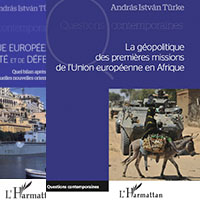
We are looking for sponsors for the English translation of these books, please contact turkeandras(at)gmail(dot)com