
You are here
Swiss News
Labour lacks an alternative | The Independent - United Kingdom
Categories: European Union, Swiss News
Debate: Mass layoffs at Washington Post: what is Bezos up to?
Around a third of the journalists at the Washington Post, one of the US's most prestigious newspapers, have been laid off. Amazon founder Jeff Bezos acquired the financially struggling paper from the family that owned it in 2013 and invested heavily in its digital transformation. During Trump's first term in office from 2017 to 2021 it was one of the most critical voices, but since his second term began Bezos has increasingly sought to cultivate a close relationship with the US president.
Categories: European Union, Swiss News
Debate: Winter Olympics in Italy: gliding along?
The 25th Winter Olympics kick off in Italy today. For the first time in Olympic history, two cities, Milan and the winter resort of Cortina d'Ampezzo, will jointly host the games. Before all the attention turns to games and medals, the media discuss the event from an economic - and environmental - perspective.
Categories: European Union, Swiss News
A challenge for the Olympic spirit | La Tribune de Genève - Switzerland
Categories: European Union, Swiss News
Debate: Will end of New Start trigger nuclear arms race?
The New Start nuclear weapons treaty, which was signed between the US and Russia in 2010 to limit the number of strategic nuclear weapons, expired on Thursday. The agreement foresaw a maximum limit of 1,550 warheads and 800 delivery vehicles for both sides. Russian President Vladimir Putin proposed a one-year extension of the treaty last September, but US President Donald Trump didn't take up the offer.
Categories: European Union, Swiss News
The days of bilateral agreements are over | Kommersant - Russia
Categories: European Union, Swiss News
Threat of nuclear proliferation | The Economist - United Kingdom
Categories: European Union, Swiss News
An easy step towards more stability | De Volkskrant - Netherlands
Categories: European Union, Swiss News
Arms race only if China tries to catch up | Dserkalo Tyschnja - Ukraine
Categories: European Union, Swiss News
ZWISCHENBERICHT über den Vorschlag für einen Beschluss des Rates über den Abschluss – im Namen der Europäischen Union – des Abkommens zur Gründung einer Assoziation zwischen der Europäischen Union und dem Fürstentum Andorra beziehungsweise der Republik...
ZWISCHENBERICHT über den Vorschlag für einen Beschluss des Rates über den Abschluss – im Namen der Europäischen Union – des Abkommens zur Gründung einer Assoziation zwischen der Europäischen Union und dem Fürstentum Andorra beziehungsweise der Republik San Marino
Ausschuss für auswärtige Angelegenheiten
Željana Zovko
Quelle : © Europäische Union, 2026 - EP
Ausschuss für auswärtige Angelegenheiten
Željana Zovko
Quelle : © Europäische Union, 2026 - EP
Categories: Europäische Union, Swiss News
WHO Launches $1 Billion Appeal Amid Funding Shortfalls and Widening Gaps in Healthcare Access
The 158th session of the Executive Board took place on 2-7 February 2026 at WHO headquarters in Geneva, Switzerland. Pictured is Dr Tedros Adhanom Ghebreyesus, WHO Director-General. Credit: WHO / Christopher Black
By Oritro Karim
UNITED NATIONS, Feb 6 2026 (IPS)
On February 3, the World Health Organization (WHO) launched its 2026 global appeal to help millions of people living in protracted conflicts and humanitarian crises access lifesaving healthcare. Following a trend of sharply declining international funding, the agency warns that it is becoming increasingly difficult to respond to emerging health threats, including pandemics and drug-resistant infections.
According to figures from the United Nations (UN), roughly a quarter of a billion people are currently living through humanitarian crises that threaten their access to healthcare and shelter, even as global defense spending has surpassed USD 2.5 trillion annually. Meanwhile, WHO estimates that approximately 4.6 billion people lack access to essential health services and 2.1 billion face significant financial strain from rising health costs.
These disparities are expected to worsen in the coming years, as the world is projected to face a shortage of 11 million healthcare workers by 2030—more than half of whom are nurses. Seeking nearly USD 1 billion to support civilians across 36 emergency settings—14 of which are classified as extremely severe—WHO aims to protect and support millions of people living in the world’s most fragile crisis settings.
“This appeal is a call to stand with people living through conflict, displacement and disaster – to give them not just services, but the confidence that the world has not turned its back on them,” said Dr Tedros Adhanom Ghebreyesus, WHO Director-General. “It is not charity. It is a strategic investment in health and security. In fact, access to health care restores dignity, stabilizes communities and offers a pathway toward recovery.”
Since its founding in 1948, WHO has served as a critical lifeline for crisis-affected populations—promoting universal health coverage, coordinating international responses to health emergencies, and tracking emerging health threats and progress worldwide. In 2025 alone, WHO and its partners provided emergency health services to approximately 30 million people, delivering vaccinations to 5.3 million children, facilitating 53 million health consultations, supporting more than 8,000 health facilities, and deploying 1,370 mobile clinics.
“In today’s most complex emergencies, WHO remains indispensable – protecting health, upholding international humanitarian law, and ensuring life-saving care reaches people in places where few others can operate,” said Marita Sørheim-Rensvik, Deputy Permanent Representative of Norway to the UN Office at Geneva. “From safeguarding access to sexual and reproductive health and rights to supporting frontline health workers under immense strain, WHO’s role is vital.”
The 2026 appeal follows a year in which humanitarian financing fell below 2016 levels, forcing WHO and its partners to reach only one-third of the 81 million people originally targeted for health assistance. Additionally, this comes after the United States exit from WHO on January 22, which is estimated to reduce the agency’s budget for 2026 and 2027 from USD 5.3 billion to USD 4.2 billion.
Ghebreyesus addressed WHO’s Executive Board in Geneva on February 2, warning of the far-reaching consequences expected after last year’s steep funding cuts, describing 2025 as one of the organization’s “most difficult years” in its history. “Sudden and severe cuts to bilateral aid have also caused huge disruptions to health systems and services in many countries,” he said.
Ghebreyesus also noted that the agency narrowly avoided a far more severe financial collapse due to a host of member states agreeing to raise mandatory assessed contributions. This would reduce WHO’s dependence on voluntary designated funding. These reforms have enabled WHO to mobilize roughly 85 percent of its core budget for 2026-2027, though Ghebreyesus warned that the remaining gap will be “hard to mobilize” in today’s strained financial environment. He cautioned that “pockets of poverty” remain across critically underfunded areas, including emergency preparedness, antimicrobial resistance, and climate resilience.
Ghebreyesus also warned noted that the funding crisis has exposed deeper challenges for global health governance, especially among low and middle-income countries that struggle to maintain access to essential services. He stressed that the crisis presents a crucial opportunity for transformation, noting that a “leaner” WHO can become more focused on its core mission and mandate within the broader UN80 reform initiative. “This means sharpening our focus on our core mandate and comparative advantage, doing what we do best – supporting countries through our normative and technical work – and leaving to others what they do best,” he added.
As a result of shrinking global funding, WHO says that it and its partners have been “forced to make difficult choices” about which operations to sustain going forward. The agency stated its intentions to concentrate solely on the most critical, high-impact interventions–such as keeping essential health facilities running, delivering emergency medical supplies and trauma care, restoring immunization efforts, ensuring access to reproductive, maternal, and child health services, and preventing and responding to disease outbreaks.
The World Health Organization (WHO) is working with health authorities in South Sudan and partners to scale up cholera prevention efforts, including a vaccination campaign. Credit:WHO/South Sudan
“In 2026, WHO is adapting its emergency response again. We are applying the discipline of emergency medicine: focusing first on actions that save lives,” said Ghebreyesus. “We are placing greater emphasis on country leadership and local partnerships. We are concentrating on areas where WHO adds the greatest value and reducing duplication so that every dollar has maximum impact.”
In 2026, WHO will prioritize its emergency health response in the Occupied Palestinian Territory, Afghanistan, Haiti, the Democratic Republic of the Congo, Sudan, South Sudan, Yemen, Somalia, Syria, Ukraine, and Myanmar, while also addressing ongoing outbreaks of cholera and mpox. As the lead agency for health coordination in humanitarian crises, WHO works with more than 1,500 partners across 24 emergency settings worldwide to ensure that national authorities and local organizations remain at the center of emergency response efforts.
Additionally, WHO’s strategy going forward places strong emphasis on helping countries reduce reliance on external aid and build long-term financial self-sufficiency. A key element of this approach is domestic resource mobilization, including the introduction of higher health taxes on harmful products such as tobacco, sugary beverages, and alcohol.
In recent months, WHO has made important progress in strengthening global responses to emerging health threats, even as antimicrobial resistance continues to escalate—with one in six bacterial infections worldwide now resistant to antibiotics. The agency has also expanded its disease surveillance capabilities, relying on AI-powered epidemic intelligence tools to help countries detect and contain hundreds of outbreaks before they evolve into major crises. WHO’s work has also been reinforced by last year’s adoption of the Pandemic Agreement and amended International Health Regulations (IHR), which aim to bolster global preparedness in the post-COVID-19 era.
“The pandemic taught all of us many lessons – especially that global threats demand a global response,” said Ghebreyesus. “Solidarity is the best immunity.” He emphasized that the future effectiveness of WHO hinges on predictable, sustained funding:“This is your WHO. Its strength is your unity. Its future is your choice.”
IPS UN Bureau Report
Follow @IPSNewsUNBureau
!function(d,s,id){var js,fjs=d.getElementsByTagName(s)[0],p=/^http:/.test(d.location)?'http':'https';if(!d.getElementById(id)){js=d.createElement(s);js.id=id;js.src=p+'://platform.twitter.com/widgets.js';fjs.parentNode.insertBefore(js,fjs);}}(document, 'script', 'twitter-wjs');
Categories: Africa, Swiss News
UN Human Rights Office Launches USD 400 million Appeal to Address Global Human Rights Needs
An artist in Colombia draws an image of the Universal Declaration of Human Rights. Credit: UN Colombia/Jose Rios Source: UN News
By UN High Commission for Human Rights
GENEVA, Feb 6 2026 (IPS)
The UN High Commissioner for Human Rights Volker Türk has launched a USD 400 million funding appeal for 2026 to address global human rights needs, warning that with mounting crises, the world cannot afford a human rights system in crisis.
“The cost of our work is low; the human cost of underinvestment is immeasurable,” Türk told States at the launch. “In times of conflict and in times of peace, we are a lifeline for the abused, a megaphone for the silenced, a steadfast ally to those who risk everything to defend the rights of others.”
In 2025, staff working for the UN Human Rights Office in 87 countries observed more than 1,300 trials, supported 67,000 survivors of torture, documented tens of thousands of human rights violations, and contributed to the release of more than 4,000 people from arbitrary detention.
Türk also stressed that addressing inequalities and respecting economic and social rights are vital to peace and stability. “Human rights make economies work for everyone, rather than deepening exclusion and breeding instability,” he said.
The Office in 2025 worked with more than 35 governments on the human rights economy, which aims to align all economic policies with human rights. For example, in Djibouti, it helped conduct a human rights analysis of the health budget, with a focus on people with disabilities. It provided critical human rights analysis to numerous UN Country Teams working on sustainable development.
Türk outlined several consequences of reduced funding in 2025. For instance, the Office conducted only 5,000 human rights monitoring missions, a decrease from 11,000 in 2024. The Office’s programme in Myanmar suffered cuts of more than 60 percent. In Honduras, support for demilitarisation of the prison system and for justice and security sector reforms was reduced. In Chad, advocacy and support for nearly 600 detainees held without legal basis had to be discontinued.
“Our reporting provides credible information on atrocities and human rights trends at a time when truth is being eroded by disinformation and censorship. It informs deliberations both in the UN Security Council and the Human Rights Council, and is widely cited by international courts, providing critical evidence for accountability,” he said.
The liquidity crisis of the regular budget also significantly affected the work of the broader human rights ecosystem. For instance, 35 scheduled State party dialogues by UN Human Rights Treaty Bodies could not take place.
Four out of eight planned country visits by the Sub-Committee on Prevention of Torture had to be cancelled. UN Special Rapporteurs’ ability to carry out country visits was curtailed, and the Human Rights Council’s investigative bodies were unable to fulfil their mandates fully.
The UN Human Rights Chief also regretted that the Office lost approximately 300 staff out of a total of 2,000 and was forced to close or radically reduce its presence in 17 countries, erasing entire programmes critical for endangered, threatened, or marginalised communities, from Colombia and Guinea-Bissau to Tajikistan.
“All this is weakening our ‘Protection by Presence’ – a simple idea with powerful impact: that the physical presence of trained human rights officers on the ground deters violations and reduces harm,” Türk said.
In 2025, the Office’s approved regular budget was USD 246 million, but it received only USD 191.5 million, resulting in a USD 54.5 million shortfall. It had also requested USD 500 million in voluntary contributions and received only USD 257.8 million.
The UN Human Rights Chief thanked the 113 funding partners – Governments, multilateral donors, private entities, among others – who contributed to the 2025 budget and helped save and improve lives.
For 2026, the UN General Assembly has approved a regular budget of USD 224.3 million, which is based on assessed contributions from Member States. This amount is 10 per cent lower than in 2025, and further uncertainty remains about the actual amount the Office will receive due to the liquidity crisis the UN is facing.
Through its 2026 Appeal, the Office is requesting an additional USD 400 million in voluntary contributions.
“Historically, human rights account for an extremely small portion of all UN spending. We need to step up support for this low-cost, high-impact work that helps stabilise communities, builds trust in institutions, and supports lasting peace,” the High Commissioner said.
“And we need more unearmarked and timely contributions so we can respond quickly, as human rights cannot wait.”
IPS UN Bureau
Follow @IPSNewsUNBureau
!function(d,s,id){var js,fjs=d.getElementsByTagName(s)[0],p=/^http:/.test(d.location)?'http':'https';if(!d.getElementById(id)){js=d.createElement(s);js.id=id;js.src=p+'://platform.twitter.com/widgets.js';fjs.parentNode.insertBefore(js,fjs);}}(document, 'script', 'twitter-wjs');
Categories: Africa, Swiss News
Le trophée de la Coupe du monde 2026 attendu à Alger pour une journée très spéciale
À quelques mois du Mondial 2026, Alger va accueillir l’un des symboles les plus forts du football, le trophée de la Coupe du monde ! […]
L’article Le trophée de la Coupe du monde 2026 attendu à Alger pour une journée très spéciale est apparu en premier sur .
Categories: Afrique, Swiss News
Pages
the old site is here


© 2012-2015 Europa Varietas Foundation © 2015-2020 Europa Varietas Association
www.europavarietas.org | info(@)europavarietas(dot)org | Switzerland
This is a GDPR ready site


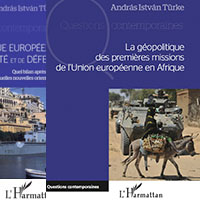
We are looking for sponsors for the English translation of these books, please contact turkeandras(at)gmail(dot)com