
You are here
Africa
A főképviselőnek az EU nevében tett nyilatkozata egyes országoknak az Oroszország destabilizáló tevékenységeire tekintettel hozott korlátozó intézkedésekhez történő csatlakozásáról
A főképviselőnek az Európai Unió nevében tett nyilatkozata egyes harmadik országoknak az Oroszország destabilizáló tevékenységeire tekintettel hozott korlátozó intézkedésekről szóló (KKBP) 2014/2643 határozat módosításáról szóló, 2026. július 13-i (KKBP) 2026/1707 tanácsi határozathoz történő csatlakozásáról.
Categories: Africa, Európai Unió : hírek magyarul
Green transition: Pay the Least, Benefit the Most
Workers are patrolling in a wind power plant on Tan Thanh beach, Go Cong city of Viet Nam. Countries in Asia and the Pacific are moving towards green transitions in the wake of higher oil prices. Credit: Unsplash/Thompson Le
By Michał Podolski
BANGKOK, Thailand, Aug 5 2026 (IPS)
Inaction and maintaining the status quo of fossil fuel dependence carry significant costs. The recent closure of the Strait of Hormuz, for instance, caused enormous losses to the global economy, with many Asia-Pacific countries bearing disproportionately larger adverse impacts. Had these economies had a more diversified energy mix, they would have benefited from such resilience under current circumstances.
Green transition, however, comes at a significant cost – investment in environmental sustainability. This investment brings tangible returns and benefits, such as cleaner air, better health, a vibrant natural environment or reduced negative climate impacts. What is the overall balance of these costs and benefits, opportunities seized or lost, innovation, or status quo maintenance?
This overall balance amounts to decisions for a faster or slower shift towards environmental sustainability and green transition. Each carries fiscal, investment and financing consequences with differing socioeconomic outcomes. Overall, because of these countless dimensions, decision-making for green transition is inherently complex. In principle, humanity has never undertaken a green transition before and lacks established blueprints.
ESCAP’s Economic and Social Survey of Asia and the Pacific 2026 sheds light on this challenge. The report identifies decarbonisation pathways that offer lower costs and higher benefits, highlights bottlenecks that inflate expenses, clarifies current priorities, and examines socioeconomic impacts. In short, the Survey 2026 identifies cheaper options with greater impacts.
For instance, in some Asia-Pacific countries, the choices on decarbonisation are relatively straightforward. With limited fossil fuel dependence, low risks of asset stranding and minimal vested interests in coal, oil and gas industries, these economies are advancing renewable energy expansion. They are leapfrogging decarbonisation hurdles and reaping steady benefits from carbon-free energy.
However, economies heavily reliant on fossil fuels are confronting tougher dilemmas. Faster carbon withdrawal brings higher immediate costs, offset only by longer-term benefits. Labour markets face greater pressure from anticipated reskilling and green sector development. These economies face elevated risks and must proceed cautiously. Ultimately, the green transition demands strong and prosperous economies capable of delivering goods and services to build a carbon-free world.
As for labour markets, net employment effects of green transition can be positive overall, yet uneven across countries and sectors. Fossil fuel job losses, potentially abrupt ones, are often concentrated in mineral-rich areas, with knock-on effects on related industries. Historical coal phase-outs without prompt government support reveal prolonged unemployment, youth out-migration, and community decline. Older workers are particularly at risk of exiting the labour force permanently. In contrast, green jobs emerge more gradually, often elsewhere, and require different skills. This mismatch highlights the need for proactive government planning – including funded reskilling and economic diversification – to redeploy skills from declining sectors.
Inflation provides another example of dilemmas faced by policymakers that are or want to pursue green transition. Higher inflation undermines economic activity and complicates transition-oriented policymaking. For instance, green transition policies, such as carbon pricing, can gradually increase prices, and thus inflation. This can raise interest rates, hinder capital-intensive green investments and pose financial stability challenges for central banks. Economies may tolerate modest and stable inflation, but high and volatile inflation will undermine the green transition efforts.
The Survey 2026 also highlights that government interventions like subsidies can be beneficial but can also lock-in suboptimal technologies. Too much of a good thing can be harmful. Government policies should guide objectives and priorities, for example, the need for better and cheaper energy storage, and enable people and enterprises to discover the most effective solutions. Market-friendly policy tools, such as technology-neutral emission limits, clear long-term plans and streamlined permitting, are all important policy adjustments.
“Take the right decisions, allow markets to work in a fair way” was a message on climate action by the UN Secretary-General António Guterres in 2025. The Survey 2026 builds on this, emphasising that market mechanisms can drive decarbonisation by identifying the best opportunities. The report also reinforces the call for “right decisions” to ensure a just and inclusive transition.
There are often easier and harder paths to the same goal. With due regard to diverse national circumstances, Asia-Pacific economies must progressively move to a low-carbon future, while safeguarding socioeconomic well-being of their people. There is no universal set of policies, but there is one clear direction. Although some costs may seem high today, inaction would prove far more expensive. At the end, optimal paths require pragmatic, evidence-based judgement: gradual where necessary, ambitious where feasible, and always mindful of who bears today’s costs versus tomorrow’s benefits.
Michal Podolski is Associate Economic Affairs Officer, ESCAP
IPS UN Bureau
Follow @IPSNewsUNBureau
!function(d,s,id){var js,fjs=d.getElementsByTagName(s)[0],p=/^http:/.test(d.location)?'http':'https';if(!d.getElementById(id)){js=d.createElement(s);js.id=id;js.src=p+'://platform.twitter.com/widgets.js';fjs.parentNode.insertBefore(js,fjs);}}(document, 'script', 'twitter-wjs');
Categories: Africa, European Union
Deloitte-Studie schlägt Alarm: Europa verliert den Batteriewettlauf gegen China
Europas Autoindustrie entgehen Milliarden: 77 Prozent aller E-Auto-Batterien stammen aus Asien. Nur 13 Prozent werden in Europa produziert, meist unter Kontrolle asiatischer Firmen.
Categories: Africa, Swiss News
Eckball hinter Polizeischild: Polizei muss Bad-Boy Paredes vor Fans schützen
Polizeischutz für Leandro Paredes! Beim Spiel seiner Boca Juniors gegen die Newell’s Old Boys in Argentinien muss der Bad-Boy von der Polizei abgeschirmt werden, um einen Eckball auszuführen. Auch in diesem Spiel sorgt die Reizfigur vom WM-Final noch für einen Eklat.
Categories: Africa, Swiss News
Unvergessliches Erlebnis vor Australien: Riesiger Buckelwal gibt Touristen High Five
Unvergesslicher Moment vor Byron Bay, Australien: Zwei Buckelwale umschwammen eine Stunde lang ein Boot und zeigten Touristen auf dem «Humpback Highway» ihre verspielte Seite.
Categories: Africa, Swiss News
Öffnung der Strasse von Hormus: USA, Iran und Oman sollen kurz vor Abkommen stehen
Die Strasse von Hormus könnte schon heute Mittwoch wieder geöffnet werden. Die USA, Iran und Oman stehen offenbar kurz vor einer Vereinbarung über eine 60-tägige Übergangsregelung für die wichtige Ölroute.
Categories: Africa, Swiss News
Erste Fotos seit Jahren zeigen Gefangene der Generäle: Myanmars Junta verspottet Freiheitsheldin Aung San Suu Kyi (81) als «Tante»
Neue Bilder zeigen Myanmars seit dem Putsch 2021 inhaftierte Aung San Suu Kyi (81). Die Friedensnobelpreisträgerin wirkt gesund – doch die Junta verspottet sie als «Auntie Suu» auf der Geburtstagstorte. Von Freiheit ist die Ikone weit entfernt.
Categories: Africa, Swiss News
Mysterious elephant deaths in Kenya raise questions around pesticides
A wave of Kenyan elephant deaths has been blamed on pesticides, but experts tell the BBC they are doubtful.
Mysterious elephant deaths in Kenya raise questions around pesticides
A wave of Kenyan elephant deaths has been blamed on pesticides, but experts tell the BBC they are doubtful.
Categories: Africa, European Union
Le Clos' home destroyed by fire after he sets Commonwealths record
Chad le Clos reveals his apartment in South Africa was destroyed by a fatal fire in a "heartbreaking tragedy" - the night after he became the most decorated athlete in Commonwealth Games history.
Categories: Africa, European Union
Le Clos' home destroyed by fire after he sets Commonwealths record
Chad le Clos reveals his apartment in South Africa was destroyed by a fatal fire in a "heartbreaking tragedy" - the night after he became the most decorated athlete in Commonwealth Games history.
Categories: Africa, European Union
Arrests in Egypt after people allegedly impersonate judges
Egyptian authorities say the alleged scam involved fabricated scenes in court as part of a plot to defraud people.
Categories: Africa, Határon túli magyar portálok összesített hírei
Ugandans among athletes 'missing' after Commonwealth Games
Police Scotland said it had received reports of various athletes "unaccounted for" in the aftermath of the Games, which concluded on Sunday.
Categories: Africa, Határon túli magyar portálok összesített hírei
Cape Verde coach Bubista resigns as Ivory Coast reappoint Renard
Head coach Bubista leaves Cape Verde after reaching the last 32 at the World Cup while Ivory Coast reappoint two-time Afcon winner Herve Renard.
World's oldest president reshuffles army as his absence stokes unease
Cameroon's president has been absent for two months while his team denies rumours about his health.
Categories: Africa, Határon túli magyar portálok összesített hírei
Zimbabwe funeral held for family believed to have been murdered in the UK
Relatives describe the mother as "the family's pride and joy".
Categories: Africa, Határon túli magyar portálok összesített hírei
Deadly landslide hits Ethiopia mountain monastery during prayer service
It sent rocks and earth crashing on to those praying at an overnight service, the authorities say.
Categories: Africa, Határon túli magyar portálok összesített hírei
Climate Change Makes Sacred Ice Vanish in Kashmir, Locals Fear Loss of Livelihoods
Every summer, before dawn breaks over the Himalayas, Bashir Ahmad leads his horses onto the narrow mountain trail that winds toward the Amarnath cave shrine. For decades, the annual Hindu pilgrimage has been the most important season of the year for his family. The money earned over two months pays for food, school fees, winter […]
Categories: Africa, European Union
After Restoring Stability, Argentina Needs to Turn Hard-Won Gains into Lasting Prosperity
Credit IMF Photo/Nicholas Karlin
By Kristalina Georgieva
WASHINGTON DC, Aug 4 2026 (IPS)
My first meeting in Buenos Aires began with an unexpected gift. Economy Minister Luis Caputo presented me with an Argentine national team jersey bearing my name and the number 10—Lionel Messi’s iconic number.
It was a fitting start to my first official visit. When Messi finally lifted the World Cup in Qatar, he was 35 years old—an age when many footballers have already retired. His triumph was the culmination of years of perseverance, setbacks, and relentless dedication. It underscored how great achievements require persistence—and can take longer than expected.
Economic transformation follows a similar path. Restoring stability is difficult. Making it endure is even harder. The greatest rewards come only after years of persistence.
That stuck with me during my visit to Argentina this week. Everywhere I went, I encountered people looking beyond today’s challenges and asking what their country could become over the next decade.
For a country that has spent much of its recent history focused on the next crisis, shifting attention to a longer horizon was, I found, to be the most encouraging sign of all.
Impressive stabilization
Only two and a half years ago, Argentina faced one of the most difficult economic moments in its modern history. The government was running constant deficits. Inflation exceeded 200 percent. The economy was contracting. Poverty had climbed above 50 percent. Families watched the value of their wages and savings fall. Businesses found it difficult to plan beyond the next few weeks.
Today, the picture is markedly different.
Argentina has delivered two consecutive years of primary fiscal surpluses for the first time in 15 years. The economy is growing. Inflation has fallen to around 30 percent. Poverty has declined. The central bank is rebuilding international reserves. Sovereign borrowing costs have fallen.
All three major credit rating agencies have upgraded the country. In addition, more than $45 billion in investment projects have already been approved under Argentina’s large investment incentive framework. The pipeline under development is more than twice that size. These achievements reflect the commitment to stability and determined policy actions by Javier Milei’s administration and, above all, the perseverance of the Argentine people.
From stability to growth and opportunities
Stabilization gives a country back something that isn’t easily measured: time. When families believe prices will remain stable, they start to save instead of simply protecting themselves against inflation. When businesses believe policies will remain predictable, they invest for years rather than months. Banks extend longer-term credit. Governments can focus on improving institutions instead of responding to the next emergency.
In other words, stability extends a country’s time horizon. I know how transformative that can be because I experienced it in my own country.
When Bulgaria suffered hyperinflation and a banking crisis in the 1990s, my mother’s lifetime savings disappeared almost overnight. I kept my own modest savings in dollars, in a tin box hidden in the cupboard. Restoring stability required difficult reforms, stronger institutions, and persistence over many years.
The results did not appear immediately. But because Bulgaria stayed the course, confidence gradually returned. Investment increased. People found work. Living standards improved. Earlier this year, Bulgaria adopted the euro—a milestone that would once have seemed impossible.
The lesson was not simply that stabilization can succeed. It was that its greatest rewards emerge only with time.
That challenge is even greater today. The global economy is becoming more uncertain. Trade patterns are shifting. Geopolitical tensions remain elevated. Artificial intelligence is reshaping industries and labor markets at remarkable speed. Capital is increasingly selective, flowing to countries that combine sound policies with predictable institutions.
In this environment, macroeconomic stability is not merely desirable—it is a prerequisite for attracting investment, creating jobs, and remaining competitive.
Unleashing potential
I saw that opportunity very clearly at the fast-developing Vaca Muerta oil and gas fields, in Neuquén province. That Argentina enjoys world-class natural resources has long been known. Yet Vaca Muerta shows that it also has talented engineers, entrepreneurs, and public and private leaders committed to developing them. And it is doing so at a moment when the world is looking for secure and reliable energy supplies.
Vaca Muerta is only one example of a broader opportunity. Mining investment is accelerating, knowledge-based services export nearly $10 billion annually, and agriculture remains among the world’s most competitive sectors. Beyond its natural resources, Argentina boasts world-class entrepreneurs, strong universities, and exceptional human talent.
The next phase is to ensure that these opportunities spread across the broader economy.
That message came through clearly in my discussions with business leaders. They welcomed the country’s renewed stability and growing investor confidence, while emphasizing the importance of reducing barriers to investment and broadening the recovery across more sectors.
It also came through in two very different conversations.
On my first morning in Buenos Aires, I met Marina, a makeup artist who kindly helped me get ready for the day ahead. She told me she works three jobs and that life remains difficult. Yet she also told me she hopes the country stays the course. Her circumstances have not changed overnight. What’s changing is her confidence that progress can last.
I later met renowned tango dancer Mora Godoy. Beyond her celebrated career, she has built a dance school and offers scholarships to young people who otherwise might never have the chance to learn.
Different stories, different professions—but both reflected the same belief that investing today can create opportunities tomorrow.
I heard that same longer-term perspective from students. Their questions were not about the next six months. They were about artificial intelligence, innovation, leadership, and Argentina’s place in the global economy. They wanted to know how their country could compete—not just next year, but over the coming decades.
Across these conversations with business leaders, workers, and students, I heard a common, encouraging message: Argentina is beginning to look beyond the next crisis to the opportunities ahead.
In the end, success will not be measured only by lower inflation, stronger reserves, or healthier public finances. It will be gauged by whether more businesses invest, small and medium-sized enterprises expand, workers find better jobs and higher wages, and more Argentines see the benefits of economic growth in their daily lives.
The next steps
That same long-term perspective guides the IMF partnership with Argentina.
Our role is to support the policies and institutions that make lasting stability possible. The government’s proposal for a stronger and more independent central bank can help ensure that progress on inflation endures. A durable fiscal responsibility framework, with clear rules and strong institutions, can help future governments preserve today’s hard-won gains. These reforms allow families to plan, businesses to borrow and invest, and governments to look beyond the next crisis.
Argentina’s economic transformation will also take time. The country has laid the foundations for a more stable future. The challenge now is to stay the course—to keep building the institutions, confidence, and opportunities that will allow today’s progress to become lasting prosperity.
Kristalina Georgieva is Managing Director of the International Monetary Fund, Washington DC.
IPS UN Bureau
Follow @IPSNewsUNBureau
!function(d,s,id){var js,fjs=d.getElementsByTagName(s)[0],p=/^http:/.test(d.location)?'http':'https';if(!d.getElementById(id)){js=d.createElement(s);js.id=id;js.src=p+'://platform.twitter.com/widgets.js';fjs.parentNode.insertBefore(js,fjs);}}(document, 'script', 'twitter-wjs');
Categories: Africa, European Union
Trade Liberalisation Never Lifted All Boats
By Jomo Kwame Sundaram
KUALA LUMPUR, Malaysia, Aug 4 2026 (IPS)
President Trump has blamed trade liberalisation advocated by globalists for US deindustrialisation. Instead, his own weaponisation of economic policies, instruments and institutions purport to ‘make America great again’ (MAGA).
Jomo Kwame Sundaram
Trump 1.0 claimed to do so by ‘reshoring’ industries that had relocated abroad. Trump 2.0 uses more threats to secure investments, markets and other economic advantages for US big business, at the expense of others, including allies and especially the Global South.While rejecting globalists’ claim that trade liberalisation enhances growth, employment and incomes for all, his own ‘America First’ policies are slowing the world economy, including the US.
Post-war trade policy
The US has dominated international relations and institutions, including multilateral economic governance, since World War Two (WW2). The US Congress rejected the 1948 Havana Charter proposing the International Trade Organisation (ITO).
Selective trade liberalisation was key to the ‘neoliberal’ Washington Consensus, which has been recommended, if not required, by multilateral economic institutions from the 1980s.
Meanwhile, the neoliberal era has been associated with slower, more volatile growth than the post-war Keynesian ‘Golden Age’ of the first quarter-century after WW2.
The West pushed for the World Trade Organization (WTO) to consolidate the international economic order on a neoliberal basis. The 1994 Marrakech Agreement establishing the WTO left little room for development policy initiatives.
For many in the West, neoliberal trade liberalisation ended with the first Trump presidency from 2017. However, the reversal had begun earlier in the 21st century, especially after the 2008-09 global (actually Western) financial crisis.
However, Trump should be acknowledged for brazenly weaponizing international trade and investment instruments against the rest of the world, including US allies.
Hegemony
Free trade advocate Jagdish Bhagwati showed that anything less than trade multilateralism, including plurilateral and bilateral free trade agreements, is sub-optimal and unfair.
Compromises, including those promoted by international financial institutions and the OECD, have, instead, strengthened US and Western hegemony.
Postwar decolonisation of Asia and Africa has seen discontent grow in multilateral institutions, prompting selective Western undermining of multilateralism after the Cold War.
Unable to ensure the WTO’s dispute settlement system consistently protects and advances its interests, the US has paralysed it by blocking key appointments since the Obama presidency.
Collective assertiveness by developing countries in multilateral fora has mitigated some adverse consequences of international economic integration under Western auspices.
Partial and uneven trade liberalisation has constrained Global South industrialisation. Recent deindustrialisation has reduced manufacturing’s share of national output in many developing countries.
Little new manufacturing capacity has developed in Africa beyond some minimal import-substituting and resource-processing activities protected by high transport costs.
Divide and rule
Economic concessions, such as trade preferences, to developing countries have been used to divide the Global South, including the ‘least developed countries’ and ‘small island developing states’, effectively weakening their collective negotiating strength.
Trade liberalisation has also reduced tariff revenue, especially important for the poorest developing countries, where it often accounted for up to half of total tax collected.
Additional taxes, typically from consumption or income, have never compensated for tariff revenue losses due to trade liberalisation. This has undermined their already weak fiscal capacities, often requiring them to borrow even more.
Promoting food agriculture in supposedly ‘land-abundant’ African countries was supposed to make them more food-secure and even export-competitive but there is no evidence this has happened.
Developing nations have long unsuccessfully asked the Global North to eliminate agricultural subsidies, tariffs, and non-tariff import barriers that protect their output.
This would make food production in developing countries more competitive. But rich countries have long insisted that developing countries must first ‘reciprocate’, e.g., by eliminating their manufacturing tariffs.
Structural adjustment has also undermined agricultural infrastructure and smallholder productivity in many developing countries. Meanwhile, lower farm subsidies in Europe have raised many food import prices in the South.
Gains from trade?
Purported gains from trade liberalisation are often either merely theoretical or one-time gains from static understandings of comparative advantage, with no cumulative potential.
Claims of gains from trade liberalisation presume internationally competitive productive and export capacities capable of generating a strong positive supply response.
Such preconditions are unlikely in most developing countries, especially the poorest, and need to be developed, typically by protecting against external market pressures.
Most studies of realistically achievable outcomes of WTO Doha Round negotiations from 2001, including those for the World Bank, projected net losses for most developing economies, except for a few Asian economies.
There is also no robust evidence of trade liberalisation significantly reducing poverty and hunger. Developing countries, especially the poorest ones and those in sub-Saharan Africa, would be worse off.
One may well ask why developing countries have to be bribed with ‘aid for trade’ if it is in their own best interests to commit to trade liberalisation, multilateral or otherwise.
Worse, trade liberalisation has made sustainable development nearly impossible by significantly reducing policy options for aspiring developmental states, especially for trade, industrial, investment and technology policies.
IPS UN Bureau
Follow @IPSNewsUNBureau
!function(d,s,id){var js,fjs=d.getElementsByTagName(s)[0],p=/^http:/.test(d.location)?'http':'https';if(!d.getElementById(id)){js=d.createElement(s);js.id=id;js.src=p+'://platform.twitter.com/widgets.js';fjs.parentNode.insertBefore(js,fjs);}}(document, 'script', 'twitter-wjs');
Related Articles
- Trump Tariffs Creating Less Manufacturing Jobs
- Trade Liberalisation Undermines Development
- No African Development from Western Trade Policies
- Trump Undresses Rival Trade Myths
- Trump’s ‘Shock and Awe’ Tariffs
- Trade Liberalisation Kicked Away African Development Ladder
- Trade Deception Returns in Pan-Africanist Guise
- Weaponizing Free Trade Agreements
- Trade Liberalization for Development?
- Agricultural Trade Liberalization Undermined Food Security
Categories: Africa, European Union
Pages
the old site is here


© 2012-2015 Europa Varietas Foundation © 2015-2020 Europa Varietas Association
www.europavarietas.org | info(@)europavarietas(dot)org | Switzerland
This is a GDPR ready site


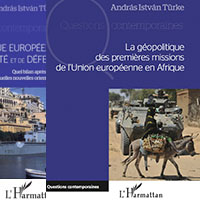
We are looking for sponsors for the English translation of these books, please contact turkeandras(at)gmail(dot)com