
You are here
Feed aggregator
La télévision d'État du Niger diffuse des allégations faisant état d'un complot international contre la junte
Le capitaine Roger Gabriel a affirmé que des proches de l’ancien président Mohamed Bazoum et des officiers tchadiens étaient liés à la tentative de coup d’État des 28 et 29 août au Niger. Selon lui, des forces spéciales tchadiennes et françaises devaient soutenir les mutins, avec l’appui présumé du Bénin et de la Côte d’Ivoire.
Categories: Afrique, Swiss News
Un enfant de 7 ans ressorti vivant d'un puits de 30 mètres
Un garçon d'environ sept ans a été tiré vivant d'un puits d'une trentaine de mètres à Aclonmè, dans l'arrondissement de Sèhouè. L'accident s'est produit mercredi 2 septembre 2026.
Le pire a finalement été évité à Aclonmè, dans la commune de Toffo. Un enfant d'environ sept ans s'est retrouvé au fond d'un puits après une chute accidentelle.

Les personnes présentes dans les environs ont rapidement engagé les secours. Un adulte s'est introduit dans le puits de 30 mètres presque sec. Il a mis le garçon à califourchon sur son ventre. Noué avec un pagne, l'enfant a pu être remonté vivant.
La victime a été extraite grâce à la dextérité du sauveteur qui a pu remonter une à une les encoches du puits.
Après son extraction, le garçon était en mesure de parler, selon le chef d'arrondissement de Sèhouè, Antoine Agohoumbo. Des dispositions ont été prises pour qu'il soit conduit dans un centre de santé afin de subir des examens.
Le petit garçon a indiqué dans une vidéo publiée sur les réseaux sociaux qu'il n'avait rien de grave. Aucune blessure ni égratignure n'était visible sur son corps.
Categories: Afrique, Swiss News
Un projet hors-réseau pour électrifier 12 localités rurales
Douze (12) localités rurales du Bénin bénéficieront de l'électrification hors-réseau. Le gouvernement a autorisé ce mercredi 2 septembre 2026 en Conseil des ministres, la signature des conventions de concession.
Les populations de Ahogbèya (Klouékanmè), Godohou (Aplahoué), Tchito (Lalo), Gbakpodji (Bopa), Avloh centre (Grand-Popo), Ahokanmey, Gobaix, Setto (Djidja), Akouessa (Abomey), Avlamè, Koussoukpa et Kpokissa (Zogbodomey) auront bientôt de l'énergie électrique. Le gouvernement a autorisé ce mercredi 2 septembre 2026 en Conseil des ministres, la signature des conventions de concession pour un projet d'électrification hors-réseau de ces localités.
Les installations à réaliser selon le communiqué du Conseil des ministres, permettront de renforcer l'accès à l'électricité dans ces localités rurales non raccordées au réseau électrique interconnecté et contribueront à améliorer les conditions de vie des populations en favorisant le développement des activités génératrices de revenus des ménages ruraux.
Categories: Afrique, Swiss News
5.000 élèves handicapés exonérés de frais, 400 millions FCFA pour financer leurs initiatives
Le Conseil des ministres du mercredi 2 septembre 2026 a adopté une série de mesures spéciales destinées à renforcer l'inclusion des personnes handicapées. Elles concernent notamment l'éducation, la mobilité et l'autonomisation économique.
Le Gouvernement entend renforcer les dispositifs en faveur des personnes handicapées. De nouvelles mesures destinées à améliorer leurs conditions de vie et leur participation à la vie sociale ont été adoptées, mercredi 2 septembre 2026 en Conseil des ministres.
Ces décisions s'inscrivent dans la continuité des actions engagées sur la base de la loi n°2017-06 du 29 septembre 2017 portant protection et promotion des droits des personnes handicapées en République du Bénin et de ses décrets d'application.
5.000 élèves handicapés concernés
La première mesure porte sur l'accès à l'éducation. Le Gouvernement prévoit d'exonérer de frais de scolarité 5.000 élèves handicapés présentant un taux d'incapacité important.
La mesure concerne leur scolarisation dans les établissements publics de l'enseignement secondaire ordinaire, mais également les Centres de Promotion Sociale des Aveugles et les centres publics de scolarisation des enfants sourds.
Des aides à la mobilité pour environ 1.000 personnes par an
L'exécutif prévoit également de renforcer l'autonomie fonctionnelle des personnes handicapées démunies grâce à la mise à disposition d'aides techniques et d'appareillages adaptés.
Le dispositif comprendra notamment des fauteuils roulants, tricycles, cannes anglaises, cannes blanches et déambulateurs, ainsi que d'autres équipements destinés à faciliter la mobilité.
Selon la décision, cette mesure devrait permettre d'impacter environ 1.000 personnes handicapées parmi les plus démunies chaque année, avec pour objectif d'améliorer leur qualité de vie et leur participation à la vie sociale.
La dotation pour l'entrepreneuriat portée à 400 millions FCFA
Sur le volet économique, le Gouvernement a annoncé le renforcement du financement des initiatives entrepreneuriales portées par les personnes handicapées.
La dotation annuelle consacrée à ce mécanisme sera doublée, passant de 200 millions à 400 millions de FCFA. Cette augmentation doit permettre d'accompagner un plus grand nombre de bénéficiaires et de faciliter leur accès aux intrants, à la formation et aux technologies nécessaires au développement de leurs activités.
Ces nouveaux financements visent notamment à soutenir la création, le développement et la compétitivité des projets entrepreneuriaux susceptibles de contribuer à la production nationale.
Selon le compte rendu du conseil des ministres, les acquis enregistrés ces dernières années, notamment la distribution de milliers de cartes d'égalité des chances, l'accompagnement de centaines de personnes handicapées dans leurs initiatives entrepreneuriales et le recrutement de plus de 50 personnes handicapées dans le cadre du quota de 5 % et de la majoration de cinq ans d'âge lors de divers concours d'accès à l'emploi public.
La ministre de la Famille et des Affaires sociales est chargée, en lien avec les autres ministres concernés, de veiller à la mise en œuvre diligente de ces mesures. L'objectif est de consolider « l'égalité des chances, gage d'inclusion et d'amélioration des conditions de vie des personnes handicapées ».
M. M.
Categories: Afrique, Biztonságpolitika
Video einer Ausschusssitzung - Donnerstag, 3. September 2026 - 08:00 - Ausschuss für Sicherheit und Verteidigung
Dauer des Videos : 135'
Haftungsausschluss : Die Verdolmetschung der Debatten soll die Kommunikation erleichtern, sie stellt jedoch keine authentische Aufzeichnung der Debatten dar. Authentisch sind nur die Originalfassungen der Reden bzw. ihre überprüften schriftlichen Übersetzungen.
Quelle : © Europäische Union, 2026 - EP
Haftungsausschluss : Die Verdolmetschung der Debatten soll die Kommunikation erleichtern, sie stellt jedoch keine authentische Aufzeichnung der Debatten dar. Authentisch sind nur die Originalfassungen der Reden bzw. ihre überprüften schriftlichen Übersetzungen.
Quelle : © Europäische Union, 2026 - EP
Categories: Biztonságpolitika, Europäische Union
Strengthen Africa’s Seed Systems as El Niño Threat Becomes Reality Again
As climate disasters frequent across the African continent, governments have been promoting climate-smart innovations, including the development of drought-resistant crops. Drought-resistant and nutritious staples such as millet and sorghum and drought-tolerant maize varieties are some crops helping farmers survive dry seasons. But there has been a decline in the adoption of these drought-tolerant crops on […]
Categories: Africa
Violences sexuelles et utilisation des femmes comme appât dans l'armée ukrainienne : au cœur d'un réseau de propagande pro-russe
Des chaînes Telegram russes utilisent de fausses accusations de viol et des images de femmes ukrainiennes pour attirer des millions d'utilisateurs vers des réseaux de propagande pro-guerre.
Categories: Afrique, Swiss News
Were Christians the target of the Palm Sunday attack in Nigeria?
Gunmen opened fire in the city of Jos on 29 March.
UNICEF Report Underscores Rising Rates of Tech-Facilitated Sexual Abuse Targeting Children
A new UNICEF report reveals that 1 in 5 children surveyed have faced tech-facilitated sexual abuse in a single year. Children in protracted crises have been made more vulnerable, as perpetrators are more likely to weaponize economic vulnerability. Credit: UNICEF/Karel Prinsloo
By Oritro Karim
UNITED NATIONS, Sep 3 2026 (IPS)
A new report from UNICEF finds that approximately 1 in 5 of all children surveyed reported facing tech-facilitated sexual abuse or exploitation in a single year.
In the past two decades, digital technologies and spaces have become intertwined with all aspects of daily life, introducing new risks to children’s safety, particularly for children in protracted crises.
Largely driven by persistent structural barriers among tech platforms and governments, rampant underreporting, and a critical lack of protection frameworks and support services for victims, tech-facilitated sexual exploitation continues to have long-term adverse impacts on millions of children while fostering an environment of impunity for perpetrators.
These factors were examined in detail in a new report from the United Nations Children’s Fund (UNICEF), titled Through Children’s Eyes: How Digital Technologies Enable Child Sexual Abuse, which draws upon findings collected across 21 countries.
“More than 20 million children across the countries studied were subjected to unwanted explicit sexual content or exploitation online, often in the digital spaces where they learn, play, and connect with friends,” said UNICEF Executive Director Catherine Russell. “These experiences cause profound emotional and mental distress. Many children suffer in silence, unsure where to turn for help. We cannot look away.”
Children subjected to tech-facilitated abuse and exploitation face heightened risks of adverse mental health conditions, many of which are long-term and can significantly affect their social development. The report notes that victims were roughly four times more likely to report self-harm, suicidal thoughts and behaviours, and elevated levels of anxiety. In Mexico and North Macedonia, UNICEF stated that the risk of suicidal ideation among children was around eight times higher when compared to the global average, while in Pakistan, the risk of self-harm was about seven times higher.
Additionally, social workers and psychologists interviewed by UNICEF reported numerous cases of post-traumatic stress disorder (PTSD) among victims, which is associated with difficulty trusting others or forming new relationships, worsened school performance, developing substance abuse conditions, or engaging in harmful or risky behaviours.
It is estimated that roughly 60 percent of all cases recorded by UNICEF occurred on social media and 14 percent occurred in online gaming. Approximately half of all social media-facilitated abuse took place on Facebook, with considerable percentages also found on WhatsApp, Instagram, Snapchat, and TikTok. 57 percent of these cases involved a perpetrator who was already known to the victim, while in 9 of the 21 surveyed countries, the perpetrator was another child.
UNICEF experts warn that the true scale of tech-facilitated sexual exploitation far exceeds reported figures due to widespread underreporting. Fewer than 1 percent of cases were reported to law enforcement or support service personnel, while roughly 4 in 10 cases were never disclosed to anyone.
The primary reasons victims avoid disclosing abuse include fear of harassment or not being taken seriously, persisting social stigmas surrounding survivors of sex-based crimes, and children simply not knowing about or not having access to adequate psychosocial support and justice programs. This often results in a culture of impunity for perpetrators while facilitating future exploitation.
For example, girls who are victims of tech-facilitated sexual abuse are often blamed or shamed by their communities, particularly in contexts with rigid patriarchal structures.
“There were many [challenges]. Mainly in my social environment, something that worried me a lot was how to relate to society after what happened,” said a young woman from Mexico who was a victim of tech-facilitated sexual abuse. “I did not know how they would react if I told them what happened to me; I was afraid of facing that. Well, the school environment too…Mainly it affects my emotional health; it made me feel depression and anxiety.”
On the other hand, when boys share that they have experienced tech-facilitated sexual abuse, their accounts are often minimized, and they are expected to cope quietly. Oftentimes, perpetrators also use threats of revealing or falsely implying a boy’s sexual orientation as a means of extortion.
Although tech-facilitated sexual abuse and exploitation affect children everywhere regardless of geography or income level, perpetrators often weaponize economic vulnerability. Children living in conflict or crisis-entrenched settings are at a heightened risk, as protection, support, and justice systems are severely strained. Daniel Kardefelt-Winther, the head of UNICEF’s research programme on Children and Digital Technologies, told Inter Press Service that risk is shaped by a range of factors, including economic circumstances, children’s relationships, and access to support services.
“Perpetrators may exploit the economic hardship some children face by offering money or gifts in exchange for sexual images or videos,” says Kardefelt-Winther, who is also the leader author of the report. “Economic need can make it difficult for children to refuse these offers, while some may not initially recognise the experience as abuse precisely because money or other benefits are being provided in return.”
Kardefelt-Winther adds that the consequences of tech-facilitated abuse can oftentimes leave digital spaces entirely, translating to real-world security risks for millions of children. For example, some children described being contacted online by strangers who coerced or deceived children into meeting in person, where they were subsequently sexually abused. In other cases, perpetrators obtained sexual images of a child and used them to blackmail children into meeting in person.
In an effort to combat tech-based harm affecting children, several countries have enacted or proposed limitations on social media access for minors, including Australia in December 2025, as well as Brazil, Indonesia, Malaysia, and the United Arab Emirates throughout 2026. Further legislation is pending in France, the United Kingdom, Greece, Canada, Denmark, and Turkey.
These efforts have proven to be quite controversial. Tech platforms warn that these measures risk user privacy, whereas youth groups argue that the restrictions infringe on free speech and isolate young people from their communities. Furthermore, human rights groups state that restricting social media for minors is not the solution, arguing that substantial protection only results from changes to platform algorithms and safety frameworks.
Kardefelt-Winther remarked that governments have good reason to be concerned with the risks that children face online, including bullying and exploitation. “Children are growing up in a digital world that was not designed with their rights, safety and wellbeing in mind…Age restrictions may play a role in keeping children safe, but on their own they do not address the underlying drivers of harm. They may even push children into less regulated spaces.”
He added: “UNICEF is calling for stronger protections for children, including safer platforms, better reporting systems, and more support for mental health services. We also want children to be part of shaping the solutions. Protecting children online is a shared responsibility, and governments, companies, families, and communities all have a role to play.”
IPS UN Bureau Report
Follow @IPSNewsUNBureau
!function(d,s,id){var js,fjs=d.getElementsByTagName(s)[0],p=/^http:/.test(d.location)?'http':'https';if(!d.getElementById(id)){js=d.createElement(s);js.id=id;js.src=p+'://platform.twitter.com/widgets.js';fjs.parentNode.insertBefore(js,fjs);}}(document, 'script', 'twitter-wjs');
Categories: Africa, Swiss News
Africa Has the Answers to Its Food Security Challenges. What It Needs Is the Architecture to Act on Them
Farmer Field Day held at Mariira, to demonstrate the different Climate Smart Technologies used in farming. December 22nd, 2022. Murang'a county, Kenya. Credit: 2022 CIAT/Owen Kimani
By Ismahane Elouafi
KIGALI, Rwanda, Sep 3 2026 (IPS)
As leaders gather in Kigali for the Africa Food Systems Forum, they face an urgent question: why do so many proven agricultural innovations still fail to reach the farmers and communities that need them most?
For the first time, Africa is home to the largest number of people facing hunger. This is despite decades of agricultural innovation developed to address the continent’s food and agriculture challenges. Between 2022 and 2024, CGIAR – the world’s largest partnership dedicated to transforming food, land and water systems in a climate crisis – developed more than 470 innovations, reaching at least six million farmers across the continent.
Africa’s food systems challenges are not the result of a lack of innovation. Rather, a set of overlapping, complex and increasingly severe pressures is undermining progress at a critical point in the continent’s transformation.
Climate-driven weather impacts are becoming more frequent and severe. A predicted “super” El Niño in the coming months is forecast to create drier than usual conditions across parts of West and Central Africa. In East Africa, it is forecast to reduce normal rainfall in some regions and to lead to severe rainfall and flooding in others. According to the World Meteorological Organization, Africa is warming faster than the global average.
Escalating conflicts across several African countries are disrupting food supply chains and increasing the risk of severe food emergencies. At the same time, geopolitical instability has driven up the cost of agricultural inputs and transport, creating further barriers to sustainable farming. All this is taking place against a backdrop of reduced funding for agricultural development and an unprecedented decline in international aid to sub-Saharan Africa.
African countries are confronting this confluence of challenges as they begin implementing the new 10-year Comprehensive Africa Agriculture Development Programme Strategy and Action Plan (2026–2035), the African Union-led roadmap for transforming the continent’s agrifood systems into more resilient drivers of economic growth, food security and healthy diets.
The roadmap sets the ambition. What is missing is the architecture to make that happen: the “missing middle” between proven agricultural innovation and the large-scale public investment, partnerships and delivery capacity needed to take it to scale.
Bridging this missing middle requires development funders to rethink how they support agricultural innovation. Governments, international financial institutions, multilateral development banks and African development finance institutions must move beyond portfolios of disparate projects and invest instead in coherent innovation pathways. Science and evidence must be integrated from the outset, before investment decisions are made.
Innovation pathways provide a route for moving tried-and-tested solutions to scale. They allow governments, funders, scientific organizations and partners to work together to identify, validate, scale and measure the impact of the most promising innovations.
Bundling complementary innovations into investable packages can also help accelerate deployment and impact, opening opportunities for ambitious young Africans to build firms, provide services and create jobs within their own food systems.
African governments must remain in the driver’s seat throughout this process. That is essential to ensure investments respond to national priorities and align with country agrifood systems investment plans under CAADP.
CGIAR is working to build precisely these connections between country demand, science, finance and delivery. One example is the partnership between CGIAR Scaling for Impact with the African Development Bank to support the Technologies for African Agricultural Transformation (TAAT) and its Clearinghouse. It demonstrates how large-scale development finance and scientific expertise can be brought together to meet national agricultural priorities and deliver proven, science-backed technologies at scale.
The TAAT Clearinghouse connects country demand and AfDB financing with proven innovations, CGIAR expertise and the technical support needed for effective delivery. It is currently linking approximately US$1.5 billion in AfDB-backed investments in Nigeria, Ethiopia and the Democratic Republic of the Congo with science-backed technologies and expertise.
In 2026 alone, CGIAR innovations funded and scaled through the TAAT Clearinghouse are expected to reach 3.4 million farmers across the continent.
The Africa Food Systems Forum must therefore be more than a place to showcase promising ideas. It should be a critical inflection point for moving from commitment to credible investment, action and delivery. African policymakers, investors, development finance institutions and researchers should use the Forum to build a more systematic science-to-finance compact—one that places proven innovation at the heart of national investment and delivery.
In an era of less aid and greater instability, Africa cannot afford for proven science to remain stranded in pilot projects—or for billions in development finance to be invested without the best available evidence. Connecting the two is one of the fastest ways to turn Africa’s food systems ambitions into results at scale.
Dr. Ismahane Elouafi is Executive Managing Director, CGIAR
IPS UN Bureau
Follow @IPSNewsUNBureau
!function(d,s,id){var js,fjs=d.getElementsByTagName(s)[0],p=/^http:/.test(d.location)?'http':'https';if(!d.getElementById(id)){js=d.createElement(s);js.id=id;js.src=p+'://platform.twitter.com/widgets.js';fjs.parentNode.insertBefore(js,fjs);}}(document, 'script', 'twitter-wjs');
Excerpt:
As leaders gather in Kigali for the Africa Food Systems Forum, CGIAR’s Ismahane Elouafi argues that Africa must connect proven agricultural innovation with the finance, partnerships and delivery systems needed to achieve impact at scale.
Categories: Africa, Swiss News
'The crowd shouted that we'd stolen someone's genitals' - deadly rumours spread on social media
More than 80 people have been killed in the mob violence, the BBC finds after gathering data from six African nations.
Wolves announce signing of defender Konan
Wolves announce the signing of Portugal-based defender Ghislain Konan.
Families in Desperate Search for Victims of the ‘Himalayan Tsunami’ in Nepal
On Sunday afternoon, Mingma Tamang, 29, rushed into the TU Teaching Hospital’s emergency ward, where a rescue team had just brought in an injured person in the Rasuwa flash flood – but she soon left grim-faced. Mingma, who has been searching for her husband, Manoj Tamang, 20, missing in the flood, moved towards the hospital’s […]
Categories: Africa, Swiss News
Dette du Sénégal : ce que l'on sait du nouvel accord conclu avec le FMI
Le Sénégal a annoncé un accord technique avec le FMI portant sur un programme de 2,2 milliards de dollars pour la période 2026-2029. Très attendu dans un contexte de forte crise de la dette, cet accord doit toutefois encore être approuvé par les instances dirigeantes du FMI.
Categories: Afrique
Dette du Sénégal : ce que l'on sait du nouvel accord conclu avec le FMI
Le Sénégal a annoncé un accord technique avec le FMI portant sur un programme de 2,2 milliards de dollars pour la période 2026-2029. Très attendu dans un contexte de forte crise de la dette, cet accord doit toutefois encore être approuvé par les instances dirigeantes du FMI.
Categories: Afrique, Swiss News
Gastaufenthalt von Thomas Meissner am SOEP im Juni und Juli 2026
Dr. Thomas Meissner, Associate Professor am Department of Microeconomics and Public Economics der School of Business and Economics der Maastricht University, war vom 11. Juni bis 19. Juli 2026 als Visiting Researcher am SOEP im DIW Berlin zu Gast.
Während seines Aufenthalts nahm der ...
Categories: Afrique, Diplomacy & Defense Think Tank News
Video einer Ausschusssitzung - Mittwoch, 2. September 2026 - 14:45 - Ausschuss für Sicherheit und Verteidigung
Dauer des Videos : 75'
Haftungsausschluss : Die Verdolmetschung der Debatten soll die Kommunikation erleichtern, sie stellt jedoch keine authentische Aufzeichnung der Debatten dar. Authentisch sind nur die Originalfassungen der Reden bzw. ihre überprüften schriftlichen Übersetzungen.
Quelle : © Europäische Union, 2026 - EP
Haftungsausschluss : Die Verdolmetschung der Debatten soll die Kommunikation erleichtern, sie stellt jedoch keine authentische Aufzeichnung der Debatten dar. Authentisch sind nur die Originalfassungen der Reden bzw. ihre überprüften schriftlichen Übersetzungen.
Quelle : © Europäische Union, 2026 - EP
Categories: Biztonságpolitika, Europäische Union
Press release - MEPs want new law to protect workers’ mental and physical health
The Committee on Employment and Social Affairs calls on the Commission to draft a law to protect workers from work-related psychosocial risks and stress at work.
Committee on Employment and Social Affairs
Source : © European Union, 2026 - EP
Committee on Employment and Social Affairs
Source : © European Union, 2026 - EP
Categories: Afrique, European Union
Press release - MEPs want new law to protect workers’ mental and physical health
The Committee on Employment and Social Affairs calls on the Commission to draft a law to protect workers from work-related psychosocial risks and stress at work.
Committee on Employment and Social Affairs
Source : © European Union, 2026 - EP
Committee on Employment and Social Affairs
Source : © European Union, 2026 - EP
Categories: Afrique, European Union
Press release - MEPs want new law to protect workers’ mental and physical health
The Committee on Employment and Social Affairs calls on the Commission to draft a law to protect workers from work-related psychosocial risks and stress at work.
Committee on Employment and Social Affairs
Source : © European Union, 2026 - EP
Committee on Employment and Social Affairs
Source : © European Union, 2026 - EP
Pages
the old site is here


© 2012-2015 Europa Varietas Foundation © 2015-2020 Europa Varietas Association
www.europavarietas.org | info(@)europavarietas(dot)org | Switzerland
This is a GDPR ready site


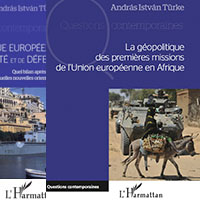
We are looking for sponsors for the English translation of these books, please contact turkeandras(at)gmail(dot)com