
You are here
Feed aggregator
Man Utd close on deal for Brighton's Baleba
Manchester United are in talks to sign Cameroon international Carlos Baleba having reignited their interest in the midfielder.
Categories: Africa, Swiss News
ÖT ÉVE KEZDŐDÖTT A SÁMÁN MŰVELET
2021. augusztus 19-én hajnalban egy különleges műveleti csoporttal, egy rohamlövész alegységgel, egészségügyi és titkosszolgálati szakemberekkel és tolmácsokkal a fedélzetén, a kecskeméti repülőbázisról útnak indult a honvédség két Airbus A319-es szállítógépe, hogy Kabulba berepülve végrehajtson egy olyan műveletet, amelyre korábban nem volt példa a Magyar Honvédség történetében.
A honvédségi A319-es mögött elmarad a kabuli nemzetközi repülőtér
Categories: Biztonságpolitika, Swiss News
UN Reiterates its 18-Year-Old Ban on Smoking
A smoke- free UN corridor. Credit: IPS
By Thalif Deen
UNITED NATIONS, Aug 19 2026 (IPS)
When smoking was common in the corridors of the UN, in the delegate’s lounge and in committee rooms during the 1970s and 90s, the office of the Secretary-General sent a memo that read: “Smoking was Discouraged” in the UN building—sounding far short of a ban.
The Russian Ambassador Sergey Lavrov (1994-2004), currently the country’s Foreign Minister, left a Security Council meeting and pulled out a cigarette in the presence of half a dozen reporters waiting for him outside the chamber.
As he approached the reporters, one of them told him that the Secretary-General had banned smoking in the building. And Lavrov shot back: “This building does not belong to the Secretary-General. It belongs to member states: he said, as he lit his cigarette.
And Lavrov was dead on target.
The ban on smoking became effective only after the 193-member General Assembly adopted a resolution back in 2008—18 years ago.
Under Resolution 63/8 and Secretariat Information Circular ST/IC/2016/10, the United Nations enforced a complete ban on indoor smoking and the sale of tobacco products across all UN Headquarters premises. Smoking and vaping were restricted exclusively to designated, signposted open-air areas.
- • The resolution 63/8, adopted on November 3, 2008, mandated a total ban on indoor smoking and tobacco sales at UN Headquarters in New York, while recommending similar restrictions across all regional and country offices system-wide.
• Information Circular ST/IC/2016/10: This administrative issuance updated and superseded prior circulars (such as ST/IC/2009/29), reiterating strict compliance guidelines for staff, delegates, and visitors regarding the smoke-free workplace mandate.
But apparently there were violations of the ban.
A new circular released last week by the UN’s Media and Liaison Unit (MALU) has reiterated the ban on smoking– and well ahead of the arrival of thousands of delegates who will be at the UN for the General Assembly sessions in mid-September.
“Please remember: terraces, verandas, entrances and other outdoor spaces are not automatically smoking areas. Smoking and vaping should take place only where the area is specifically designated and clearly marked”.
The World Health Organization (WHO), says the circular, states that there is no safe level of exposure to second-hand tobacco smoke and that fully smoke-free environments provide the most effective protection.
Even brief exposure can affect cardiovascular and respiratory health, particularly for people with asthma, cardiovascular disease, other respiratory conditions, or heightened sensitivity to smoke.
Second-hand smoke can drift beyond the person smoking and affect colleagues, delegates, visitors and service personnel who have not chosen to be exposed. Vape aerosol may also contain nicotine, ultrafine particles and other potentially harmful substances; for this reason, vaping is subject to the same UNHQ restrictions.
According to WHO, a UN agency based in Geneva, tobacco damages nearly every organ in the body, causing cancer, heart disease, stroke, lung disease, reduced fertility, weakened immunity and premature death.
- • Tobacco kills more than 7 million people each year, including over 1.6 million non-smokers who are exposed to second-hand smoke.
• All forms of tobacco use are harmful, and there is no safe level of exposure.
• Around 80% of the world’s 1.2 billion tobacco users live in low- and middle-income countries
• Nicotine is highly addictive and harmful, particularly for children, adolescents and young adults whose brains are still developing.
The tobacco epidemic, says WHO, is one of the biggest public health threats the world has ever faced, responsible for over 7 million deaths annually as well as disability and long-term suffering from tobacco-related diseases.
Tobacco use is a major risk factor for cardiovascular and respiratory diseases, over 20 different types or subtypes of cancer, and many other debilitating health conditions.
All forms of tobacco use are harmful, and there is no safe level of exposure to tobacco. Cigarette smoking is the most common form of tobacco use worldwide. Other tobacco products include waterpipe tobacco, cigars, cigarillos, heated tobacco, roll-your-own tobacco, pipe tobacco, bidis and kreteks, and smokeless tobacco products.
Nicotine is highly addictive and harmful, particularly for children, adolescents and young adults whose brains are still developing. Nicotine exposure during adolescence can affect brain development, including impacts on attention and learning.
Early nicotine use can increase the likelihood of long-term dependence and future use of other nicotine and tobacco products. Nicotine use also increases cardiovascular risk, the WHO warned.
“Around 80% of the 1.2 billion tobacco users worldwide live in low- and middle-income countries (2), where the burden of tobacco-related illness and death is heaviest. Tobacco use contributes to poverty by diverting household spending from basic needs such as food and shelter to tobacco. This spending behaviour is difficult to curb because tobacco is very addictive”.
The economic costs of tobacco use are substantial and include significant health care costs for treating the diseases caused by tobacco use, as well as the lost human capital that results from tobacco-attributable morbidity and mortality.
IPS UN Bureau Report
Follow @IPSNewsUNBureau
!function(d,s,id){var js,fjs=d.getElementsByTagName(s)[0],p=/^http:/.test(d.location)?'http':'https';if(!d.getElementById(id)){js=d.createElement(s);js.id=id;js.src=p+'://platform.twitter.com/widgets.js';fjs.parentNode.insertBefore(js,fjs);}}(document, 'script', 'twitter-wjs');
Categories: Africa, Határon túli magyar portálok összesített hírei
L'Etoile d'Angélique Kidjo gravée sur Hollywood Walk of Fame
La star de la musique béninoise, Angélique Kidjo a reçu son étoile sur le Hollywood Walk of Fame dans la soirée de ce mardi 18 août 2026 à Los Angeles.
Nouvelle distinction pour Angélique Kidjo. Elle a reçu ce mardi 18 août 2026, son étoile sur le Hollywood Walk of Fame. Cette distinction fait d'elle, la première artiste africaine de l'histoire à être immortalisée sur le Hollywood Walk of Fame dans la catégorie « enregistrement ».
Cette nouvelle distinction vient consacrer quatre décennies d'une carrière internationale exceptionnelle au cours de laquelle l'artiste a fait rayonner la musique africaine sur les plus grandes scènes internationales.
La cérémonie officielle de remise a eu lieu en présence d'une délégation du gouvernement béninois représenté par le ministre de la Culture, des Arts, et du Patrimoine, Yassine Latoundji, et l'ambassadeur du Bénin aux Etats-Unis, Agniola Ahouanmenou.
Quelques images de la cérémonie officielle de remise d'étoile


Categories: Afrique, Union européenne
Le pays à la tête du mouvement réclamant des réparations pour l'esclavage
Le Ghana est devenu le principal porte-parole de l'Afrique pour faire savoir au monde entier que les pays occidentaux doivent verser des réparations.
Categories: Afrique, Swiss News
Le pays à la tête du mouvement réclamant des réparations pour l'esclavage
Le Ghana est devenu le principal porte-parole de l'Afrique pour faire savoir au monde entier que les pays occidentaux doivent verser des réparations.
Categories: Afrique, European Union
GAZA: ‘There Are No Standards to Tell You What to Do in Conditions like Gaza’
By CIVICUS
Aug 19 2026 (IPS)
CIVICUS discusses the state of civic and humanitarian action in Gaza with Ibrahim Arandas, a Palestinian activist and project manager at SPARK Gaza, a civil society organisation that provides humanitarian and psychosocial support.
Ibrahim Arandas
Israel’s onslaught on Gaza, which began in October 2023, forced most people from their homes and left almost everyone reliant on humanitarian aid. A much-breached ceasefire that began on 10 October 2025 allowed more aid to enter, but conditions remain dire. Throughout the war, local civil society organisations, grassroots volunteers and international partners have worked to try to provide humanitarian support.What’s life like for people in Gaza now, and what needs are most urgent?
Today, life is defined by scarcity and uncertainty. Israel has turned Gaza into something far worse than a concentration camp. It has engineered a system designed not just to confine and suffocate an entire population, but to erode people’s lives day after day, generation by generation. This is not a simple military operation but deliberate, prolonged destruction, calibrated to keep people alive, but just enough to avoid global outrage while denying every basic condition of human dignity.
The psychological toll is enormous. Aid agencies report that anxiety and severe helplessness have become the norm rather than the exception, particularly among families who have lost their homes, routines and support networks. Our most urgent needs are clean water, healthcare, shelter and mental health support.
What has changed and what obstacles to humanitarian work remain?
When the ceasefire was announced, we thought it meant the end of the war and the suffering. Before the war, two million of us lived across Gaza. We have lost friends and family, and now live in just 36 per cent of the territory.
The hardest issue we face is reaching vulnerable people with the aid they need, including basic supplies, healthcare and mental health support. Patients need healthcare, but our teams cannot reach them. Israel makes movement between areas extremely hard, particularly during periods of escalation, when near-constant closures and limited crossings determine who enters and leaves Gaza.
This is a high-risk, complex environment and we have to stay adaptive to reach the sites and people who depend on us. Every movement implies high risk, but there’s no risk register.
How has your organisation’s work evolved?
We have grown. Gaza has lived through many wars, but we’d never faced conditions like these. In Gaza, you can’t plan a month or two ahead. Things collapse, and the plan has to be redesigned every day.
In our European Union-funded project, we had to constantly redesign how we deliver programming, shifting activities and timelines and sometimes moving sessions online, because access to project sites and young people can change from week to week depending on movement restrictions and security conditions.
We work under constant uncertainty, with internet and network cut-offs overnight and contact with front-line workers lost within an hour. From this, we learned and adapted existing global standards to our context. I developed and published a framework I call ‘adaptive conflict project management’, useful for working in conflict-affected areas like Gaza. It sets out how to build a risk plan, delegate to frontline workers rather than only leaders, divide projects across areas because movement is restricted and keep every worker feeling safe and supported.
How has civil society sustained the response and what support does it need?
Coordination has been essential. One of our few sources of resilience is local organising, combined with international partners who bring resources and access to global platforms like CIVICUS. The combination of local knowledge and international backing has kept civic and humanitarian work alive under the most difficult conditions.
As a frontline worker, what I believe is most needed is sustained access. It’s not just about the volume of aid, but about the ability to plan around consistent access to people and areas. We also need investment in local capacity, not only emergency relief, so Gaza’s civil society can lead the recovery rather than only respond to the crisis. We want to lead this recovery and think beyond emergency relief.
CIVICUS interviews a wide range of civil society activists, experts and leaders to gather diverse perspectives on civil society action and current issues for publication on its CIVICUS Lens platform. The views expressed in interviews are the interviewees’ and do not necessarily reflect those of CIVICUS. Publication does not imply endorsement of interviewees or the organisations they represent.
GET IN TOUCH
Website
Facebook
Instagram
Ibrahim Arandas/Facebook
Ibrahim Arandas/Instagram
Ibrahim Arandas/LinkedIn
SEE ALSO
Gaza: ceasefire an illusion CIVICUS Lens | Article 15.Mar.2026
Gaza: ‘Humanitarian aid matters for survival, but its dynamics diminish Palestinian agency’ CIVICUS Lens | Interview with Ali Abdel-Wahab 16.Feb.2026
‘Life in Gaza’s shelters is marked by deprivation – but also by the endurance of human dignity’ CIVICUS Lens | Anonymous interview 12.Aug.2025
Follow @IPSNewsUNBureau
!function(d,s,id){var js,fjs=d.getElementsByTagName(s)[0],p=/^http:/.test(d.location)?'http':'https';if(!d.getElementById(id)){js=d.createElement(s);js.id=id;js.src=p+'://platform.twitter.com/widgets.js';fjs.parentNode.insertBefore(js,fjs);}}(document, 'script', 'twitter-wjs');
Categories: Africa, European Union
Höhere CO2-Steuern können Produktivität der grünen Wirtschaft stärken
Modellanalyse zeigt: Höhere CO2-Preise lenken Arbeit in klimafreundliche Bereiche, wo Expertise für grüne Transformation entsteht – Einnahmen sollten genutzt werden, um Einkommensteuern zu senken und damit Arbeitsanreize zu erhöhen – So ließen sich Klimaziele erreichen und zugleich die künftige ...
Kraftakt gegen Tschechen: Wawrinka beendet Niederlagenserie – aber bangt um US Open
Erfolgsmeldung von Stan Wawrinka. Er gewinnt erstmals seit Mitte Mai wieder eine Partie.
Categories: Határon túli magyar portálok összesített hírei, Swiss News
Klitschko-Ehefrau: Natalia Yegorova trauert um Hayden Panettiere (†36)
Der plötzliche Tod von Hayden Panettiere (36) erschüttert Natalia Yegorova (52), die Ex-Frau von Vitali Klitschko. Auf Instagram teilt sie bewegende Worte und erinnert an ihre tiefe Freundschaft mit der Schauspielerin.
Categories: Határon túli magyar portálok összesített hírei, Swiss News
Er ist dement und schuldunfähig – wird er jetzt verwahrt?: Ivan T. massakriert Ehefrau und Tochter mit über 210 Messerstichen
Sein Verteidiger spricht von einem «aussergewöhnlichen Mordfall». 2025 tötet Ivan T. (74) in Bülach Ehefrau und Tochter mit Hunderten Messerstichen. Laut Gutachten ist T. schuldunfähig – und soll verwahrt werden. Heute Mittwoch steht er vor Gericht – Blick tickert live.
Categories: Határon túli magyar portálok összesített hírei, Swiss News
Nach Zoff und Kritik: Memphis Depay verlängert Vertrag mit Corinthians
Memphis Depay bleibt in Brasilien. Der 32-jährige Holländer hat seinen Corinthians-Vertrag bis 2028 verlängert. Er verzichtet dabei auf viel Geld.
Categories: Határon túli magyar portálok összesített hírei, Swiss News
Remembering Fidel Castro, a Hero of the World’s Oppressed People
By Anis Chowdhury
SYDNEY, Aug 19 2026 (IPS)
The 13th of August marked the 100th birthday of Cuba’s revolutionary leader Fidel Alejandro Castro Ruz – in short Fidel Castro. Amidst an intensified US siege and the threat of invasion, Cubans commemorated their dear leader’s centenary birth anniversary with events that included an International Book Fair, art exhibitions, concerts and gatherings of delegates from left-wing organisations across the continent.
Anis Chowdhury
Cuba has withstood more than 6 decades of an illegal US economic blockade – i.e., not authorised by the United Nations Security Council – since its revolution in 1959. It defeated the CIA-backed military invasion (the 1961 Bay of Pigs invasion) by the Cubans who fled to the US after the Revolution. Castro survived CIA’s 638 assassination attempts.Wayne Smith, a US diplomat with a long experience in Cuba, believes Fidel Castro will be remembered because “he stood up to the United States and survived”. When Castro died in 2016, the leading US news media CBS carried an opinion piece, entitled, “How Fidel Castro stood up to the U.S., and won”.
The illegal blockade of Cuba contributes to shortages of food, medicine, fuel, and essential supplies, increasing the cost of everyday life for the Cuban people. However, when Castro welcomed Pope John Paul II in 1998 and let the pictures do the talking, the world saw Cuba surviving in spite of the US trade embargo.
Castro’s legacy
Castro’s legacy was best summarised by Ken Livingstone, former mayor of London. In 2006, during his visit to Cuba, Livingstone said, “What’s amazing here is you’ve got a country that’s suffered an illegal economic blockade by the United States for almost half a century and yet it’s been able to give its people the best standard of health care, brilliant education… to do this in the teeth of an almost economic war is a tribute to Fidel Castro”.
Thus, Cuba attained high human development measured by the United Nations Development Programme (UNDP)’s Human Development Index (HDI). In comparison with the world average of 0.746 based on 185 countries, Cuba’s HDI was 0.762 in 2023. In 1994, Cuba’s HDI reached 0.887. Underlying the above global average HDI is a high adult literacy rate of nearly 100% and a high life expectancy of approximately 78.1 years at birth.
These are the results of free health care and free education for all, considered a right. Cuba has the highest ratio of doctors to patients in the world, at 9.8 per 1,000 people (2021), which was 0.9 in 1960. Its infant mortality of 3.86 per 1,000 live births is one of the lowest in the world. At the William Soler Paediatric Hospital in Havana, more than 90% of the new-borns who needed neonatal surgery survived their procedures.
Malaria, polio, tetanus, and measles have been eradicated in Cuba due to years of investment in primary care and assiduous attention to the population’s health. Cuba’s long-standing commitment to health has led to a successful COVID-19 pandemic response. Cuba spends a larger proportion of its gross domestic product on education than any other country in the world.
Unfortunately, the recent tightening of the unilateral illegal blockade by the Trump administration is inflicting heavy costs and reversing Cuba’s unique development gains.
A true internationalist
Castro was a true internationalist leader of the proletariat and stood by freedom fighters, especially in Africa. At a rally of approximately 1 million Cubans in 1962, Fidel Castro presented the Second Declaration of Havana, a call to revolutionary action to anti-imperialist and working-class fighters internationally. Castro often reiterated, the Cuban people’s internationalist aid to liberation struggles was “paying our debt to humanity.”
Castro sent his first batch of military support to Algerian President Ben Bellah in 1963. Castro’s Cuba trained the revolutionaries in Angola, Guinea-Bissau, Namibia, Democratic Republic of Congo and Cape Verde and fought with them against the colonial rule. Castro branded apartheid “a creation of Western capitalism and imperialism”, and his Cuba helped bring down the system of apartheid in South Africa by providing resources and training to African National Congress (ANC) fighters.
Despite the hardship illegally imposed on it by the US, Cuba always stood by the world’s oppressed and hapless people. In 1960, Cuba joined the relief effort after the Chilean earthquake. In 1963, it sent health-care workers to assist the newly independent state of Algeria.
Castro’s Cuba has been despatching cadres of health-care professionals all over the world to combat disasters and epidemics. Cuban doctors were on the scene in Haiti during the cholera outbreak that followed the 2010 earthquake; they arrived in west Africa during the 2013–16 Ebola crisis. And when COVID-19 spread to Europe, two Cuban health professional teams landed in Italy. By the end of April, 2020, more than 1000 Cuban health-care workers were helping foreign countries respond to COVID-19.
Castro conceptualised and implemented an inclusive model of healthcare that brought doctors to the people. He extended Cuban medical aid to other countries, demonstrating the essentially internationalist and human nature of the Cuban Revolution.
Clare Wenham, assistant professor of global health policy at the London School of Economics and Political Science observed, “The international health programme is about solidarity; Cuba believes that healthy populations are the bedrock of global society and they want to support that any way they can”.
Mandela and Castro
Like many revolutionaries and freedom fighters in the Global South, Nelson Mandela was inspired by the Cuban Revolution’s triumph in 1959. Charged with the task of starting a guerrilla army in 1961, Mandela looked to the writings of Cuban Communists for guidance.
Mandela visited Cuba in 1991 to express his gratitude to Castro, calling Castro’s Revolution “a source of inspiration to all freedom-loving people”. Mandela further added, “We admire the sacrifices of the Cuban people in maintaining their independence and sovereignty in the face of a vicious, imperialist-orchestrated campaign. We, too, want to control our own destiny.”
During a public event in Havana, Mandela asked Castro to visit South Africa. Referring to Castro, Mandela asked, “Who trained our people, who gave us resources, who helped so many of our soldiers, our doctors? … “You have not come to our country – when are you coming?”
Castro attended Mandela’s presidential inauguration in May 1994. Barbara Masekela, South Africa’s former ambassador to the US and who accompanied Mandela to Cuba in 1991, said Mandela’s friendship with Castro had been “born in the trenches of the freedom struggle”.
A true friend of the oppressed
Norberto Fuentes, a writer once close to Castro and now living in exile, believes the Cuban leader’s relevance is as “the spokesman for silence, for the man who has no army, no Congress, no face. The man who has nothing”.
Thousands of Cuban internationalists contributed to decisive battles for independence of African countries, while fostering cooperation in the fields of health, education, and training.
Despite hardships due to the US’s illegal blockade, Castro’s Cuba has remained a shining example of internationalism and holds a special place in the history of people’s struggles against imperialism.
Anis Chowdhury, Emeritus Professor, Western Sydney University (Australia). He held senior UN positions in Bangkok and New York and served as Special Assistant to the Chief Advisor for Finance (with the status and rank of State Minister) in the Professor Yunus-led Interim Government. E-mail: anis.z.chowdhury@gmail.com; a.chowdhury@westernsydney.edu.au
IPS UN Bureau
Follow @IPSNewsUNBureau
!function(d,s,id){var js,fjs=d.getElementsByTagName(s)[0],p=/^http:/.test(d.location)?'http':'https';if(!d.getElementById(id)){js=d.createElement(s);js.id=id;js.src=p+'://platform.twitter.com/widgets.js';fjs.parentNode.insertBefore(js,fjs);}}(document, 'script', 'twitter-wjs');
Categories: Africa, European Union
«Versuchten, ihn loszuwerden»: Hayden Panettieres (†36) Mutter macht Ex schwere Vorwürfe
Nach dem plötzlichen Tod von US-Schauspielerin Hayden Panettiere (†36) bricht ihre Mutter Lesley Vogel das Schweigen. Sie erhebt schwere Vorwürfe gegen den On-Off-Freund ihrer Tochter, Brian Hickerson, der bei ihrem Tod anwesend war.
Categories: Határon túli magyar portálok összesített hírei, Swiss News
Vincenz-Prozess Tag 8: Staatsanwaltschaft hat ein letztes Wort
Es ist der Wirtschaftsprozess des Jahrzehnts. Pierin Vincenz und Beat Stocker sollen dank versteckter Deals abkassiert haben. Letzten Montag hat die Verhandlung am Obergericht begonnen. Die zweite Prozesswoche geht bereits dem Ende zu. Blick berichtet livel.
Categories: Határon túli magyar portálok összesített hírei, Swiss News
Grosser Abbau am Hauptsitz: Winterthurer Industriekonzern streicht insgesamt 220 Jobs
Das Winterthurer Industrieunternehmen Burckhardt Compression will am Standort Winterthur bis zu rund 150 Stellen abbauen. Weitere 70 Stellen sollen an internationalen Standorten gestrichen werden. Grund dafür: Die kommenden Quartale werden voraussichtlich schwach.
Categories: Határon túli magyar portálok összesített hírei, Swiss News
Nach Badeunfall wieder bei Bewusstsein: Entwarnung! Zustand von Serie-A-Stürmer stabil
Gute Nachrichten aus Italien: Der 20-jährige Yael Trepy befindet sich nach seinem Badeunfall in Porto Cervo auf dem Weg der Besserung.
Categories: Határon túli magyar portálok összesített hírei, Swiss News
Scharfe Kritik am Fifa-Boss: Premier-League-Chef fordert Infantinos Rücktritt
Der Premier-League-Chef Richard Masters fordert das Ende von Gianni Infantino. Grund: Ein geplanter Verkauf von WM-Anteilen, der laut Masters den Fussball gefährdet.
Categories: Afrique, Swiss News
Voss-Tecklenburg kehrt zurück: «Toll, dass dem FCZ ein solcher Transfer gelungen ist»
Mit Martina Voss-Tecklenburg kehrt ein grosser Name in die Schweiz zurück. Wegbegleiterinnen erklären, was die einstige Nati-Trainerin ausmacht und wo sie dem FCZ helfen kann. Und ein deutscher Journalist spricht über ihre wüste Trennung vom DFB.
Categories: Afrique, Swiss News
Schock-Moment in Spanien: Fussballer werden von Erdbeben erschüttert
Die Fussballer vom granadinischen Vorstadt-Klub Arenas CD erleben während ihres Trainings eine echte Überraschung. Plötzlich bebt die Erde.
Categories: Afrique, Swiss News
Pages
the old site is here


© 2012-2015 Europa Varietas Foundation © 2015-2020 Europa Varietas Association
www.europavarietas.org | info(@)europavarietas(dot)org | Switzerland
This is a GDPR ready site


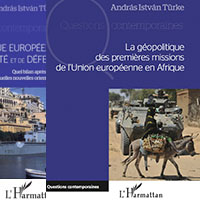
We are looking for sponsors for the English translation of these books, please contact turkeandras(at)gmail(dot)com