
You are here
Afrique
Recrutement massif au sein des APC : Priorité accordée à cette catégorie de candidats
À l’approche de la prochaine rentrée scolaire, les communes à travers l’ensemble du territoire national s’apprêtent à lancer d’importantes opérations de recrutement externe pour l’année […]
L’article Recrutement massif au sein des APC : Priorité accordée à cette catégorie de candidats est apparu en premier sur .
Categories: Afrique, European Union
Nein zu 19 neuen Wohnungen: Stadt stoppt Abriss von 1920er-Villen
Die Stadt Lausanne hat die Baugenehmigung für ein Gebäude mit 19 Wohnungen abgelehnt. Stattdessen bleiben zwei alte Villen stehen. Das steckt dahinter.
Categories: Afrique, Swiss News
«Zur richtigen Zeit am richtigen Ort»: Yannik Zamboni über sein Treffen mit dem Dalai Lama
Er war zur richtigen Zeit am richtigen Ort und dieser Zufall verschaffte Designer Yannik Zamboni das Glück und die Ehre, den Dalai Lama zu treffen. Mit Blick spricht der Basler über diese besondere Begegnung.
Categories: Afrique, Swiss News
Mega-Bauprojekt gegen Sihl-Flut: Zürich baut Betonkanal im See – für 175 Millionen Franken
Nach der Jahrhundert-Dürre wäre nur etwas schlimmer: Jahrhundert-Regen. Extremes Hochwasser würde in Zürich ganze Quartiere überschwemmen. Der Entlastungsstollen vom Sihltal zum Zürichsee soll eine Katastrophe verhindern.
Categories: Afrique, Swiss News
Jennie Leu zur Siegerin gekürt: Dieser Mops ist 4000 Franken wert
Mops-Dame Jennie Leu hat eine Jury in Kalifornien überzeugt. Ihre Besitzerin gewinnt ein stolzes Preisgeld und die Hündin eine Auszeichnung. Wofür? Das erfährst du im Video.
Categories: Afrique, Swiss News
Auch ManCity hatte Interesse: Chelsea-Star vor Wechsel in die Wüste
Pedro Neto könnte Chelsea verlassen: Der 26-Jährige soll vor einem Wechsel zu Al-Hilal in Saudi-Arabien stehen. Laut Berichten ist Chelsea bereit, den Portugiesen für 60 Millionen Euro ziehen zu lassen.
Categories: Afrique, Swiss News
Les 10 routes les plus dangereuses au monde en 2026
Attachez votre ceinture et préparez-vous à un voyage vertigineux à la découverte de certaines des routes les plus dangereuses au monde.
Categories: Afrique, Pályázatok
Les 10 routes les plus dangereuses au monde en 2026
Attachez votre ceinture et préparez-vous à un voyage vertigineux à la découverte de certaines des routes les plus dangereuses au monde.
Categories: Afrique, Swiss News
Mehr Platz für Velos, Recht auf Ladestation beim E-Auto – der Widerstand wächst: «Röstis Departement übertrifft die schlimmsten Befürchtungen»
Mehr Platz für Lastenvelos, mehr Veloparkplätze und E-Auto-Ladestationen in Mehrfamilienhäusern: Der Bund will strengere Regeln bei Neubauten. Doch Immobilienbesitzer wehren sich heftig – sie fürchten steigende Kosten und Eingriffe in ihre Rechte.
Categories: Afrique, Swiss News
Arnaque sur Instagram et fausse annonce : la wilaya d’Alger met en garde les citoyens
La wilaya d’Alger a publié, samedi 15 août 2026, un communiqué pour alerter les citoyens au sujet d’une annonce diffusée sur les réseaux sociaux par […]
L’article Arnaque sur Instagram et fausse annonce : la wilaya d’Alger met en garde les citoyens est apparu en premier sur .
Categories: Afrique, Határon túli magyar portálok összesített hírei
Lutte contre l’obésité morbide : options médicales pour retrouver la santé
Monter un escalier en étant essoufflé, ressentir une douleur au genou dès les premiers pas, redouter le regard des autres dans une salle d’attente : […]
L’article Lutte contre l’obésité morbide : options médicales pour retrouver la santé est apparu en premier sur .
Categories: Afrique, Határon túli magyar portálok összesített hírei
Face aux pannes et aux retards d’intervention : Ce secteur névralgique passe à la gestion à distance
Le ministre des Ressources en eau, Lounès Bouzegza, a donné ce vendredi le coup d’envoi officiel du système de télégestion du service de l’eau potable. […]
L’article Face aux pannes et aux retards d’intervention : Ce secteur névralgique passe à la gestion à distance est apparu en premier sur .
Categories: Afrique, Határon túli magyar portálok összesített hírei
Algérie-Italie : un partenariat renforcé autour du phosphate integré
L’ambassadrice d’Italie en Algérie, Alessandra Schiavo, a salué l’ampleur du projet de phosphate intégré, qu’elle qualifie de « projet industriel de grande portée ». Selon […]
L’article Algérie-Italie : un partenariat renforcé autour du phosphate integré est apparu en premier sur .
Categories: Afrique, Határon túli magyar portálok összesített hírei
Qui sont les sœurs Chawinga qui mènent l'équipe du Malawi dans sa quête de gloire à la CAN féminine?
Les sœurs Tabitha et Temwa Chawinga sont incontestablement les stars du parcours inattendu du Malawi jusqu'en finale de la Coupe d'Afrique des Nations féminine 2026.
Categories: Afrique, European Union
Qui sont les sœurs Chawinga qui mènent l'équipe du Malawi dans sa quête de gloire à la CAN féminine?
Les sœurs Tabitha et Temwa Chawinga sont incontestablement les stars du parcours inattendu du Malawi jusqu'en finale de la Coupe d'Afrique des Nations féminine 2026.
Categories: Afrique, Swiss News
Appel à candidatures pour l'édition 2026 du Prix Abdoulaye FADIGA pour la promotion de la recherche économique
La Banque Centrale des Etats de l'Afrique de l'Ouest (BCEAO) lance un appel à candidatures pour l'édition 2026 du Prix Abdoulaye FADIGA (PAF) pour la promotion de la recherche économique au sein de l'Union Economique et Monétaire Ouest Africaine (UEMOA). Lancé en mars 2008, ce Prix rend hommage à Monsieur Abdoulaye FADIGA, premier Gouverneur africain de la BCEAO (1975-1988).
1. Objectifs du Prix
Le PAF vise, entre autres, à : (i) encourager l'excellence en matière de recherche en sciences économiques, (ii) promouvoir des approches théoriques et empiriques permettant de relever les défis auxquels les économies de l'UEMOA sont confrontées et (iii) stimuler l'innovation chez les jeunes chercheurs et les économistes professionnels ressortissants de l'UEMOA.
2. Thématiques pour l'édition 2026
Les articles devront porter sur l'une des thématiques ci-après :
- Questions macroéconomiques relatives aux politiques monétaire, financière et budgétaire, à l'endettement public, à la coordination des politiques monétaire et budgétaires ;
- Stabilité financière et politiques micro et macro-prudentielles dans l'UMOA ;
- Financement des économies : financement du secteur privé, finance verte, inclusive et durable, impact des investissements directs étrangers ;
- Intégration économique régionale, dont les programmes de coopération monétaire, la mise en œuvre de l'Accord sur la Zone de Libre-Echange Continentale Africaine ;
- Défis de la montée du protectionnisme, de la fragmentation économique et des guerres commerciales sur les économies de l'Union et leurs implications de politique économique ;
- Changement climatique et risques associés : impacts économiques et financiers pour les pays de l'UEMOA, verdissement de la politique monétaire ;
- Inclusion et innovations financières, digitalisation : opportunités et risques liés aux crypto-monnaies, mobile money, monnaies digitales de banques centrales, Fintechs ;
- Impacts des chocs exogènes : volatilité des cours des matières premières, pandémie de la Covid-19, guerre en Ukraine, insécurité et terrorisme ;
Toute autre thématique d'intérêt scientifique ou politique pour la BCEAO et les économies de l'UEMOA.
3. Conditions d'éligibilité
Sont éligibles au Prix Abdoulaye FADIGA, tout chercheur ou toute équipe de chercheurs en sciences économiques :
- ressortissants du Bénin, du Burkina Faso, de la Côte d'Ivoire, de la Guinée-Bissau, du Mali, du Niger, du Sénégal ou du Togo, quel que soit leur pays de résidence ;
- âgés de quarante-cinq (45) ans au plus au 31 décembre 2026 ;
- justifiant d'un diplôme d'au moins Bac+5 en sciences économiques ou dans des disciplines connexes, notamment la statistique appliquée à l'économie, l'économétrie et la finance, au cours de l'année d'édition du Prix.
4. Récompenses et autres avantages
Le lauréat du PAF bénéficiera des récompenses et avantages ci-après :
- une enveloppe financière de dix (10) millions de francs CFA ;
- un séjour de recherche rémunéré à la BCEAO pour une durée d'un (1) an ;
- la publication de l'étude primée dans la Revue Economique et Monétaire (REM).
En outre, un Prix d'encouragement d'une valeur de cinq (5) millions de francs CFA sera attribué à l'auteur du deuxième meilleur article, qui sera également publié dans la REM. Celui-ci bénéficie également d'un séjour de recherche à la BCEAO dans les mêmes conditions que le lauréat du Prix.
5. Dossier de candidature
Le dossier, à transmettre via la plateforme informatique dédiée à cet effet sur le site internet de la BCEAO ou du COFEB ou l'adresse mail : prixabdoulayefadiga@bceao.int, comprend :
la fiche de candidature dûment remplie et signée ;
la version complète et non révisable de l'étude, ne comportant aucun signe distinctif ;
le(s) curriculum(s) vitae à jour et copie(s) du(des) passeport(s) ou carte(s) nationale(s) d'identité en cours de validité du(des) candidat(s) ;
la fiche d'engagement sur l'honneur contre le plagiat dûment signée par le(s) candidat(s) ;
les bases de données et les codes/programmes utilisés dans l'analyse économétrique.
6. Langues de rédaction
Les études à soumettre au PAF peuvent être rédigées en anglais, en français ou en portugais. Un résumé de cinq cents (500) mots maximum est exigé dans la langue de rédaction de l'étude. En outre, lorsque l'étude est rédigée en français ou en portugais, elle doit comporter une version du résumé en anglais.
7. Critères d'évaluation des articles
Un Comité de Lecture indépendant, composé de Professeurs de renommée internationale en sciences économiques, évaluera les articles soumis suivant les normes scientifiques, en mettant un accent particulier sur les critères ci-après :
Originalité de la recherche ;
Rigueur méthodologique ;
Pertinence des résultats et des recommandations pour les économies ouest-africaines.
8. Calendrier
Date de lancement : 31 août 2025
Date limite de soumission : 31 août 2026
9. Informations et contact
Le règlement du Prix, la fiche de candidature et la fiche d'engagement sur l'honneur contre le plagiat sont téléchargeables sur les sites Internet suivants : https://www.bceao.int/fr/content/prix-abdoulaye-fadiga ou https://cofeb.bceao.int/abdoulaye-fadiga
Ces documents peuvent également être obtenus auprès des représentations nationales de la BCEAO. Pour toutes informations complémentaires, écrire à : courrier.zdaji@bceao.int
Toutes les formalités liées à la candidature à ce Prix sont gratuites.
Categories: Afrique, Swiss News
La course à la succession de Guterres : l'ONU aura-t-elle une femme à la tête du Secrétariat général ?
Sept candidats originaires d'Amérique du Sud et d'Afrique se sont lancés dans la course pour l'un des postes diplomatiques les plus importants au monde.
Categories: Afrique, Swiss News
La course à la succession de Guterres : l'ONU aura-t-elle une femme à la tête du Secrétariat général ?
Sept candidats originaires d'Amérique du Sud et d'Afrique se sont lancés dans la course pour l'un des postes diplomatiques les plus importants au monde.
Categories: Afrique, Swiss News
La Béninoise Saara Houansou sacrée The Voice 2026
La Béninoise Saara Houansou a remporté, vendredi 14 août 2026, la quatrième saison de The Voice Afrique francophone.
La chanteuse béninoise Saara Houansou a été désignée grande gagnante de la quatrième édition de The Voice Afrique francophone, à l'issue de la finale disputée vendredi 14 août 2026 sur CANAL+.
La jeune artiste, membre de l'équipe de Josey, était opposée au Congolais Original Ekwa, au Burundais Dreamer et au Malgache Val. C'est finalement le vote du public qui a fait pencher la balance en sa faveur.
Tout au long de la compétition, Saara Houansou a franchi les différentes étapes de l'émission, des auditions à l'aveugle aux Battles, puis aux épreuves des KO.
Au moment de remettre le trophée à sa candidate, Josey a salué son parcours et son potentiel. « Ce soir, le Bénin est fier de toi. Va et ne t'arrête pas », lui a lancé la coach.
Très émue après l'annonce de sa victoire, Saara Houansou a appelé les jeunes artistes à croire en leurs ambitions. Elle les a notamment invités à « oser » malgré la peur et à saisir les occasions qui se présentent.
La nouvelle lauréate a également adressé ses remerciements au Bénin et au public africain pour le soutien reçu pendant la compétition.
Une ouverture
En plus du trophée, Saara Houansou bénéficiera d'un accompagnement susceptible de donner un nouvel élan à sa carrière.

Son prix comprend notamment l'enregistrement d'un EP avec Universal Music Group, ainsi que la production d'un single et de son clip.
Grâce à ce trophée de Saara Houansou, le Bénin monte pour la première fois au sommet du podium de The Voice Afrique francophone.
Lancée le 12 juin 2026 sur Canal+ Magic, cette quatrième saison a réuni des candidats issus de 16 pays africains. La compétition, organisée en Côte d'Ivoire et présentée par Jean-Michel Onnin, a opposé les talents au fil des différentes étapes jusqu'à la finale.
M. M.
Categories: Afrique
Voici les numéros gagnants du DIGITAL 00H
DIGITAL 00H : Avez-vous tenté votre chance ?
Le tirage DIGITAL 00H N°227 a livré son verdict !
Samedi 15 août 2026
Avez-vous joué ?
Avez-vous misé sur vos numéros porte-bonheur ?
RÉSULTAT : 67 • 89 • 47 • 87 • 18
Félicitations aux heureux gagnants !
Pas encore cette fois ? Gardez le sourire
Rendez-vous à 00H pour le prochain tirage.
Jouez dans nos points de vente ou : Tapez *590# ou rendez-vous sur lnbloto.bj
Jouez avec modération et responsabilité. Le jeu doit rester un plaisir.
Categories: Afrique
Pages
the old site is here


© 2012-2015 Europa Varietas Foundation © 2015-2020 Europa Varietas Association
www.europavarietas.org | info(@)europavarietas(dot)org | Switzerland
This is a GDPR ready site


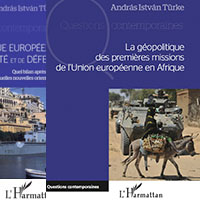
We are looking for sponsors for the English translation of these books, please contact turkeandras(at)gmail(dot)com