
You are here
Africa
Wild dogs record 2,500-mile trek across Zambia in search of a mate
Scientists say the record-breaking journey by three brothers offers hope wildlife can survive growing pressures.
Categories: Africa, Europäische Union
Zambians warned not to eat dead wildlife after anthrax kills dozens of animals
At least 12 people are being treated for anthrax after eating infected meat from wildlife carcasses.
Categories: Africa, Swiss News
Zambians warned not to eat dead wildlife after anthrax kills dozens of animals
At least 12 people are being treated for anthrax after eating infected meat from wildlife carcasses.
Categories: Africa, European Union
Reminiscent of the nuclear arms race | El Periódico de Catalunya - Spain
Categories: Africa, European Union
5 femmes exceptionnelles qui ont changé le monde grâce à la technologie
Malgré les nombreuses avancées impressionnantes réalisées, les femmes ne sont toujours pas suffisamment représentées dans ces domaines.
Les numéros gagnants du DIGITAL 08H
DIGITAL 08H : Avez-vous tenté votre chance ?
Le tirage DIGITAL 08H N°175 a livré son verdict !
Lundi 14 Septembre 2026
Avez-vous joué ?
Avez-vous misé sur vos numéros porte-bonheur ?
RÉSULTAT : 44 • 02 • 32 • 24 • 11
Félicitations aux heureux gagnants !
Pas encore cette fois ? Gardez le sourire.
Rendez-vous à 11H pour le prochain tirage.
Jouez dans les points de vente ou : Tapez *590# ou rendez-vous sur lnbloto.bj
Jouez avec modération et responsabilité. Le jeu doit rester un plaisir.
Global Survey Finds Deep Crisis of Trust as Majority Say Economic System Favours the Rich
A report Rebuild Trust: Rigged Economies, Fractured Societies and the Case for Change found that people everywhere believed the system was rigged. Credit: Earth4All
By Umar Manzoor Shah
SRINAGAR, India, Sep 14 2026 (IPS)
An international survey released by Earth4All has found a growing crisis of trust in governments, widespread anger over inequality, and strong public support for major economic reforms, suggesting that many people across the world believe current political and economic systems are failing to serve ordinary citizens.
The report, Rebuild Trust: Rigged Economies, Fractured Societies and the Case for Change, surveyed people in 17 countries representing 58 percent of global GDP, 38 percent of the world’s population, and 37 percent of global carbon emissions. Its findings paint a picture of societies that feel increasingly divided, economically insecure, and disconnected from political institutions.
As per the report, nearly two-thirds of respondents said they believe their country’s economic system is “rigged” to benefit the rich and powerful. Seven in ten said there is too much economic inequality in their country, while 69 percent called for major changes to economic systems to improve life for most people.
“The survey results show a mismatch between public support for economic change and what mainstream political parties are willing to offer,” the report’s authors, Owen Gaffney and Kate Pickett, write. They argue that the findings reveal an opportunity for governments to build new social contracts based on fairness, economic security, and long-term wellbeing.
The survey comes at a time when many countries are grappling with rising living costs, political polarisation, climate pressures, and growing public frustration with institutions.
One of the report’s most striking conclusions is that many people feel their societies are becoming more fractured.
Across the 17 countries surveyed, 67 percent said their country is more divided today than it was a decade ago. More than seven in ten respondents reported serious tensions between supporters of different political parties. Nearly two-thirds saw conflict between rich and poor, while similar numbers perceived tensions between immigrant and native-born populations.
The authors argue that these divisions are linked not only to economic conditions but also to a broader erosion of trust.
“Societies feel themselves coming apart. There is a trust deficit at the heart of societies,” reads the report.
Only 31 percent of respondents said they trust their governments to make decisions that will benefit the majority of people 20 or 30 years into the future. This was one of the lowest-rated measures in the survey.
The report also highlights a less visible issue. Many people feel they are not treated with respect and dignity.
Across all surveyed countries, only 41 percent agreed that people like them are treated with respect and dignity. The authors note that feelings of disrespect and humiliation can fuel political alienation and social resentment.
“A society in which one in four people feel they do not receive respect contains significant combustible material,” the report states. “Many people feel unseen, believe the system is rigged and do not experience their society as a collective enterprise.”
Asian countries included in the survey showed significant differences in public attitudes.
Indonesia emerged as one of the strongest supporters of economic reform. Nearly three-quarters of Indonesians said there is too much inequality in their country, while 74 percent believed the system benefits the wealthy. A remarkable 78 percent supported major economic changes, the highest level among all countries surveyed.
Indonesians also showed strong backing for climate action. Sixty-eight per cent said governments should take strong action against climate change even if it results in higher prices.
Yet Indonesia appeared less polarised than many Western countries. Only 53 percent believed the country is more divided than it was ten years ago, significantly below the global average.
Japan presented a different picture.
Trust in government was among the lowest recorded in the survey. Only 19 percent of Japanese respondents said they trusted their government to make long-term decisions benefiting the majority of citizens. Just one fifth felt they were treated with respect and dignity.
The findings also revealed unexpectedly strong support for authoritarian leadership in Japan. Nearly half of respondents agreed that the country would be better off with a strong leader unconstrained by parliament and elections. Meanwhile, only half said democracy was the best system of government.
India also featured prominently in the survey. According to comparative data in the report, 66 percent of Indian respondents agreed that there is too much economic inequality in the country, close to the international average. India ranked among countries where a majority still felt they were treated with respect and dignity, recording one of the highest scores in the survey on that measure.
Despite widespread frustration with governments and economic systems, the survey found continued support for democracy.
Overall, 68 percent of respondents said democracy remains the best way to govern their country. However, support was not universal. Forty percent also agreed that their country would be better off with a strong leader who does not have to worry about parliament or elections.
The authors describe this as a warning sign rather than a rejection of democracy itself.
In countries such as Brazil and Japan, support for strong leaders reached especially high levels. In Brazil, 51 percent backed the idea of a leader unconstrained by elections, while 63 percent still supported democracy. In Japan, support for strong leadership stood at 46 percent.
The United States presented a contrasting picture. Only 26 percent favoured a strong leader outside democratic constraints, while 68 percent supported democracy as the preferred form of government.
The report warns that declining trust in institutions can create openings for anti-democratic movements if governments fail to address public concerns about fairness and economic opportunity.
Climate Action Retains Public Backing
Despite growing economic anxieties, the survey found continued support for climate action.
More than half of respondents said governments should take strong action to reduce greenhouse gas emissions even if it leads to higher prices. Support was strongest in middle-income countries and weaker among lower-income households and politically conservative respondents.
The authors argue that climate policies are more likely to succeed when paired with measures that address economic inequality and social insecurity.
Public resistance to climate action often grows when people believe they are being asked to bear unfair costs while wealthier groups benefit from the existing system, the report suggests.
Kate Pickett, one of the report’s authors and a well-known researcher on inequality and social wellbeing, has long argued that unequal societies tend to experience weaker social cohesion and lower levels of trust. The findings of the new survey appear to reinforce that argument.
Economic Anxiety Remains Widespread
Beyond questions of trust and politics, the survey highlights persistent worries about basic economic security.
Across the countries surveyed, 41 percent of respondents said they were concerned about having enough money to cover their basic needs during the coming year. Economic anxiety was particularly high in countries facing inflation and financial instability.
Argentina recorded the highest levels of economic insecurity. More than two-thirds of respondents worried about covering basic needs, and 78 percent supported major economic reforms.
Even in wealthier countries, concerns about inequality remained widespread.
In the United States, 62 percent said there was too much inequality. In Sweden, often regarded as one of the world’s more equal societies, 71 percent shared the same view. Australia recorded 64 percent.
The authors argue that economic growth alone is no longer enough to reassure citizens.
Instead, people increasingly judge systems based on fairness, opportunity, and whether prosperity is shared.
The Earth4All initiative was launched by organisations including the Club of Rome, the Potsdam Institute for Climate Impact Research, the Stockholm Resilience Centre, and the Norwegian Business School. It seeks to identify pathways toward sustainable prosperity and social wellbeing.
The report’s authors say the findings should serve as a wake-up call for political leaders.
Rather than viewing public frustration as a temporary reaction to economic shocks, they argue that governments should recognize it as evidence of deeper structural problems.
The survey reveals what the authors call a “near-universal diagnosis”. Across different political systems, cultures, and income levels, large majorities share the belief that current economic arrangements favour elites while leaving ordinary citizens behind.
IPS UN Bureau Report
OFFICIEL : la figure de proue du hip-hop Suspect 95 devient le nouvel ambassadeur de la marque internationale de paris MELBET
Abidjan, [10/09/2026] — Fin des rumeurs et du suspense ! Ce dont tout Internet parlait depuis une semaine est désormais officiellement confirmé.Le géant mondial de l'iGaming MELBET est fier d'annoncer la signature d'un partenariat avec l'une des personnalités les plus influentes de l'industrie musicale africaine : le rappeur Suspect 95.
https://youtube.com/shorts/mi4kBKr4H-M?si=uEORbzekYyhN_4uG
La collaboration entre la marque internationale et Suspect 95 s'inscrit dans une logique naturelle. En 15 ans de présence sur le marché international, MELBET a développé un vaste écosystème présent dans 130 pays et réunissant plus de 800 000 utilisateurs. Plusieurs fois récompensée lors de prestigieuses cérémonies telles que SiGMA, EVENTUS et AffPapa, la marque mise sur un produit auquel des millions de personnes font confiance et s'associe à des valeurs de fiabilité et de croissance durable sur des marchés solides.
C'est précisément pour cette raison que l'entreprise choisit des partenaires capables de fixer les standards et de créer les tendances. Suspect 95, incarnation de la réussite, de l'ambition et de la confiance en soi, rejoint désormais la prestigieuse famille des ambassadeurs internationaux de MELBET. Il évolue ainsi aux côtés de la légende et champion de l'UFC Kamaru Usman et du club le plus titré d'Italie, la Juventus.
MELBET a commenté cette signature majeure en ces termes :
« Nous ne recherchions pas simplement une personnalité connue, mais un véritable leader d'opinion dont la voix compte. Suspect 95 est synonyme de réussite et de détermination. Son énergie et sa proximité avec son public correspondent parfaitement à notre philosophie. Ensemble, nous préparons de nombreuses surprises pour les joueurs ivoiriens. »
« C'est un grand honneur pour moi de rejoindre une équipe d'une telle envergure internationale », déclare Suspect 95. « MELBET, c'est le plus haut niveau mondial. Nous partageons les mêmes valeurs : la volonté d'être les premiers et l'envie d'offrir aux gens les meilleures émotions. Préparez-vous, nous avons quelque chose de grandiose en réserve pour vous ! »
Dans le cadre de ce partenariat, Suspect 95 deviendra le visage des grandes campagnes publicitaires de MELBET en Côte d'Ivoire. Les joueurs et les fans pourront profiter d'offres exclusives et de jeux-concours avec des prix à gagner. Inscris-toi sur MELBET avec le code promo suspect95 pour recevoir un bonus de 200 % jusqu'à 130 000 XOF sur ton premier dépôt !
Investment in Irrigation Systems Is Vital in Preparing for the Next Climate Shock
A delegate walking past a billboard at the Africa Food Systems Forum at Kigali Convention Centre in Rwanda's capital. Credit: Farai Shawn Matiashe/IPS
By Farai Shawn Matiashe
KIGALI, Sep 14 2026 (IPS)
When the African continent experiences erratic rains, crops fail, leaving millions of people facing hunger.
Approximately 95% of Africa’s arable land depends heavily on rainfall, which is vulnerable to climate shocks such as drought.
El Niño-induced drought expected to hit some parts of Africa, particularly southern Africa, is going to worsen the situation.
At the Africa Food Systems Forum in Kigali, Rwanda, governments and development partners are calling for more investment in irrigation systems to reduce dependence on rain-fed agriculture by farmers, including small holders who make up 80% of all farmers in sub-saharan Africa.
Building More Irrigation Systems
Only 5% of Africa’s arable land is under irrigation. Asia irrigates about 7 times more than Africa, as it holds about three-quarters of the entire world’s irrigated land.
“Some irrigation systems have been developed. The task now is to take it to scale,” said Nigeria’s Minister of Agriculture, Senator Abubakar Kyari, at a side event organised by the International Water Management Institute (IWMI). “The technology is there and the workforce is there. What we need is collective action.”
IWMI is a global research organisation addressing water challenges in developing countries, working with governments, civil society, and businesses.
When El Niño hit the southern Africa region in the 2023/2024 agriculture season, it triggered one of the driest mid-seasons in over 40 years. It devastated rain-fed maize production, leaving over 26 million people facing hunger in Botswana, Lesotho, Malawi, Namibia and Zambia.
These countries declared national drought disasters to mobilise resources from the public purse, private sector and humanitarian agencies.
In preparing for the next El Nino, Abubakar said agriculture cannot remain at the mercy of the seasons. He said Africa should sustainably manage and deploy its vast water schemes. “This is not a continent of scarcity but of strategic abundance,” he said. “Our task now is not to apportion blame but to break that cycle.”
Africa holds about 9% of the world’s renewable freshwater systems.
Abubakar proposed the adoption and operationalisation of the African Union Framework on Irrigation Development and Agricultural Water Management to enhance water control and increase farmer-led irrigation. This framework is a continental blueprint published in 2020 to boost food security, adapt to climate change, and modernise agriculture across member states.
Abubakar said there is a need to innovate financing to close the investment gap and to strengthen transboundary water appropriation. “We must move from sharing drops to sharing benefits. Establishment of enforceable cooperative frameworks. To scale up climate-smart irrigation and put farmers at the centre of irrigation development. Also to open opportunities for young people in irrigated value chains,” he said
“We must turn continental commitments into actionable delivery. We have articulated the future we want. We must translate that.”
Policy is key to enabling a working, favourable environment for increasing investment in the agriculture sector.
Speaking at the same event, Vincent Kabuti, Irrigation Secretary in the Ministry of Water, said governments should be able to put in place mechanisms for farmers to hold the government accountable.
He said large commercial irrigation systems are essential in complementing farmer-led irrigation systems.
“We have a lot of water, but it is the investment that we do not have,”
Preparing for the next El Niño
Southern Africa expects the next El Niño in the 2026/2027 agricultural season, according to scientists.
The weather phenomenon was officially declared on 11 June by the US National Oceanic and Atmospheric Administration (NOAA). NOAA confirmed that ocean temperatures in equatorial areas of the Pacific Ocean had remained more than 0.5 °C above average for several months.
El Niño occurs when trade winds in the Pacific reverse direction, causing warmer water to flow into central and eastern areas of the world’s largest ocean.
In Africa, it normally brings El contrasting weather extremes, causing severe droughts in southern Africa and heavy, flood-triggering rains across East Africa.
Drier conditions, which scientists are anticipating, are expected to threaten staple crop yields like maize in southern Africa. Reduced food security risks compounding pressure on food price inflation and acute malnutrition among children.
Abubakar said irrigation systems cushion farmers from droughts and boost food security, create jobs and boost the livelihoods of approximately 439 million Africans living in extreme poverty.
Tilahun Amede, a director of Climate Sustainable Productivity and Resilience at Alliance for a Green Revolution in Africa (AGRA), an institution focused on scaling agricultural innovations that help smallholder farmers towards increased incomes, better livelihoods, and improved food security, said countries must integrate water in every aspect of agriculture. “African governments must invest in water and irrigation systems,” he said.
“We also need to create a market for farmers to increase their incomes so that they can adopt irrigation systems.”
IPS UN Bureau Report
Related Articles
International Trade Theory Not Developmental
By Jomo Kwame Sundaram
KUALA LUMPUR, Malaysia, Sep 14 2026 (IPS)
Most free trade advocates falsely claim that comparative advantage ensures developmental gains from trade liberalisation. Mainstream trade theory does not promise that partial trade liberalisation guarantees optimal international specialisation.
Jomo Kwame Sundaram
Specialisation?Developing countries are supposedly better off after specialising in relatively simple activities contributing to global supply chains, such as primary commodity production and low-skill, labour-intensive manufacturing.
Why should developing countries specialise in producing and exporting mineral or agricultural primary commodities? After all, most economists recognise the greater gains in growth, employment, and income from dynamic modern activities, especially manufacturing.
Comparative advantage supposedly gained by trade liberalisation supposedly ensures gains from international specialisation. However, tropical agriculture has instead experienced falling relative prices rather than higher-value-added secondary and tertiary activities in the North.
As Hans Singer and Raul Prebisch showed in 1950, export prices for primary commodities have fallen much more over the long term relative to the prices of manufactures. Bilge Erten has shown these trends continuing into the early 21st century.
Evidence since the late 20th century suggests that the prices of manufactured goods produced by developing countries have fallen relative to those of more sophisticated, high-tech goods from more developed economies.
Intellectual property rents
Due to intense competition among developing countries producing ‘generic’ manufactures, developed-country firms secure higher rents from intellectual property rights (IPRs) – namely, ‘surplus’ from monopoly power so conferred – on their manufactured exports.
The latter are priced higher due to the ‘exclusive’ monopoly power protected by IPRs and ‘branding’ strengthened by transnational law with the establishment of the multilateral World Trade Organization and related law on trade-related intellectual property rights (TRIPS).
In fact, the prices of generic primary commodities and ‘unbranded’ manufactures have fallen due to more intense competition. In contrast, the prices of ‘exclusive’ products, due to monopoly IPRs and transnational corporate branding, remain higher.
However, such rents do not accrue to mass-produced generic products, whether primary commodities or manufactures made with easily accessible materials and production techniques, subject to intense market competition.
The last decade-long commodity ‘super-cycle’ price boom, which ended around 2004, generated windfall earnings and investible capital. While it undoubtedly lifted many boats for growth, if not development, it did not contradict longer-term trends.
Biased theory
The economic literature on development, trade, and monopolistic competition recognises the possibility of increasing – not just diminishing – returns to scale in manufacturing, enabling average costs to fall.
Such gains from trade are not from one-time ‘static’ improvements in resource allocation. Instead, these benefits stem from dynamic changes driven by production expansion, specialisation, and differentiation for larger markets.
Potential gains from greater external market access can be significant, but only if building on an existing industrial base, capacity and capabilities. Proactive support through appropriate industrial, investment, and technology policies can be crucial.
This pragmatic developmental approach to trade policy contradicts the neoclassical Heckscher-Ohlin ‘pure’ trade theory, the received conventional wisdom invoked by contemporary advocates of trade liberalisation.
Some Keynesian economists promoted balance-of-payments-constrained growth. Cross-border flows of goods and services are determined by the level and growth rate of economic activity, with the exchange rate determining relative prices.
This approach, implying fewer gains from trade, is rejected by trade liberalisation advocates. Developing countries’ gains from specialisation are reduced by falling relative prices, with consumers benefiting from productivity gains at the expense of producers.
If developing-country firms do not manufacture products at productivity levels comparable to those in developed countries, claims of trade gains from consumers’ ‘love of variety’ become quite irrelevant.
Agricultural trade liberalisation
The Western push for agricultural trade liberalisation sought to eliminate tariffs to ensure food security while ignoring subsidies that developed countries could afford.
Although agricultural export subsidies have been largely eliminated, OECD food producers continue to benefit from production subsidies, thereby enabling productivity and trade gains.
As many developing countries became net importers of subsidised agribusiness exports from OECD exporters, price increases due to subsidy withdrawal hurt consumers, especially in developing countries.
Comparable gains in developing-country agriculture have often been modest due to the decline in infrastructure and support services, especially after the imposition of the ‘neoliberal’ Washington Consensus by the West in the 1980s.
The increasing private foreign corporate domination of agricultural research, development, and extension has also significantly reduced net gains to developing-country smallholder farmers.
Neoliberal reforms, including structural adjustment programmes, have reduced, contracted out or privatised government and public-sector alternatives. This raised the costs of credit, marketing, and inputs, including seeds, fertilisers, herbicides, pesticides, machinery and fuel.
While trade liberalisation of manufactured imports eroded the policy space needed for investment and technology policies for development, agricultural trade liberalisation has undermined ‘food security’ in most developing countries.
Thus, many African net food-exporting nations became net food importers in the 1980s, following the neoliberal reforms imposed by structural adjustment programmes on indebted nations.
IPS UN Bureau
Related Articles
- Trade Liberalisation Never Lifted All Boats
- Trump Tariffs Creating Less Manufacturing Jobs
- Trade Liberalisation Undermines Development
- No African Development from Western Trade Policies
- Trump Undresses Rival Trade Myths
- Trump’s ‘Shock and Awe’ Tariffs
- Trade Liberalisation Kicked Away African Development Ladder
- Trade Deception Returns in Pan-Africanist Guise
- Weaponizing Free Trade Agreements
- Trade Liberalization for Development?
- Agricultural Trade Liberalization Undermined Food Security
Du jamais vu, le poulet atteint 650 DA/kg : les raisons d’une flambée sans précédent
Dans une déclaration accordée au journal El Khabar, le président de la Fédération nationale des éleveurs de volailles, Ali Benchaïba, a détaillé les facteurs ayant […]
L’article Du jamais vu, le poulet atteint 650 DA/kg : les raisons d’une flambée sans précédent est apparu en premier sur .
Boks power & All Blacks of old - what did we learn from series?
What did we learn from South Africa's Rugby's Greatest Rivalry series victory over New Zealand?
Categories: Africa, European Union
Rentrée judiciaire : ces lourds dossiers de corruption au programme
Les couloirs des palais de justice retrouvent leur agitation. Ce mercredi 16 septembre, l’ensemble des tribunaux, cours et circonscriptions judiciaires du pays relancent officiellement leurs […]
L’article Rentrée judiciaire : ces lourds dossiers de corruption au programme est apparu en premier sur .
Industrie automobile : le nouveau pari à 300 milliards de dinars de l’Algérie
L’industrie automobile en Algérie pourrait prendre un nouveau virage dans les prochaines années. Une étude stratégique consacrée à la création d’un « cluster industriel des […]
L’article Industrie automobile : le nouveau pari à 300 milliards de dinars de l’Algérie est apparu en premier sur .
Kosgei wins Great North Run but McColgan withdraws
Kenya's Brigid Kosgei wins the women's race at the Great North Run as Eilish McColgan drops out early with injury, while American Zouhair Talbi wins the men's event.
Categories: Africa, European Union
Debakel um F-35-Beschaffung: Schweiz hat schon zwei Milliarden in die USA überwiesen
Wie viele Kampfjets die Armee für die sechs Milliarden Franken bekommt, ist offen. Wann die Flieger bereit sind, ist auch unklar. Trotzdem zahlt die Schweiz alle paar Monate Hunderte Millionen an den Hersteller.
Categories: Africa, Swiss News
Caramel-Nuss-Torte: Bei diesem Rezept kann niemand widerstehen
Die Caramel-Nuss-Torte aus dem Kochbuch «Al forno» von Claudio Del Principe nennt der Autor selbst eine «dekadente Nusstorte». Und das ist keineswegs übertrieben: Auf einen buttrigen Mürbteig mit feinem Mandelaroma folgt ein herrlich cremiges Salzcaramel, dazu kommen geröstete Walnüsse, edle Grand-Cru-Schokolade und zartbitteres Kakaopulver. Eine Torte, die so verführerisch ist, dass man ihr kaum widerstehen kann.
Categories: Africa, Swiss News
Uganda's King Oyo buried amid calls for unity over his successor
A TV news presenter has been named as the traditional kingdom of Tooro's new monarch but the late king's family claim he chose an heir.
Categories: Africa
'I've turned the page' - Camara on Chelsea deal collapse
Monaco and Senegal midfielder Lamine Camara says he is moving on from his failed £47.1m move to Chelsea.
Categories: Africa, European Union
'It's like a dog set loose on us' - fear over Kenya's crackdown on foreign traders
The authorities have struggled to contain the fallout, as frightened migrants flee the country.
Categories: Africa, European Union
Pages
the old site is here


© 2012-2015 Europa Varietas Foundation © 2015-2020 Europa Varietas Association
www.europavarietas.org | info(@)europavarietas(dot)org | Switzerland
This is a GDPR ready site


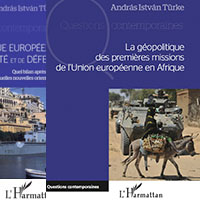
We are looking for sponsors for the English translation of these books, please contact turkeandras(at)gmail(dot)com