
You are here
Feed aggregator
Pourquoi une nouvelle vague de soldats nord-coréens pourrait combattre dans la guerre menée par la Russie en Ukraine
La Corée du Nord continuera d'envoyer ses soldats combattre dans la guerre menée par la Russie, mais seulement tant que cela restera profitable, écrit Quentin Sommerville de la BBC.
Categories: Afrique, Swiss News
The role of poultry farming in food security and dietary diversity: evidence from Ethiopia
Family poultry farming is widely promoted as a nutrition-sensitive agricultural intervention, yet rigorous causal evidence on its dietary and food security impacts remains limited. Using three rounds of panel data from the World Bank’s Living Standards Measurement Study - Integrated Surveys on Agriculture for Ethiopia (2011/12-2015/16), we follow a household fixed-effects strategy to examine the effect of poultry farming on egg consumption, dietary diversity, consumption expenditure, and food security. Despite 53% of households owning poultry in 2015/16, only 9% consumed eggs and 2% consumed chicken meat in the preceding seven days, revealing a stark production-consumption gap. Fixed-effects estimates show that poultry ownership increases the probability of egg consumption by 4 percentage points at the extensive margin, while each additional egg-laying chicken per capita raises it by 8 percentage points. Controlling for household income leaves these estimates unchanged, confirming that nutritional gains operate through direct access to own-produced eggs rather than income effects. Placebo tests find no significant association with milk or non-poultry meat consumption, further supporting this hypothesis. Poultry ownership is associated with higher household dietary diversity scores, but has no significant effect on food security, suggesting improvements in dietary quality without broader food quantity gains. Gender-disaggregated analysis shows that, despite lower ownership rates, female-headed households manage flocks more intensively and channel benefits more effectively into household food consumption. We also find a significant positive association between poultry ownership and diarrhea among children under five, underscoring the need to integrate hygiene and sanitation measures into poultry promotion programs.
Categories: Diplomacy & Defense Think Tank News, Swiss News
The role of poultry farming in food security and dietary diversity: evidence from Ethiopia
Family poultry farming is widely promoted as a nutrition-sensitive agricultural intervention, yet rigorous causal evidence on its dietary and food security impacts remains limited. Using three rounds of panel data from the World Bank’s Living Standards Measurement Study - Integrated Surveys on Agriculture for Ethiopia (2011/12-2015/16), we follow a household fixed-effects strategy to examine the effect of poultry farming on egg consumption, dietary diversity, consumption expenditure, and food security. Despite 53% of households owning poultry in 2015/16, only 9% consumed eggs and 2% consumed chicken meat in the preceding seven days, revealing a stark production-consumption gap. Fixed-effects estimates show that poultry ownership increases the probability of egg consumption by 4 percentage points at the extensive margin, while each additional egg-laying chicken per capita raises it by 8 percentage points. Controlling for household income leaves these estimates unchanged, confirming that nutritional gains operate through direct access to own-produced eggs rather than income effects. Placebo tests find no significant association with milk or non-poultry meat consumption, further supporting this hypothesis. Poultry ownership is associated with higher household dietary diversity scores, but has no significant effect on food security, suggesting improvements in dietary quality without broader food quantity gains. Gender-disaggregated analysis shows that, despite lower ownership rates, female-headed households manage flocks more intensively and channel benefits more effectively into household food consumption. We also find a significant positive association between poultry ownership and diarrhea among children under five, underscoring the need to integrate hygiene and sanitation measures into poultry promotion programs.
Categories: Biztonságpolitika, Diplomacy & Defense Think Tank News
The role of poultry farming in food security and dietary diversity: evidence from Ethiopia
Family poultry farming is widely promoted as a nutrition-sensitive agricultural intervention, yet rigorous causal evidence on its dietary and food security impacts remains limited. Using three rounds of panel data from the World Bank’s Living Standards Measurement Study - Integrated Surveys on Agriculture for Ethiopia (2011/12-2015/16), we follow a household fixed-effects strategy to examine the effect of poultry farming on egg consumption, dietary diversity, consumption expenditure, and food security. Despite 53% of households owning poultry in 2015/16, only 9% consumed eggs and 2% consumed chicken meat in the preceding seven days, revealing a stark production-consumption gap. Fixed-effects estimates show that poultry ownership increases the probability of egg consumption by 4 percentage points at the extensive margin, while each additional egg-laying chicken per capita raises it by 8 percentage points. Controlling for household income leaves these estimates unchanged, confirming that nutritional gains operate through direct access to own-produced eggs rather than income effects. Placebo tests find no significant association with milk or non-poultry meat consumption, further supporting this hypothesis. Poultry ownership is associated with higher household dietary diversity scores, but has no significant effect on food security, suggesting improvements in dietary quality without broader food quantity gains. Gender-disaggregated analysis shows that, despite lower ownership rates, female-headed households manage flocks more intensively and channel benefits more effectively into household food consumption. We also find a significant positive association between poultry ownership and diarrhea among children under five, underscoring the need to integrate hygiene and sanitation measures into poultry promotion programs.
Categories: Biztonságpolitika, Diplomacy & Defense Think Tank News
Unravelling the effects of Indonesia's oil palm export ban on global stock markets
Export bans are frequently used as trade policy instruments to stabilise domestic prices, but they often generate unintended consequences. This study examines the effects of Indonesia's palm oil export ban, introduced in April 2022 and lifted in May 2022, on the performance of the global agricultural sector and the stock markets of palm oil–producing countries. Drawing on a conceptual framework, we develop hypotheses regarding how stock indices with different industrial compositions respond to such trade policy interventions. Using an event study methodology, we analyse daily stock market data from palm oil–producing countries as well as a global agriculture-specific MSCI index. The analysis encompasses both nationally diversified stock indices and a global sector–specific index. The results reveal statistically significant negative cumulative abnormal returns for the global agricultural index following the introduction of the export ban, whereas national cross-industry indices show statistically insignificant reactions. Following the lifting of the ban, the global agricultural index experienced statistically significant positive cumulative abnormal returns, whereas national indices exhibited mixed and statistically insignificant responses. These findings are consistent with the conceptual framework, suggesting that the policy primarily affected the global agricultural sector while leaving diversified national stock markets largely unaffected. Importantly, the effects associated with the introduction and subsequent lifting of the ban did not fully offset each other, resulting in an overall negative net effect on the global agricultural index.
Categories: Afrique, Diplomacy & Defense Think Tank News
Unravelling the effects of Indonesia's oil palm export ban on global stock markets
Export bans are frequently used as trade policy instruments to stabilise domestic prices, but they often generate unintended consequences. This study examines the effects of Indonesia's palm oil export ban, introduced in April 2022 and lifted in May 2022, on the performance of the global agricultural sector and the stock markets of palm oil–producing countries. Drawing on a conceptual framework, we develop hypotheses regarding how stock indices with different industrial compositions respond to such trade policy interventions. Using an event study methodology, we analyse daily stock market data from palm oil–producing countries as well as a global agriculture-specific MSCI index. The analysis encompasses both nationally diversified stock indices and a global sector–specific index. The results reveal statistically significant negative cumulative abnormal returns for the global agricultural index following the introduction of the export ban, whereas national cross-industry indices show statistically insignificant reactions. Following the lifting of the ban, the global agricultural index experienced statistically significant positive cumulative abnormal returns, whereas national indices exhibited mixed and statistically insignificant responses. These findings are consistent with the conceptual framework, suggesting that the policy primarily affected the global agricultural sector while leaving diversified national stock markets largely unaffected. Importantly, the effects associated with the introduction and subsequent lifting of the ban did not fully offset each other, resulting in an overall negative net effect on the global agricultural index.
Categories: Afrique, Diplomacy & Defense Think Tank News
Unravelling the effects of Indonesia's oil palm export ban on global stock markets
Export bans are frequently used as trade policy instruments to stabilise domestic prices, but they often generate unintended consequences. This study examines the effects of Indonesia's palm oil export ban, introduced in April 2022 and lifted in May 2022, on the performance of the global agricultural sector and the stock markets of palm oil–producing countries. Drawing on a conceptual framework, we develop hypotheses regarding how stock indices with different industrial compositions respond to such trade policy interventions. Using an event study methodology, we analyse daily stock market data from palm oil–producing countries as well as a global agriculture-specific MSCI index. The analysis encompasses both nationally diversified stock indices and a global sector–specific index. The results reveal statistically significant negative cumulative abnormal returns for the global agricultural index following the introduction of the export ban, whereas national cross-industry indices show statistically insignificant reactions. Following the lifting of the ban, the global agricultural index experienced statistically significant positive cumulative abnormal returns, whereas national indices exhibited mixed and statistically insignificant responses. These findings are consistent with the conceptual framework, suggesting that the policy primarily affected the global agricultural sector while leaving diversified national stock markets largely unaffected. Importantly, the effects associated with the introduction and subsequent lifting of the ban did not fully offset each other, resulting in an overall negative net effect on the global agricultural index.
Categories: Afrique, Diplomacy & Defense Think Tank News
Investment in Irrigation Systems Is Vital in Preparing for the Next Climate Shock
A delegate walking past a billboard at the Africa Food Systems Forum at Kigali Convention Centre in Rwanda's capital. Credit: Farai Shawn Matiashe/IPS
By Farai Shawn Matiashe
KIGALI, Sep 14 2026 (IPS)
When the African continent experiences erratic rains, crops fail, leaving millions of people facing hunger.
Approximately 95% of Africa’s arable land depends heavily on rainfall, which is vulnerable to climate shocks such as drought.
El Niño-induced drought expected to hit some parts of Africa, particularly southern Africa, is going to worsen the situation.
At the Africa Food Systems Forum in Kigali, Rwanda, governments and development partners are calling for more investment in irrigation systems to reduce dependence on rain-fed agriculture by farmers, including small holders who make up 80% of all farmers in sub-saharan Africa.
Building More Irrigation Systems
Only 5% of Africa’s arable land is under irrigation. Asia irrigates about 7 times more than Africa, as it holds about three-quarters of the entire world’s irrigated land.
“Some irrigation systems have been developed. The task now is to take it to scale,” said Nigeria’s Minister of Agriculture, Senator Abubakar Kyari, at a side event organised by the International Water Management Institute (IWMI). “The technology is there and the workforce is there. What we need is collective action.”
IWMI is a global research organisation addressing water challenges in developing countries, working with governments, civil society, and businesses.
When El Niño hit the southern Africa region in the 2023/2024 agriculture season, it triggered one of the driest mid-seasons in over 40 years. It devastated rain-fed maize production, leaving over 26 million people facing hunger in Botswana, Lesotho, Malawi, Namibia and Zambia.
These countries declared national drought disasters to mobilise resources from the public purse, private sector and humanitarian agencies.
In preparing for the next El Nino, Abubakar said agriculture cannot remain at the mercy of the seasons. He said Africa should sustainably manage and deploy its vast water schemes. “This is not a continent of scarcity but of strategic abundance,” he said. “Our task now is not to apportion blame but to break that cycle.”
Africa holds about 9% of the world’s renewable freshwater systems.
Abubakar proposed the adoption and operationalisation of the African Union Framework on Irrigation Development and Agricultural Water Management to enhance water control and increase farmer-led irrigation. This framework is a continental blueprint published in 2020 to boost food security, adapt to climate change, and modernise agriculture across member states.
Abubakar said there is a need to innovate financing to close the investment gap and to strengthen transboundary water appropriation. “We must move from sharing drops to sharing benefits. Establishment of enforceable cooperative frameworks. To scale up climate-smart irrigation and put farmers at the centre of irrigation development. Also to open opportunities for young people in irrigated value chains,” he said
“We must turn continental commitments into actionable delivery. We have articulated the future we want. We must translate that.”
Policy is key to enabling a working, favourable environment for increasing investment in the agriculture sector.
Speaking at the same event, Vincent Kabuti, Irrigation Secretary in the Ministry of Water, said governments should be able to put in place mechanisms for farmers to hold the government accountable.
He said large commercial irrigation systems are essential in complementing farmer-led irrigation systems.
“We have a lot of water, but it is the investment that we do not have,”
Preparing for the next El Niño
Southern Africa expects the next El Niño in the 2026/2027 agricultural season, according to scientists.
The weather phenomenon was officially declared on 11 June by the US National Oceanic and Atmospheric Administration (NOAA). NOAA confirmed that ocean temperatures in equatorial areas of the Pacific Ocean had remained more than 0.5 °C above average for several months.
El Niño occurs when trade winds in the Pacific reverse direction, causing warmer water to flow into central and eastern areas of the world’s largest ocean.
In Africa, it normally brings El contrasting weather extremes, causing severe droughts in southern Africa and heavy, flood-triggering rains across East Africa.
Drier conditions, which scientists are anticipating, are expected to threaten staple crop yields like maize in southern Africa. Reduced food security risks compounding pressure on food price inflation and acute malnutrition among children.
Abubakar said irrigation systems cushion farmers from droughts and boost food security, create jobs and boost the livelihoods of approximately 439 million Africans living in extreme poverty.
Tilahun Amede, a director of Climate Sustainable Productivity and Resilience at Alliance for a Green Revolution in Africa (AGRA), an institution focused on scaling agricultural innovations that help smallholder farmers towards increased incomes, better livelihoods, and improved food security, said countries must integrate water in every aspect of agriculture. “African governments must invest in water and irrigation systems,” he said.
“We also need to create a market for farmers to increase their incomes so that they can adopt irrigation systems.”
IPS UN Bureau Report
Related Articles
International Trade Theory Not Developmental
By Jomo Kwame Sundaram
KUALA LUMPUR, Malaysia, Sep 14 2026 (IPS)
Most free trade advocates falsely claim that comparative advantage ensures developmental gains from trade liberalisation. Mainstream trade theory does not promise that partial trade liberalisation guarantees optimal international specialisation.
Jomo Kwame Sundaram
Specialisation?Developing countries are supposedly better off after specialising in relatively simple activities contributing to global supply chains, such as primary commodity production and low-skill, labour-intensive manufacturing.
Why should developing countries specialise in producing and exporting mineral or agricultural primary commodities? After all, most economists recognise the greater gains in growth, employment, and income from dynamic modern activities, especially manufacturing.
Comparative advantage supposedly gained by trade liberalisation supposedly ensures gains from international specialisation. However, tropical agriculture has instead experienced falling relative prices rather than higher-value-added secondary and tertiary activities in the North.
As Hans Singer and Raul Prebisch showed in 1950, export prices for primary commodities have fallen much more over the long term relative to the prices of manufactures. Bilge Erten has shown these trends continuing into the early 21st century.
Evidence since the late 20th century suggests that the prices of manufactured goods produced by developing countries have fallen relative to those of more sophisticated, high-tech goods from more developed economies.
Intellectual property rents
Due to intense competition among developing countries producing ‘generic’ manufactures, developed-country firms secure higher rents from intellectual property rights (IPRs) – namely, ‘surplus’ from monopoly power so conferred – on their manufactured exports.
The latter are priced higher due to the ‘exclusive’ monopoly power protected by IPRs and ‘branding’ strengthened by transnational law with the establishment of the multilateral World Trade Organization and related law on trade-related intellectual property rights (TRIPS).
In fact, the prices of generic primary commodities and ‘unbranded’ manufactures have fallen due to more intense competition. In contrast, the prices of ‘exclusive’ products, due to monopoly IPRs and transnational corporate branding, remain higher.
However, such rents do not accrue to mass-produced generic products, whether primary commodities or manufactures made with easily accessible materials and production techniques, subject to intense market competition.
The last decade-long commodity ‘super-cycle’ price boom, which ended around 2004, generated windfall earnings and investible capital. While it undoubtedly lifted many boats for growth, if not development, it did not contradict longer-term trends.
Biased theory
The economic literature on development, trade, and monopolistic competition recognises the possibility of increasing – not just diminishing – returns to scale in manufacturing, enabling average costs to fall.
Such gains from trade are not from one-time ‘static’ improvements in resource allocation. Instead, these benefits stem from dynamic changes driven by production expansion, specialisation, and differentiation for larger markets.
Potential gains from greater external market access can be significant, but only if building on an existing industrial base, capacity and capabilities. Proactive support through appropriate industrial, investment, and technology policies can be crucial.
This pragmatic developmental approach to trade policy contradicts the neoclassical Heckscher-Ohlin ‘pure’ trade theory, the received conventional wisdom invoked by contemporary advocates of trade liberalisation.
Some Keynesian economists promoted balance-of-payments-constrained growth. Cross-border flows of goods and services are determined by the level and growth rate of economic activity, with the exchange rate determining relative prices.
This approach, implying fewer gains from trade, is rejected by trade liberalisation advocates. Developing countries’ gains from specialisation are reduced by falling relative prices, with consumers benefiting from productivity gains at the expense of producers.
If developing-country firms do not manufacture products at productivity levels comparable to those in developed countries, claims of trade gains from consumers’ ‘love of variety’ become quite irrelevant.
Agricultural trade liberalisation
The Western push for agricultural trade liberalisation sought to eliminate tariffs to ensure food security while ignoring subsidies that developed countries could afford.
Although agricultural export subsidies have been largely eliminated, OECD food producers continue to benefit from production subsidies, thereby enabling productivity and trade gains.
As many developing countries became net importers of subsidised agribusiness exports from OECD exporters, price increases due to subsidy withdrawal hurt consumers, especially in developing countries.
Comparable gains in developing-country agriculture have often been modest due to the decline in infrastructure and support services, especially after the imposition of the ‘neoliberal’ Washington Consensus by the West in the 1980s.
The increasing private foreign corporate domination of agricultural research, development, and extension has also significantly reduced net gains to developing-country smallholder farmers.
Neoliberal reforms, including structural adjustment programmes, have reduced, contracted out or privatised government and public-sector alternatives. This raised the costs of credit, marketing, and inputs, including seeds, fertilisers, herbicides, pesticides, machinery and fuel.
While trade liberalisation of manufactured imports eroded the policy space needed for investment and technology policies for development, agricultural trade liberalisation has undermined ‘food security’ in most developing countries.
Thus, many African net food-exporting nations became net food importers in the 1980s, following the neoliberal reforms imposed by structural adjustment programmes on indebted nations.
IPS UN Bureau
Related Articles
- Trade Liberalisation Never Lifted All Boats
- Trump Tariffs Creating Less Manufacturing Jobs
- Trade Liberalisation Undermines Development
- No African Development from Western Trade Policies
- Trump Undresses Rival Trade Myths
- Trump’s ‘Shock and Awe’ Tariffs
- Trade Liberalisation Kicked Away African Development Ladder
- Trade Deception Returns in Pan-Africanist Guise
- Weaponizing Free Trade Agreements
- Trade Liberalization for Development?
- Agricultural Trade Liberalization Undermined Food Security
Un cordonnier condamné à 5 ans de prison pour abus sexuel sur mineure
La Cour de Répression des Infractions Economiques et du Terrorisme (CRIET) a confirmé la condamnation d'un cordonnier, poursuivi pour des faits d'abus sexuel sur une mineure de 7 ans à Cotonou.
Un cordonnier a été condamné, le 11 février 2026, à cinq ans d'emprisonnement ferme par la Cour de Répression des Infractions Economiques et du Terrorisme (CRIET), pour abus sexuel sur une mineure.
L'accusé doit verser également la somme de 500.000 FCFA de dommages et intérêts à la victime et un franc symbolique à l'Institut National de la Femme (INF).
L'affaire concerne une fillette âgée de 7 ans. Le 23 juin 2025, sa mère constate, au moment de lui faire sa toilette, des écoulements inhabituels au niveau de ses parties intimes. Questionnée par sa mère, l'enfant raconte qu'Adanvo-Méchac, cordonnier, qui réside au quartier Zongo à Cotonou, lui aurait offert des biscuits avant de lui demander de le suivre.
Selon le récit de la victime, l'homme l'aurait ensuite conduite dans un endroit isolé où il aurait abusé sexuellement d'elle.
Les faits ne se seraient toutefois pas limités à cet épisode. Trois jours auparavant, le 20 juin 2025, le même homme aurait déjà tenté de commettre un acte similaire sur la fillette. Cette tentative avait été interrompue après l'intervention d'un voisin qui l'aurait surpris.
Le prévenu a fait appel de cette décision. Le 6 juin 2026, la Chambre d'appel de la CRIET, statuant en matière correctionnelle des infractions commises à raison du sexe, a confirmé le premier jugement dans toutes ses dispositions.
M. M.
Categories: Afrique
Le ticket bus passe à 200 FCFA sur les campus universitaires
Le lundi 21 septembre 2026, le transport universitaire sera ouvert sur les campus universitaire de Parakou, de Kétou, d'Abomey, et d'Abomey-Calavi. Les bus flambant neufs acquis par le gouvernement pour faciliter le transport estudiantin seront mis en circulation.
Joie et satisfaction pour les étudiants béninois. Ils pourront bénéficier des œuvres sociales et universitaires une semaine exactement après la rentrée académique 2026-2027. Le transport universitaire sera ouvert le lundi 21 septembre.
Les 63 bus acquis par le gouvernement pour faciliter leur déplacement seront mis en circulation à l'Université d'Abomey-Calavi (UAC), à l'Université nationale d'agriculture de Kétou, à l'Université des sciences, technologies, ingénieries et mathématiques d'Abomey, et à l'Université de Parakou.
Le ticket d'accès sera vendu à une somme de 200 francs CFA.
Le dispositif mis en place prévoit de déposer directement les étudiants sur leurs campus, avec un service accessible pour faciliter leurs déplacements au quotidien.
F. A. A.
Categories: Afrique, Europäische Union
Les Amazones U20 rentrent à Cotonou ce dimanche
Les Amazones du Bénin rentrent au bercail ce dimanche 13 septembre 2026, après leur séjour en Pologne dans le cadre du Mondial U20 féminin.
Eliminées en phase de poule au Mondial U20 féminin, les Amazones rentrent au pays ce dimanche 13 septembre 2026. L'avion transportant la sélection nationale et les membres de l'encadrement technique est attendu à Cotonou à 21h 30.
Pour leur première participation à cette compétition de haut niveau, les Béninoises ont fait un nul face au Mexique, 2 buts partout, avant de courber l'échine devant l'Argentine 8-0, et la Pologne, pays organisateur 4-1.
Une mobilisation est annoncée à l'aéroport de Cotonou pour saluer l'engagement et la détermination des filles à cette compétition internationale, une première dans l'histoire du Bénin.
F. A. A.
Categories: Afrique, European Union
DIGITAL 00 H : les numéros gagnants
DIGITAL 00H : Avez-vous tenté votre chance ?
Le tirage DIGITAL 00H N°171 a livré son verdict !
Dimanche 13 Septembre 2026
Avez-vous joué ?
Avez-vous misé sur vos numéros porte-bonheur ?
RÉSULTAT : 82 • 20 • 53 • 07 • 57
Félicitations aux heureux gagnants !
Pas encore cette fois ? Gardez le sourire.
Rendez-vous à 08H pour le prochain tirage.
Jouez dans les points de vente ou : Tapez *590# ou rendez-vous sur lnbloto.bj
Jouez avec modération et responsabilité. Le jeu doit rester un plaisir.
Categories: Afrique, European Union
DIGITAL 08H : Avez-vous misé sur les bons numéros ?
DIGITAL 08H : Avez-vous tenté votre chance ?
Le tirage DIGITAL 08H N°172 a livré son verdict !
Dimanche 13 Septembre 2026
Avez-vous joué ?
Avez-vous misé sur vos numéros porte-bonheur ?
RÉSULTAT : 84 • 33 • 44 • 86 • 87
Félicitations aux heureux gagnants !
Pas encore cette fois ? Gardez le sourire.
Rendez-vous à 11H pour le prochain tirage.
Jouez dans les points de vente ou : Tapez *590# ou rendez-vous sur lnbloto.bj
Jouez avec modération et responsabilité. Le jeu doit rester un plaisir.
La croix du Dimanche 13 Septembre 2026

Categories: Afrique, European Union
La combinaison gagnante du tirage de 18 H
LES RÉSULTATS DE LOTO STAR SONT LÀ !
TIRAGE N°110/26
Dimanche 13 septembre 2026 (18H)
11 • 78 • 08 • 38 • 66

Félicitations aux heureux gagnants !
– -Pas encore cette fois ? Gardez le sourire.
– -Une nouvelle chance vous attend à 20H pour le prochain tirage.
– -Jouez dans nos centres de jeux ou en ligne.
– -Tapez *590# ou lnbloto.bj
Jouez avec modération et responsabilité. Le jeu doit rester un plaisir.
Categories: Afrique, European Union
Le verdict du tirage de 11 H
LES RÉSULTATS DE LOTO STAR SONT LÀ !
TIRAGE N°110/26
Dimanche 13 septembre 2026 (11H)
12 • 42 • 01 • 80 • 44

Félicitations aux heureux gagnants !
– -Pas encore cette fois ? Gardez le sourire.
– -Une nouvelle chance vous attend à 14H pour le prochain tirage.
– -Jouez dans nos centres de jeux ou en ligne.
– -Tapez *590# ou lnbloto.bj
Jouez avec modération et responsabilité. Le jeu doit rester un plaisir.
Categories: Afrique, European Union
Double Chance : les 10 numéros du tirage N°110/26
LES RÉSULTATS DOUBLE CHANCE SONT LÀ !
LOTO STAR Tirage N°110/26
Dimanche 13 septembre 2026 (14H)
– Zone A (5 premiers numéros) :
63 • 23 • 76 • 31 • 45
– Zone B (5 derniers numéros) :
39 • 17• 77 • 66 • 70

Félicitations aux heureux gagnants.
Pas encore cette fois ? Gardez le sourire !
Rendez-vous à 18H pour le prochain tirage.
Jouez avec modération et responsabilité. Le jeu doit rester un plaisir.
Categories: Afrique, Határon túli magyar portálok összesített hírei
Il profanait le Coran pour ses rituels : coup de filet de la police à Saïda
Un homme présenté comme un guérisseur aux pouvoirs surnaturels a été mis hors d’état de nuire à Saïda. Les policiers de la brigade de répression […]
L’article Il profanait le Coran pour ses rituels : coup de filet de la police à Saïda est apparu en premier sur .
Categories: Afrique, Határon túli magyar portálok összesített hírei
Alger : une panne technique perturbe la distribution d’eau dans ces communes
Une défaillance technique sur une station de pompage stratégique vient de bouleverser l’alimentation en eau potable d’une partie de la capitale. Dans un communiqué diffusé […]
L’article Alger : une panne technique perturbe la distribution d’eau dans ces communes est apparu en premier sur .
Trafic de prégabaline : l’Algérie plaide pour une classification internationale de certaines substances
L’Algérie appelle à inscrire la question du trafic illicite de prégabaline dans les discussions de la prochaine réunion des chefs d’organismes africains de lutte antidrogue. […]
L’article Trafic de prégabaline : l’Algérie plaide pour une classification internationale de certaines substances est apparu en premier sur .
Pages
the old site is here


© 2012-2015 Europa Varietas Foundation © 2015-2020 Europa Varietas Association
www.europavarietas.org | info(@)europavarietas(dot)org | Switzerland
This is a GDPR ready site


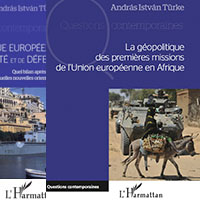
We are looking for sponsors for the English translation of these books, please contact turkeandras(at)gmail(dot)com