
You are here
Feed aggregator
Was tun wenns juckt?: Das hilft gegen Kopfläuse
Oft entnervt, mal verunsichert kommen junge Eltern in die Apotheke und suchen Rat zum Thema Läuse. Wir ersparen euch den Weg zur Drogerie und beantworten die am häufigsten gestellten Fragen zu Läusen.
Categories: Swiss News
Flugzeug geht in Flammen auf: Pilot zieht im Sturzflug den Rettungsfallschirm
Nach einem Motorschaden brennt ein einmotoriges Flugzeug in Brasilien lichterloh. In letzter Sekunde löst der 29-jährige Pilot den Rettungsfallschirm aus.
Categories: Swiss News
«Werdende Mama»: Ehemalige Kambundji-Konkurrentin ist schwanger
Kurz nach ihrem Rücktritt freut sich die ehemalige deutsche Sprinterin Alexandra Burghardt auf ihr erstes Kind. Zu den Gratulantinnen zählen auch zwei Schweizer Leichtathletik-Stars.
Categories: Swiss News
Ex-head of Rwanda's presidential guard dies in jail 12 years after his arrest
His brother tells the BBC his family have not been allowed to see him "in all these years".
Categories: Africa, Swiss News
Royals coming home!: Harry und Meghan sind in Birmingham gelandet
Das ging dann doch schneller als erwartet: Laut der britischen BBC sind Prinz Harry und Herzogin Meghan sowie die beiden Kinder Archie und Lilibet heute Mittwoch in Grossbritannien angekommen. Die Royals sind in Birmingham gelandet.
Categories: Swiss News
Hier wirkt der Haar-Papst: Zürichs neuer Hair-Hotspot im La Réserve Eden au Lac
Im La Réserve Eden au Lac geht es gerade ziemlich still, aber ziemlich luxuriös zur Sache – vor allem punkto Haare.
Categories: Swiss News
«Brutaler Angriff»: Jacques Moretti soll seine Frau Jessica schwer am Kopf verletzt haben
Am Sonntag wurde bekannt, dass Jacques Moretti wohl wegen des Vorwurfs von häuslicher Gewalt in Untersuchungshaft sitzt. Jetzt offenbart ein italienischer Medienbericht neue Details zum Zustand seiner Ehefrau. Jessica Moretti habe eine Kopfverletzung erlitten.
Categories: Swiss News
Sie verlor 60 Kilogramm: Sat.1-Moderatorin will als Bodybuilderin in den USA durchstarten
Stolz zeigte Moderatorin Martina Reuter ihren neuen Körper, nachdem sie durch eiserne Disziplin 60 Kilogramm verloren hatte. Jetzt hat sie ein neues Ziel, welches ihren Körper erneut einer Transformation unterzieht: Reuter will Bodybuilderin werden.
Categories: Swiss News
Keine Grauzone bei Kinderpornografie: Weshalb ein Zürcher Lehrer nie mehr unterrichten darf
Ein Lehrer lädt kinderpornografische Videos herunter, angeblich um «Marktforschung» zu betreiben. Die Gerichte erteilen ihm ein lebenslanges Berufsverbot. Das ist ihre Begründung.
Categories: Swiss News
Leser zu AfD-Vormarsch: «Die Deutschen haben aus der Geschichte nichts gelernt»
Die AfD könnte bald ihr erstes Bundesland regieren. Eine Umfrage zeigt, dass die Partei in Sachsen-Anhalt aktuell deutlich vorne liegt. Der derzeitige Höhenflug der AfD spaltet unsere Leserschaft.
Categories: Swiss News
Verbandspräsident Ritter zieht Bilanz für den Hitzesommer 2026: «Psychischer Druck auf Bauernfamilien ist enorm»
Der Hitzesommer hat die Schweizer Landwirtschaft hart getroffen. Die Folgen reichen von Ernteausfällen und knappen Futterreserven bis zum wirtschaftlichen Druck auf die Höfe. Gleichzeitig zwingt der Klimawandel die Bauern zum Umdenken – und eröffnet neue Chancen.
Categories: Swiss News
Bei «Grill den Henssler»: Krebskranker Johann Lafer erhält Standing Ovation
Ende Mai machte Johann Lafer seine Krebserkrankung öffentlich. Am Sonntag coacht der Star-Koch wieder die Promis bei «Grill den Henssler». Das Publikum reagiert mit Standing Ovations.
Categories: Swiss News
Ganze Dörfer bei Sturzflut in Nepal weggeschwemmt – viele Tote und Vermisste: Von 400 Touristen auf Pilgerreise fehlt jede Spur
Heftige Sturzfluten und Schlammlawinen haben in Nepal bereits viele Todesopfer gefordert. Und es werden immer mehr. Ganze Dörfer wurden weggeschwemmt und zahlreiche Menschen werden vermisst. Auch im benachbarten Tibet gab es schwere Schäden.
Categories: Swiss News
Nachhaltig Wickeln: Öko- und Stoffwindeln als Alternativen zur Einwegwindel
Herkömmliche Windeln verursachen eine Menge Abfall, sind biologisch schwierig abbaubar und nicht nachhaltig produziert. Diese vier Wickel-Alternativen sind nachhaltiger.
Categories: Swiss News
Zurück im US-Open-Rampenlicht: Federer-Familie stiehlt dem Maestro die Show
Roger Federer kehrt ins grösste Tennisstadion der Welt zurück! Bei einem Show-Match im Arthur-Ashe-Stadion in New York steht ihm die ganze Familie zur Seite. Bald folgt der Höhepunkt: sein Platz in der Tennis Hall of Fame.
Categories: Swiss News
Beyond the Horizon: Raising a Generation to Protect the Blue Pacific
Simita Kumar, Education Officer at the Pacific Community (SPC), leads an engaging activity on the biodiversity of intertidal and coral reef ecosystems with young participants at the Veivueti Kids Ocean Conference. Credit: SPC
By Sera Sefeti
SUVA, Fiji, Aug 26 2026 (IPS)
For generations, Pacific children have grown up with the ocean as part of everyday life. It is where families fish, where stories are passed down, where livelihoods begin and where cultures are rooted.
Yet many young people are inheriting an ocean facing pressures unlike anything their ancestors experienced, from warming seas and coral bleaching to plastic pollution and declining marine ecosystems.
In New Caledonia, the ocean is becoming a classroom.
Students are collecting and analysing macro-, meso- and micro-plastics, measuring coastal erosion alongside environmental specialists and removing invasive species. They are also meeting women scientists and ocean professionals, discovering not only the challenges facing the sea but also the many professions and possibilities connected to it.
The work is being led by Comité Égalité pour tous à l’école, an NGO in New Caledonia, in partnership with the Pacific Community (SPC), bringing local ocean issues into student learning through hands-on activities and real-world experiences.
“Our programme raises awareness among young people across the Pacific about the challenges and professions of the sea in all its dimensions, with particular focus on gender equality and highlighting the role of women in ocean-related careers, science, and innovation,” says Véronique Mollot Lehoullier, President of Comité Égalité pour tous à l’école.
The programme began in New Caledonia in 2021 and has since extended to French Polynesia and Vanuatu, with the ambition of developing a model that can be replicated across Oceania.
At its heart is a simple idea: children learn best when they can experience what they are being taught.
For Mollot Lehoullier, the ocean cannot be understood through theory alone.
“It is by discovering ocean-related professions firsthand, meeting women scientists and professionals, and taking part in field trips that students truly grasp the stakes of protecting and valuing lagoon ecosystems,” she says.
“This hands-on approach turns abstract awareness into lasting civic engagement, giving young people concrete role models to identify with girls and boys alike.”
Students at the Veivueti Kids Ocean Conference taking part in an interactive activity at the SPC booth, identifying marine organisms commonly found in tidal zone ecosystems. Credit: SPC
That approach is helping turn ocean education from something children read about into something they can see, touch and experience.
It is also opening a window to futures they may not have previously imagined.
For a young girl, meeting a woman working in marine science or conservation can make an ocean-related career feel possible. For boys, it reinforces that the ocean and the responsibility to protect it belong to everyone.
And the response from students has been striking.
“They don’t watch the clock, and they’re never in a hurry to finish,” Mollot Lehoullier says.
Many students do not want to return to their regular classrooms. Instead, they stay behind to continue speaking with professionals, asking questions and taking part in activities.
“These aren’t theoretical lessons but activities the students are fully part of, so for them it doesn’t feel like work at all, it feels like interactive discovery.”
That sense of discovery is becoming increasingly important as Pacific communities confront a rapidly changing ocean.
For Maëva Tesan, Information, Communication and Knowledge Officer at SPC’s Pacific Community Centre for Ocean Science (PCCOS), strengthening ocean knowledge and ocean literacy in New Caledonia is an important part of that regional effort.
“While many local organisations are already actively working in this field, we have also expanded our involvement this year through several local initiatives, including the Sea Festival and the Science Festival,” she says.
For SPC, partnering with Comité Égalité pour tous à l’école builds on the organisation’s existing role in promoting inclusive education and brings together a shared commitment to raising young people’s awareness of the ocean.
“By working together, we can combine our expertise to strengthen ocean education and inspire the next generation of ocean stewards in New Caledonia,” Tesan says.
The ambition extends beyond one country.
The programme’s reach into French Polynesia and Vanuatu reflects a broader regional approach: building on local initiatives while sharing knowledge, resources and experiences across the Pacific.
Summit participants take part in a hands-on field activity, identifying marine organisms collected for study. Credit: SPC
From New Caledonia to Fiji
Across Fiji, a quiet movement is helping change how the next generation sees the ocean. Children who once viewed the sea simply as a place to swim, fish or spend time with friends are beginning to understand something much deeper: that the future of the Blue Pacific depends on the choices they make today.
For Hannah Nanovu, Whole School Ocean Coordinator at the International School Suva, watching that transformation unfold is one of the most rewarding parts of her work.
“Every year, the students surprise and inspire me through their passion, creativity, and commitment to learning more about the ocean and taking action,” Nanovu says.
“This year, having students travel from Beqa to participate was particularly inspiring, and seeing the conference grow each year, with more schools joining and schools travelling further to be part of it, reminds me that we are building a community of young ocean advocates across Fiji.”
That growing community came together once again at Veivueti Kids Ocean Conference, where students explored the ocean not just through science, but through culture, storytelling, traditional knowledge and hands-on learning.
Since developing its Whole School Ocean Programme in 2018, the International School Suva has used the conference to create a space where students can present research, exchange ideas and discover that every child—regardless of where they come from—has a role in protecting the ocean.
Behind that movement is a broader regional effort led by the Pacific Community (SPC).
Together, these efforts are part of a growing movement to strengthen ocean literacy across the Blue Pacific.
Leotasi Kautu, School Principal from Tuvalu, presents the 3D inundation model of Funafuti, developed by SPC and the Government of Tuvalu, to map flood risk and guide climate adaptation. Credit: SPC
Science that Begins at Home
For many students, science can sometimes feel distant.
Words such as biodiversity, ocean circulation, marine ecosystems and climate change can remain confined to textbook concepts to memorise, rather than realities that surround them.
But the Pacific offers a different classroom.
For SPC, this connection between knowledge, place and lived experience is central to strengthening ocean literacy across the region.
“Pacific communities have a deep cultural and traditional connection to the ocean, but more can be done to increase knowledge about ocean ecosystems, the challenges they face, and how we can protect them,” says Doreen Tuala, Team Leader for Curriculum and Assessment at SPC.
“The best place to start addressing this need is through education, especially by engaging young people.”
The challenge and the opportunity is that there is no single Pacific classroom.
The region encompasses hundreds of islands, diverse cultures and languages, different education systems and communities whose relationships with the ocean vary from one place to another.
That means ocean education cannot simply be copied from one country to the next.
Instead, regional approaches need to create space for local knowledge, culture and experience.
Students can investigate the health of coral reefs they know, explore the importance of mangroves to their communities, examine fisheries that support their families and learn about coastal changes occurring around them.
They can also learn from elders and communities, recognising that Pacific peoples have long understood the ocean through observation, experience and generations of lived knowledge.
Tuala says connecting learning to students’ everyday lives gives them an opportunity to investigate issues that are not abstract, but immediate.
These include coral reef health, sustainable fisheries, coastal erosion, marine pollution and the impacts of climate change.
“When students can connect what they are learning to their everyday lives, local environments and cultural knowledge, they are better able to understand these challenges and explore solutions,” she says.
From Learners to Ocean Guardians
Recognising that ocean stewardship begins long before adulthood, SPC is strengthening its regional commitment to ocean literacy through partnerships, education initiatives and practical learning.
Its work includes strengthening science education through a partnership with National Geographic Pristine Seas, expanding locally relevant teaching materials through the EQAP Ocean Literacy Resources Repository, and supporting practical learning experiences such as Fiji’s Veivueti Kids Ocean Conference.
Together, these initiatives are helping bring ocean literacy into Pacific education in ways that reflect the realities of Pacific children.
“Through this partnership, we are bringing together scientific expertise, educational resources and regional networks to support countries in integrating ocean literacy into education systems,” Tuala says.
The partnership combines SPC’s curriculum expertise with National Geographic Pristine Seas’ experience in marine science, exploration and conservation.
But ambition goes beyond lesson plans.
It is about helping close a long-standing gap in structured ocean education that reflects Pacific realities allowing children to learn about marine environments through ecosystems, examples, cultures and experiences they recognize as their own.
IPS UN Bureau Report
Follow @IPSNewsUNBureau
!function(d,s,id){var js,fjs=d.getElementsByTagName(s)[0],p=/^http:/.test(d.location)?'http':'https';if(!d.getElementById(id)){js=d.createElement(s);js.id=id;js.src=p+'://platform.twitter.com/widgets.js';fjs.parentNode.insertBefore(js,fjs);}}(document, 'script', 'twitter-wjs');
Related Articles
- Pacific Ocean Under Pressure — Now a Region Finally Armed With Evidence
- Bridging Knowledge Systems: How Pacific Communities Are Reclaiming Climate Solutions Through Nature
- Weaving Wisdom and Science: Pacific Voices Call for Ocean Protection
Excerpt:
There is a saying that people protect what they love, and to love something, you first need to understand it. — Hannah Nanovu, Whole School Ocean Coordinator, International School SuvaMütter haben in der Pandemie wegen Schulschließungen weniger gearbeitet, Väter mehr
Studie untersucht Folgen von Schulschließungen auf Arbeitsangebot berufstätiger Eltern – Vor allem Mütter von Grundschulkindern schränkten ihre Beschäftigung ein, Väter weiteten sie aus – Betreuungskluft zwischen Müttern und Vätern mit mehr Flexibilität und besserer Kinderbetreuung verringern
Die ...
Categories: Afrique, Diplomacy & Defense Think Tank News
Grand Planetary Challenges Need a Grand Coalition to Solve Them
Photo highlighting the activities and successes of the 'Promoting Nature-based Solutions for Land Restoration while Strengthening National Monitoring Technical Working Group in Kenya: Phase 2' project funded by UK PACT. Credit: Anthony Ochieng/CIFOR-ICRAF
By Lulseged Tamene Desta and Cargele Masso
NAIROBI, Kenya, Aug 26 2026 (IPS)
Several coalitions exist today to defend the territories in which people live and work. Global leaders have long understood the importance of shared responsibility for collective security and have invested significant time in establishing networks, partnerships and alliances. In 2025, global spending on defense reached a record $2.9 trillion.
But the global community is increasingly recognizing that today’s gravest existential risks arise from a war being waged against nature itself – and our defenses are woefully fragmented and underfunded. The world is investing only about $220 billion a year for nature-based solutions, compared to $7.3 trillion for nature-negative activities.
This is not just a discrete, isolated environmental concern. The triple planetary crises of land degradation, biodiversity loss and climate change are worsening food insecurity, water scarcity and ecosystem collapse, threatening millions of lives.
Collectively, the impact of the ongoing assault on nature is amplifying conflict, worsening migration, driving inflation higher, and fomenting geopolitical instability. Unless restoration and sustainable management of resources is in place, the world is expected to lose more than US$23 trillion by 2050, while halting this trend would cost around $4.6 trillion.
Many solutions to these interconnected crises exist but have been ineffective to date. Limited coordination and collaboration between countries, sectors and disciplines, as well as insufficient resources and short-term approaches to long-term challenges, mean we are far behind the UN’s Sustainable Development Goals. Despite compelling evidence of the costs of degradation, investment remains far below what is needed because opportunities are rarely presented as credible, investable propositions.
To change this, two things must happen. First, governments, international agencies, academia and civil society must unite through a grand coalition to bring together those currently working in isolation to achieve greater impact than the sum of their parts – a kind of mutual pact to protect nature.
Photo highlighting the activities and successes of the ‘Promoting Nature-based Solutions for Land Restoration while Strengthening National Monitoring Technical Working Group in Kenya: Phase 2’ project funded by UK PACT. Credit: Anthony Ochieng/CIFOR-ICRAF
And second, this grand coalition must also engineer a funding paradigm shift from focusing on environmental challenges to investing in the many opportunities of conservation and restoration.
The ongoing UN COP17 desertification talks in Mongolia, where the theme is “Restoring Land, Restoring Hope”, is the perfect opportunity to progress this.
Evidence shows that integrated approaches to address landscape degradation solve multiple interconnected challenges.
For example, investment in soil and water conservation in the Adarsha watershed in southern India has been found to improve water availability, agricultural productivity, and rural livelihoods. Analysis showed that yields of maize intercropped with pigeonpea increased by 148% while households in the watershed were less affected by droughts compared to those in the non-watershed area.
In Kenya and Tanzania, the adoption of Participatory Rangeland Management improved rangeland condition and resilience to climate shocks for more than 90% of participating communities.
Despite evidence from these successes, these interventions are not being invested in and applied at the scale needed to transform the world’s food, land and water systems in ways that can build long-term, far-reaching resilience.
Countries, donors, financing institutions and civil society must come together in a grand coalition to direct the coordination, governance and investment necessary to tackle these crises where they all interconnect: at the landscape level.
A grand coalition would offer a dedicated focal point to integrate and advance the UN’s goals for climate, biodiversity and land degradation, allowing for stronger coordination and shaping the global agenda for informed decision-making. Critically, the coalition would lead the redirection away from ineffective, siloed solutions and the self-defeating environmental trade-offs they create.
A grand coalition would also create a platform for establishing the rigorous systems of governance essential to achieving global goals for nature, including fair and inclusive land tenure and governance over water systems. Understanding the true cost of landscape governance and inaction is instrumental for adequate investments.
Lastly, a grand coalition would gather the evidence to help shift the emphasis of finance for nature towards investments that benefit everyone. By identifying a menu of options for turning grand challenges into grand opportunities, the coalition would unlock the financing from banks, donors, philanthropies and other development funders needed to scale interventions globally.
The UNCCD COP17 talks in Mongolia is not just an opportunity to address the challenges facing land. It’s a moment to foster unity around a shared threat to all of our territories. CGIAR and its partners will play its part by developing an investment plan to anchor greater coordination in collaboration with the grand coalition of action for shared human and planetary outcomes.
Landscapes are where our greatest environmental and human challenges today are playing out, from declining biodiversity to the deforestation driving climate change, to increasing levels of food insecurity.
Investing in multifunctional landscapes through a unified global coalition, therefore, is not simply an environmental imperative for the world, but also a strategic one. Galvanizing support for landscape-centered solutions can simultaneously reduce future risks and strengthen economies and communities.
A global coalition for restoring and protecting landscapes would recognize a defining reality of the 21st century: protecting nature is fundamental for protecting us all.
Dr. Lulseged Tamene Desta, is Director of the CGIAR Multifunctional Landscapes Science Program
Cargele Masso, is Director of the CGIAR’s Environmental Health and Biodiversity Impact Area Platform
IPS UN Bureau
Follow @IPSNewsUNBureau
!function(d,s,id){var js,fjs=d.getElementsByTagName(s)[0],p=/^http:/.test(d.location)?'http':'https';if(!d.getElementById(id)){js=d.createElement(s);js.id=id;js.src=p+'://platform.twitter.com/widgets.js';fjs.parentNode.insertBefore(js,fjs);}}(document, 'script', 'twitter-wjs');
A Divided Vote for the UN’s Human Rights Chief
Results of the vote on the approval of the appointment of the UN High Commissioner for Human Rights, UN General Assembly, 24 July 2026. Credit: UN Photo/Loey Felipe
By Samuel King
BRUSSELS, Belgium, Aug 26 2026 (IPS)
On 24 July, the United Nations (UN) General Assembly reappointed Volker Türk as High Commissioner for Human Rights for a further four years. Only 10 states – among them Israel, Russia and the USA – opposed the decision.
Türk is an Austrian lawyer who’s spent almost his entire career in the UN system, from field postings in Kosovo to the UN refugee agency to his present role in Geneva. Because of this, when he became High Commissioner in October 2022, there were concerns he might be more cautious than his predecessors, but he has spoken out about violations committed by the powerful. He criticised Russia’s full-scale invasion of Ukraine, demanded investigations into deaths in US immigration detention and condemned Israel’s atrocities in Gaza. He has, however, faced criticism for not calling out Israel’s actions in Gaza as genocide and not speaking out enough on China, particularly concerning the situation of Uyghur people in Xinjiang.
The vote will make Türk the first person set to serve two full terms since the post was created in 1993. One early High Commissioner, Mary Robinson, wanted to stay on, but strong US resistance to her positions on its post-9/11 military interventionism and the 2001 Durban Conference — the UN’s World Conference against Racism, where Israel and the USA walked out due to its focus on the Israeli-Palestinian conflict — left her with only a one-year extension.
As a funding crisis continues to engulf the UN human rights system, continuity matters. US withdrawal from funding UN agencies, part of its broader assault on the international system in general and human rights bodies in particular, has placed the Office of the High Commissioner for Human Rights (OHCHR) under serious financial strain, forcing staff cuts and reducing capacity to work in countries where human rights violations are taking place. A vacancy or a contested process would have added further disruption at a difficult time.
A rushed and contested process
The vote came unexpectedly and moved fast. UN Secretary-General António Guterres informed states of his intention to reappoint Türk without a public process, open competition or much time for deliberation. With Guterres’ second term ending this year, the move was likely intended to keep the decision off his successor’s desk and prevent opposition from building.
Most states accepted this, but the USA didn’t. It immediately moved to delay the vote, citing insufficient consultation. Ireland, speaking for the European Union, opposed the US motion, which was defeated by 63 votes to 27. The USA’s representative called the process ‘classic UN cronyism’, accused Guterres of cutting a backroom deal and warned there would be ‘consequences’. Russia tried a different tactic, proposing to extend Türk’s mandate by just 81 days, to the end of 2026, leaving the decision to the next Secretary-General. That too was rejected, by 71 votes to 19.
Argentina, Burkina Faso, Israel, Mali, Nicaragua, Niger, North Korea, Russia, Trinidad and Tobago and the USA voted against Türk’s reappointment. The list contains tight US allies, such as Argentina and Israel, and states that align with Russia, such as North Korea and the three military-run states of the Sahel, which are increasingly working as a bloc. Under the Trump administration, it’s no longer a surprise to see the USA voting the same way as Russia. Most of the states, including Nicaragua, systematically violate human rights. Russia and North Korea both resist any accountability for human rights violations, while the USA particularly objected to Türk’s criticism of its war on Iran and migration detention deaths. Israel accused the OHCHR of having ‘erased the atrocities of October 7 and betrayed UN neutrality’.
Some states that might have been expected to vote against Türk, however, supported him. Among the 144 who backed his reappointment were the Democratic Republic of the Congo, Sudan and Syria, all states subject to active UN scrutiny. This suggested that hostility to a specific human rights mandate doesn’t necessarily extend to the whole system, and even heavily scrutinised states may see value in a working relationship with the OHCHR.
A vulnerable human rights system
The 13 abstentions and 26 no-shows also deserve attention. Some were procedural, with Ecuador and Paraguay saying afterwards that they wanted more time. Peru cited concerns about limiting the incoming Secretary-General’s flexibility, though its abstention may also reflect Türk’s recent criticism of Peru’s human rights record, including laws granting amnesty to security forces accused of serious violations during armed conflict between 1980 and 2000.
Iraq, New Zealand, South Korea, Sri Lanka and Uganda all abstained. New Zealand described its position as ‘procedural rather than policy’, but the decision drew sharp domestic criticism, not least given its recent failure to recognise Palestinian statehood.
Among the smaller states that ducked a decision, some likely faced economic or political pressure from the most powerful states to stay quiet, while others may have judged themselves insufficiently protected from the consequences of taking a visible position. This means the vote may reflect vulnerability as much as it measures support for the High Commissioner. As the most powerful states increasingly throw their weight around in the international system, smaller states may have to make calculations about when they can afford to take a position and when they need to stay quiet.
Continuity as the outcome
Institutional continuity is the immediate outcome, and Türk has signalled what he intends to do with it. In a June speech, he described an ‘unprecedented, shameless onslaught against international law’ that’s causing appalling human suffering, insisted the international community must stay focused on fundamentals and declared the Universal Declaration of Human Rights and the core treaties ‘ever more important’. His message to the G7, meeting nearby, was blunt: put human rights at the centre of discussions as a force for stability, not an afterthought.
Legitimacy and moral authority, however, won’t pay the OHCHR’s bills. Over the next four years, Türk must resist China, Russia and the USA as they work to undermine the UN bodies that protect human rights. The 144 states that backed Türk now carry the responsibility of turning their votes into action. They should ensure the OHCHR is adequately funded and work to bring on board states that abstained, particularly if they did so out of fear. They must show that collective commitment to human rights still counts for something.
Samuel King is a researcher with the Horizon Europe-funded research project ENSURED: Shaping Cooperation for a World in Transition at CIVICUS: World Alliance for Citizen Participation.
For interviews or more information, please contact research@civicus.org
Follow @IPSNewsUNBureau
!function(d,s,id){var js,fjs=d.getElementsByTagName(s)[0],p=/^http:/.test(d.location)?'http':'https';if(!d.getElementById(id)){js=d.createElement(s);js.id=id;js.src=p+'://platform.twitter.com/widgets.js';fjs.parentNode.insertBefore(js,fjs);}}(document, 'script', 'twitter-wjs');
Pages
the old site is here


© 2012-2015 Europa Varietas Foundation © 2015-2020 Europa Varietas Association
www.europavarietas.org | info(@)europavarietas(dot)org | Switzerland
This is a GDPR ready site


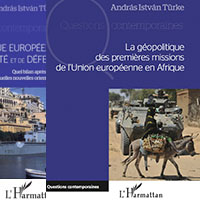
We are looking for sponsors for the English translation of these books, please contact turkeandras(at)gmail(dot)com