
You are here
Feed aggregator
Sajtóközlemény - Az EP megszavazta a védelmi innováció felgyorsítását célzó új programot
A program célja, hogy reagáljon az Oroszország Ukrajna elleni háborúja miatt kialakult új biztonsági helyzetre, amelyben kritikus fontosságúak a gyors és költséghatékony védelmi innovációk.
Ipari, Kutatási és Energiaügyi Bizottság
Biztonság- és Védelempolitikai Bizottság
Forrás : © Európai Unió, 2026 - EP
Ipari, Kutatási és Energiaügyi Bizottság
Biztonság- és Védelempolitikai Bizottság
Forrás : © Európai Unió, 2026 - EP
Categories: Európai Unió : hírek magyarul, Europäische Union
Press release - Updated rules to protect workers from exposure to dangerous chemicals
On Tuesday, Parliament approved new rules to improve EU standards protecting workers from exposure to certain dangerous substances.
Committee on Employment and Social Affairs
Source : © European Union, 2026 - EP
Committee on Employment and Social Affairs
Source : © European Union, 2026 - EP
Categories: Biztonságpolitika, European Union
Press release - Updated rules to protect workers from exposure to dangerous chemicals
On Tuesday, Parliament approved new rules to improve EU standards protecting workers from exposure to certain dangerous substances.
Committee on Employment and Social Affairs
Source : © European Union, 2026 - EP
Committee on Employment and Social Affairs
Source : © European Union, 2026 - EP
Categories: Afrique, European Union
Press release - Updated rules to protect workers from exposure to dangerous chemicals
On Tuesday, Parliament approved new rules to improve EU standards protecting workers from exposure to certain dangerous substances.
Committee on Employment and Social Affairs
Source : © European Union, 2026 - EP
Committee on Employment and Social Affairs
Source : © European Union, 2026 - EP
Categories: Europäische Union, European Union
Press release - Updated rules to protect workers from exposure to dangerous chemicals
On Tuesday, Parliament approved new rules to improve EU standards protecting workers from exposure to certain dangerous substances.
Committee on Employment and Social Affairs
Source : © European Union, 2026 - EP
Committee on Employment and Social Affairs
Source : © European Union, 2026 - EP
Categories: Európai Unió : hírek magyarul, Europäische Union
Plus de 3kg de chanvre indien saisis, des suspects arrêtés
Dans la commune de Ouinhi, les opérations de la Police républicaine se multiplient contre les lieux de consommation et de trafic de chanvre indien. Plusieurs suspects sont tombés dans les filets des forces de sécurité lors d'une intervention menée dans la nuit du 30 septembre 2026.
Une équipe du commissariat d'arrondissement de Dassa a investi une cabane à Ouinhi où deux individus étaient en train de consommer du chanvre indien dans la nuit du 30 septembre 2026.
L'un des suspects interpellés a conduit les policiers jusqu'à son présumé fournisseur. La perquisition effectuée dans le repaire de ce dernier a permis de retrouver des emballages, des paquets de cigarettes, des boulettes ainsi que plus de trois kilogrammes de chanvre indien.
Au quartier Gnanly, d'autres suspects ont pris la fuite à l'arrivée des policiers, abandonnant sur place du matériel destiné à la consommation de stupéfiants ainsi que deux motocyclettes.
M. M.
Categories: Afrique
Les numéros gagnants du DIGITAL 08H
DIGITAL 08H : Avez-vous tenté votre chance ?
Le tirage DIGITAL 08H N°241 a livré son verdict !
Mardi 06 Octobre 2026
Avez-vous joué ?
Avez-vous misé sur vos numéros porte-bonheur ?
RÉSULTAT : 33 • 34 • 20 • 02 • 31
Félicitations aux heureux gagnants !
Pas encore cette fois ? Gardez le sourire.
Rendez-vous à 11H pour le prochain tirage.
Jouez dans les points de vente ou : Tapez *590# ou rendez-vous sur lnbloto.bj
Jouez avec modération et responsabilité. Le jeu doit rester un plaisir.
A TOI DE JOUER #XòGbɔnAlɔkpaVo
#LNBSA #JeuResponsable #LaChanceAvecModération
LA CROIX DU MARDI 6 OCTOBRE 2026

Categories: Afrique
Edmond K. Adjikpè nommé DG, Nina Armelle Guendehou reconduite DGA
NSIA Banque Bénin dispose désormais d'une nouvelle équipe dirigeante. Edmond K. Adjikpè a pris ses fonctions de directeur général le 1er octobre 2026, tandis que Nina Armelle V. Guendehou a été reconduite au poste de directrice générale adjointe. Cette nouvelle configuration repose sur la complémentarité de leurs parcours et expertises.
Deux profils complémentaires assurent désormais les fonctions de directeur général et de directrice générale adjointe de la filiale Bénin du groupe NSIA. Il s'agit de Edmond K. Adjikpè, et de Nina Armelle V.
Guendehou, entrés en fonction le 1er octobre 2026.
Fort de 22 années d'expérience dans les secteurs bancaire et financier ainsi que dans la finance du développement, Edmond K. Adjikpè prend les commandes de la filiale béninoise du groupe NSIA. Son parcours couvre notamment le financement, le développement des activités, la structuration de partenariats et la conduite d'opérations complexes.
À ses côtés, Nina Armelle V. Guendehou poursuit sa mission de N⁰ 2 au sein de la direction générale. Elle dispose de 23 années d'expérience, principalement dans la gestion des risques, l'audit, le contrôle interne et la gouvernance bancaire. Sa reconduction vise notamment à assurer la continuité dans le suivi prudentiel et opérationnel de l'établissement.
Une direction fondée sur la complémentarité
Cette organisation associe ainsi une expertise tournée vers le développement des activités à une expérience approfondie dans la maîtrise des risques. Elle intervient dans un contexte où les établissements bancaires de la sous-région sont appelés à accroître leur contribution au financement de l'économie, tout en renforçant leurs dispositifs de contrôle et de conformité.
Pour NSIA Banque Bénin, les principaux enjeux portent notamment sur le développement des financements, le renforcement de la proximité avec les clients et partenaires ainsi que l'amélioration de la performance opérationnelle. Ces objectifs devront être poursuivis dans un environnement marqué par l'évolution des exigences réglementaires, la digitalisation des services financiers et la transformation des besoins des entreprises et des particuliers.
Le groupe NSIA met également en avant, à travers ces nominations, la valorisation des compétences locales et de l'expertise africaine. Les deux dirigeants disposent d'une connaissance du marché béninois et d'expériences acquises au sein d'institutions financières à dimension panafricaine.
Avec cette nouvelle équipe dirigeante, NSIA Banque Bénin entend poursuivre sa dynamique de développement et renforcer sa contribution au financement de l'économie nationale. La nouvelle direction devra désormais traduire cette complémentarité en résultats, tant sur le développement des activités que sur la qualité des actifs, des services et de la gouvernance de la banque.
F. A. A.
Categories: Afrique, Europäische Union
DIGITAL 00H : les numéros gagnants
DIGITAL 00H : Avez-vous tenté votre chance ?
Le tirage DIGITAL 00H N°240 a livré son verdict !
Mardi 06 Octobre 2026
Avez-vous joué ?
Avez-vous misé sur vos numéros porte-bonheur ?
RÉSULTAT : 49 • 43• 27 • 75 • 87
Félicitations aux heureux gagnants !
Pas encore cette fois ? Gardez le sourire.
Rendez-vous à 08H pour le prochain tirage.
Jouez dans les points de vente ou : Tapez *590# ou rendez-vous sur lnbloto.bj
Jouez avec modération et responsabilité. Le jeu doit rester un plaisir.
A TOI DE JOUER #XòGbɔnAlɔkpaVo
#LNBSA #JeuResponsable #LaChanceAvecModération
Categories: Afrique, Europäische Union
KI gehört nicht in private Hände
Die Instrumente der Ökonomik sind kontraproduktiv, um gegen die existenziellen Risiken der Künstlichen Intelligenz anzugehen., Künstliche Intelligenz (KI) kann die Welt zum Besseren verändern wie keine Technologie zuvor. Gleichzeitig ist sie dabei, zur größten existenziellen Bedrohung zu werden, die die Menschheit je erfahren hat. Die derzeit kursierenden Vorschläge, diese Gefahr zu reduzieren, sind völlig unzureichend. ...
Categories: Afrique, Diplomacy & Defense Think Tank News
Entwurf der Tagesordnung - Mittwoch, 7. Oktober 2026 - PE796.276v02-00 - Ausschuss für auswärtige Angelegenheiten
Quelle : © Europäische Union, 2026 - EP
Categories: Afrique, Europäische Union
Ce que l'échec de l'exécution de Christa Pike nous apprend sur la peine de mort aux États-Unis
L'échec de l'exécution de Christa Pike, condamnée à mort dans le Tennessee, a relancé le débat sur la peine de mort et sur la manière dont elle est appliquée aux États-Unis.
Categories: Afrique, European Union
Le Nigeria pleure la mort de 32 personnes dans le crash d'un avion militaire dans un marais
Le président Bola Tinubu décrit l'accident comme un «moment douloureux» pour l'armée et pour toute la nation.
Categories: Afrique, Határon túli magyar portálok összesített hírei
Le Nigeria pleure la mort de 32 personnes dans le crash d'un avion militaire dans un marais
Le président Bola Tinubu décrit l'accident comme un «moment douloureux» pour l'armée et pour toute la nation.
Categories: Afrique, Swiss News
Le Nigeria pleure la mort de 32 personnes dans le crash d'un avion militaire dans un marais
Le président Bola Tinubu décrit l'accident comme un «moment douloureux» pour l'armée et pour toute la nation.
Categories: Afrique, Európai Unió : hírek magyarul
Cheetahs to play European games in Swansea
South African side Cheetahs will play their European Challenge Cup home matches this season at St Helen's in Swansea, the home of Welsh side Ospreys.
A MEGKERÜLHETETLENEK ÉS NÉLKÜLÖZHETETLENEK (NTM 2026, 2. RÉSZ)
Minden haderő és azon belül természetesen a légierő működésében kritikus szerepet játszik a logisztika, a folyamatos utánpótlást biztosító katonai ellátórendszer. Ha nincs üzemanyag, alkatrész, kiszolgáló- és szállítóeszköz, élelmezés, szállás, valamint éles műveletben fegyverzet, a haderő megáll. A görögországi Araxoszban idén tavasszal megrendezett NATO Tiger Meet gyakorlat magyar kontingenséről szóló sorozat második részében a megkerülhetetlenek és nélkülözhetetlenek, vagyis a logisztikusok feladatrendszeréről lesz szó.
Az Araxoszba kitelepülő magyar kontingens logisztikai feladatainak irányítását a jelentős nemzetközi és missziós tapasztalattal rendelkező Fejes Szabolcs őrnagy, a Magyar Honvédség vitéz Szentgyörgyi Dezső 101. Repülődandár (jelenleg MH 59. Szentgyörgyi Dezső Repülődandár) Műveleti Logisztikai Főnökségének főnökhelyettese kapta meg. A repülődandárnál ez a főnökség foglalkozik - a Helyőrségtámogató Parancsnokság szakállományával szoros együttműködésben - az áttelepülések műveleti logisztikájával, illetve a gyakorlatok logisztikai tervezésével és végrehajtásával.
Categories: Afrique, Biztonságpolitika
Minutes - Thursday, 10 September 2026 - PE792.148v01-00 - Committee on Foreign Affairs
Source : © European Union, 2026 - EP
Categories: Afrique, Europäische Union
Workers Help Feed the World but Starved of Dignity
An IPES-Food report warns that workers in the global food system face high exploitation in keeping the world fed. Credit: Busani Bafana/IPS
By Busani Bafana
BULAWAYO, Oct 6 2026 (IPS)
A new report reveals widespread labour exploitation among food system workers, warning that keeping the world fed comes at the cost of human dignity.
More than 1.4 billion people work in the food industry – the largest employer in the world – and are the most abused, according to a report, Food Work: The workers behind our food and the exploitation they face, published this week by the International Panel of Experts on Sustainable Food Systems (IPES-Food).
The global food system exploits more workers than any other economic sector, and the report notes that this exploitation is not accidental but rather ingrained in a business model that keeps labour cheap while maximising profits.
Abuse All Round
“Often hidden from view, food workers face low pay, wage theft, forced labour, human trafficking, discrimination, sexual violence, dangerous working conditions, and exclusion from social safety nets,” the report found.
“From farmworkers, fishers, and slaughterhouse staff to delivery drivers, restaurant and supermarket employees, and domestic workers, labour abuse is rife at every link in the food chain.”
The report highlighted that migrants, women, refugees, and racialised workers are funnelled into the worst conditions, where speaking up risks job loss, deportation and blacklisting.
IPES-Food co-chair Olivier De Schutter said what was most surprising about the findings of the report was the deep hypocrisy of governments concerning migrant farmworkers. With many countries relying heavily on migrant labour, especially for fruit and vegetable production, as witnessed during the Covid-19 pandemic, governments often grant migrant workers short-term, seasonal stays.
“These workers are routinely subject to forms of exploitation and abuse that would be unimaginable if they were natives – housed in poor conditions, paid poverty wages, and working in often dangerous conditions,” said Olivier De Schutter, a former UN Special Rapporteur on the right to food.
De Schutter argued that because migrant workers were considered unskilled, they were treated like second-class workers and that they had no or minimal connections to the communities in countries that host them; they barely complained in cases of abuse.
This practice is a form of trafficking in human beings, except that it’s legal and officially encouraged, De Schutter told IPS.
According to the UN’s Food and Agriculture Organisation (FAO), the gross value of global agricultural production is estimated at just over $5 trillion, while the World Bank estimates agricultural value-added at about $3.2 trillion.
The global food system is valued at more than $8 trillion, yet those who produce and market the food survive on poverty wages, which calls for a change.
De Schutter identified three mutually reinforcing challenges which include loopholes in the current legislation which does not apply minimum wage or on working hours, poor law enforcement and the difficulty of organising workers where unions are discouraged or even repressed.
“Governments routinely take the position that, where workers are informal, labour legislation does not apply, and labour inspectorates have no role to play,” he said, describing this situation as absurd.
‘It’s like saying that if you don’t have a driver’s licence, you can ignore the traffic rules. In fact, international human rights law requires that basic labour legislation be extended to informal workers and that incentives be given to employers to register their workers to ensure informality does not pay and that formalisation instead be rewarded.”
IPES-Food co-chair Olivier De Schutter. Credit: IPES-Food
Systemic Exploitation
“Unfair employment arrangements, off-the-books work, and lack of basic job security all combine to entrench worker vulnerability,” he said. “Governments directly enable this abuse through legal carve-outs that explicitly exempt food and farm workers from basic protections on wages, workplace safety, and union rights.”
The report highlighted that even where protective laws exist, weak public enforcement and pervasive informal employment leave millions of workers unprotected.
Migrant workers are essential to today’s food systems, yet they face some of the highest rates of workplace abuse, wage theft, forced labour, injury, and death, the report noted.
Worsening Conditions
Compounding these structural abuses, a dangerous convergence of emerging forces was making food work increasingly hazardous and exploitative.
“Climate change is becoming a workers’ rights crisis,” said Mamadou Goïta, IPES-Food panel expert. “Farmworkers already face poverty wages, toxic pesticides, and gruelling conditions. Now climate change is turning up the heat and making their work even more dangerous.”
Goïta said governments were still failing to guarantee workers even basic, lifesaving protections like shade, rest, and drinking water.
“The people producing our food should not have to risk their health or their lives to earn a living,” said Goïta.
The impacts of extreme heat and drought are usually measured in lost crops and harvests. But the human toll on the world’s 928 million agricultural workers was also mounting, with heat stress being the most common health threat facing farmworkers, the report noted.
The consequences of health threats include dizziness, vomiting, and exhaustion from heat stroke and kidney disease. In the US, farmworkers were 35 times more likely to die from heat stress than other workers.
Agricultural regions across Africa, the Americas, and southern Europe now experience up to 50 more days of dangerous heat each year than in the 1970s. In Africa, 93% of workers were exposed to dangerous heat, most of whom work in food systems, said the report.
The report warned that while climate change was exposing workers to extreme heat, severe weather and toxic wildfire smoke, corporate power was suppressing wages, undermining collective bargaining, and shifting risks onto workers, which meant prioritising shareholder returns over decent work.
“At the cutting edge, digital technologies are creating new frontiers of exploitation: gig-based platform work, automation, algorithmic management, and workplace surveillance are isolating workers, intensifying productivity pressures, increasing injury rates, and eroding worker bargaining power,” said the report.
Organise or Agonise
But workers are fighting back. They are forming unions and cooperatives, staging strikes, litigating for rights, and building alliances to demand comprehensive labour standards that recognise their worth and dignity.
The report shows that comprehensive labour standards, living wages, and the right to collective bargaining can shift the world’s largest workforce from the food system’s most invisible victims to resilience.
The report emphasised that in achieving lasting transformation in the food systems industry, there must be a strong policy and power shift across five key priorities. These include building the power of workers by strengthening trade unions and expanding collective bargaining. In addition, legal carve-outs for food and farm workers must be eliminated and equal rights for migrant workers guaranteed.
Policies that criminalise migrants must be scrapped, while employer-tied visa schemes must be dismantled to guarantee equal labour rights and social protections regardless of status, the report said, urging for a curtailment of corporate power so that companies are held accountable for labour abuses throughout their supply chains.
“The people who feed the world deserve safe, fairly paid, and dignified work,” said the report. “Food systems must never depend on low wages, hazardous conditions, or invisible labour. Achieving this requires changing who holds power, who profits, and who bears the costs.”
IPS UN Bureau Report
Related Articles
Categories: Africa, Swiss News
Press release - EP TODAY
Categories: Afrique, European Union
Pages
the old site is here


© 2012-2015 Europa Varietas Foundation © 2015-2020 Europa Varietas Association
www.europavarietas.org | info(@)europavarietas(dot)org | Switzerland
This is a GDPR ready site


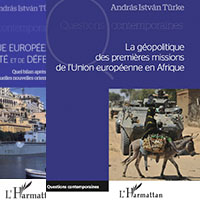
We are looking for sponsors for the English translation of these books, please contact turkeandras(at)gmail(dot)com