
You are here
European Union
Security mania has become entrenched | El Periódico de Catalunya - Spain
Categories: Afrique, European Union
Yesterday's proud sense of unity is no longer | Corriere del Ticino - Switzerland
Categories: European Union, Union européenne
Wrong reactions only made things worse | Moskowski Komsomolez - Russia
Categories: European Union, Union européenne
Debate: How will Sweden vote on 13 September?
In the run-up to the Swedish general election on Sunday, the centre-left opposition comprising the Social Democrats, the Left Party, the Greens and the Centre Party is leading the polls, ahead of the centre-right coalition of Liberal Conservatives, Christian Democrats and Liberals, which cooperates with the right-wing Sweden Democrats (SD). However, both camps have been hit by new scandals shortly before the vote.
Categories: European Union, Union européenne
The Left Party is not ready to govern | Dagens Nyheter - Sweden
Categories: Europäische Union, European Union
Debate: ECB raises key interest rates - will prices come down?
The European Central Bank (ECB) has raised its key interest rate from 2.25 to 2.5 percent. Officials said the decision was prompted by inflationary pressure caused by the conflict in the Middle East. Prices are being driven up primarily by the oil price shock resulting from the war in Iran. Commentators see little hope of the situation improving with this measure.
Categories: European Union
This could backfire | IQ - Lithuania
Categories: European Union
Debate: Summit in Paris: where is Europe in the space race?
Around 2,000 representatives from politics, the military, business and research were invited to Paris to attend the International Space Summit on Wednesday and Thursday. The purpose was to explore ways in which Europe can catch up with the US and China, who are currently leading the space race. "Our European space programme is fragile and we must step up our efforts," French President Emmanuel Macron stressed at the opening event.
The Lighter Side of Politics at the UN General Assembly
By Thalif Deen
UNITED NATIONS, Sep 11 2026 (IPS)
When over 130 world leaders arrive in New York for the high-level segment of the General Assembly next week– it will be rare to hear hard-hitting, headline-grabbing political statements from the podium.
The speeches before the 193-member General Assembly, and UN press briefings that occasionally follow, are mostly long-winded and monotonously boring. The exceptions, however, are rare.
When Libyan leader Muammar Gaddafi visited the UN in September 2009, a report in the London Guardian said he “grabbed his 15 minutes of fame at the UN building in New York and ran with it. He ran with it so hard he stretched it to an hour and 40 minutes, six times longer than his allotted slot, to the dismay of UN organizers”.
Gaddafi fully lived up to his reputation for eccentricity, bloody-mindedness and extreme verbiage, as he tore up a copy of the UN charter in front of startled delegates, accused the Security Council of being an al-Qaida like terrorist body, called for George Bush and Tony Blair to be put on trial for the Iraq war, demanded $7.7 trillion in compensation for the ravages of colonialism on Africa, and wondered whether swine flu was a biological weapon created in a military laboratory.
Incidentally, according to one news report, there were 112 different spellings of the Libyan leader’s name, both in English and Arabic, including Muammar el-Qaddafi, Muammar Gaddafi, Muammar al-Gathafi, Muammar El Kadhafi, Moammar el Kazzafi, Moamer, El Qathafi, Mu’Ammar, Gadafi, and Moamar Gaddafi, amongst others.
The Wall Street Journal ran a cartoon making fun of the multiple spellings, with a visiting reporter, on a one-on-one interview in Tripoli, told the Libyan leader: ”My editor sent me to find out whether you are Qaddafi, Khaddafi, Gadafi, Qathafi or Kadhafi?”
A memorable Soviet-US confrontation took place at the General Assembly hall in October 1960 during the height of the Cold War, but this time it was between the USSR and the Philippines, considered a close US ally at that time.
The Filipino delegate Lorenzo Sumulong, lashed out at the USSR, pointing out that “the peoples of Eastern Europe and elsewhere (under Soviet domination) have been deprived of the free exercise of their civil and political rights and which have been swallowed up, so to speak, by the Soviet Union”.
Incensed by the remark, the Soviet leader Nikita Khrushchev, who was leading the Soviet delegation, hit back with a vengeance, describing the Filipino as “a jerk, a stooge, and a lackey”, and a “toady of American imperialism” –words that are rarely heard in the General Assembly or the Security Council these days. Forget the North Korean refrain: “Running Dogs of Imperialism”.
But an equally legendary story was the longstanding rumor that Khrushchev removed his shoe and kept banging on his desk, to be recognized, on a point of order.
The only evidence was a single photo in circulation, which was dismissed by some as a fake concocted by US intelligence – and that was long before the age of digital technology and photo-shopping.
The British Prime Minister, Harold Macmillan, who was at the podium, jokingly responded to the Soviet leader’s angry outbursts by famously asking the Speaker: “I should like that to be translated, if I may,’ amid loud laughter.
UN speeches are translated simultaneously into six of the UN’s official languages— Arabic, Chinese, English, French, Russian, and Spanish– but never the banging of shoes.
In another bygone era, Ugandan leader Idi Amin caused a stir when he tried to praise British Prime Minister Edward Heath. He told the assembly that Heath was just like Adolf Hitler—before quickly insisting he meant Winston Churchill.
And back in October 2006, the civilian government in Thailand was ousted when Prime Minister Thaksin Shinawatra was in New York to address the General Assembly. Instead of returning home, where he was likely to face charges of corruption, Thaksin opted to fly to London, where he was in virtual political exile.
The bloodless military coup against a democratically elected government in Thailand forced the United States to review its military relations and suspend aid to one of Washington’s long-standing political allies in Southeast Asia.
The administration of U.S. President George W. Bush, which was seeking UN sanctions against the military government in neighboring Myanmar, said the Thai military coup was a “U-turn” for democracy in that politically stable region.
Still, the best guarantee for survival — for visiting world leaders during the General Assembly sessions– was to include all their military leaders, including the chiefs of the armed forces, the navy and the air force, in the country’s UN delegation so that they will be within sight at the General Assembly Hall – and not back home taking over the leadership of the country in military coups.
During the General Assembly sessions, the IPS office on the UN’s fourth floor was an occasional meeting place for representatives of liberation movements accredited to the UN, including the PLO and FRETILIN.
One regular visitor was Jose Ramos-Horta, designated as foreign minister in the government-in-exile set up by the liberation movement FRETILIN (Revolutionary Front for an Independent East Timor). Winner of the 1996 Nobel Peace Prize and later president of East Timor (2007-2012). Ramos-Horta, according to a widely circulated anecdote, was at a dinner in a restaurant frequented by delegates, in the UN neighborhood, where waiters politely asked guests from what country they were from.
When asked, he proudly claimed he was from East Timor, (a former Portuguese possession that was under Indonesian control from 1975 to 1999). “So, you are an Eskimo?”, said the waiter displaying his geographical ignorance. “’No, no, no,” replied Ramos-Horta: “I am not an Eskimo, I am from a country called East Timor.”
After he completed his first presidency in 2012, he was appointed as the United Nations‘ Special Representative and Head of the United Nations Integrated Peacebuilding Office in Guinea-Bissau (UNIOGBIS) in January 2013. When I met him outside the UN on First Avenue, I double checked the anecdote— and he confirmed it did happen. And we laughed.
Meanwhile, a security officer once recalled an incident where the prime minister from an African country, addressing the General Assembly, was heckled by a group of African students. As is usual with hecklers, the boisterous group was taken off the visitor’s gallery, grilled, photographer and banned from entering the UN premises. But about five years later, one of the hecklers returned to the UN —this time, as foreign minister of his country, and addressed the world body.
Besides Qaddafi, some of the military leaders who addressed the UN included Fidel Castro of Cuba, Amadou Toure of Mali (who assumed power following a coup in 1991 but later served as a democratically elected President), and Jerry Rawlings of Ghana (who seized power in 1979, executed former heads of state but later served as a civilian president voted into power in democratic elections).
Although PLO leader Yasser Arafat made it to the UN, some of the world’s most controversial leaders, including Iraq’s Saddam Hussein, Syria’s Hafez al-Assad and his son Bashar al-Assad, and North Korea’s Kim il Sung and his grandson Kim Jong-un never made it to the UN.
When the politically-charismatic Ernesto Che Guevara, once second-in-command to Cuban leader Fidel Castro, was at the United Nations to address the General Assembly sessions back in 1964, the U.N. headquarters came under attack – literally. The speech by the Argentine-born Marxist revolutionary was momentarily drowned by the sound of an explosion.
The anti-Castro forces in the United States, backed by the Central Intelligence Agency (CIA), had mounted an insidious campaign to stop Che Guevara from speaking. A 3.5-inch bazooka was fired at the 39-storeyed Secretariat building by the East River while a vociferous CIA-inspired anti-Castro, anti-Che Guevara demonstration was taking place outside the U.N. building on New York’s First Avenue and 42nd street.
But the rocket launcher – which was apparently not as sophisticated as today’s shoulder-fired missiles and rocket-propelled grenades – missed its target, rattled windows, and fell into the river about 200 yards from the building. One newspaper report described it as “one of the wildest episodes since the United Nations moved into its East River headquarters in 1952.”
As longtime U.N. staffers would recall, the failed 1964 bombing of the U.N. building took place when Che Guevara launched a blistering attack on U.S. foreign policy and denounced a proposed de-nuclearization pact for the Western hemisphere.
It was one of the first known politically motivated terrorist attacks on the United Nations. After his Assembly speech, Che Guevara was asked about the attack aimed at him. “The explosion has given the whole thing more flavor,” he joked, as he chomped on his Cuban cigar.
When he was told by a reporter that the New York City police had nabbed a woman, described as an anti-Castro Cuban exile, who had pulled out a hunting knife and jumped over the UN wall, intending to kill him, Che Guevara said: “It is better to be killed by a woman with a knife than by a man with a gun.”
This article contains excerpts from a book on the United Nations titled “No Comment—and Don’t Quote Me on That,” authored by Thalif Deen, Senior Editor at Inter Press Service news agency. A former member of the Sri Lanka delegation to the General Assembly sessions, he is a Fulbright scholar with a Master’s Degree in Journalism from Columbia University, New York, and twice (2012-2013) shared the gold medal for excellence in UN reporting awarded annually by the UN Correspondents Association (UNCA). The book is available on Amazon. The link to Amazon via the author’s website follows: https://www.amazon.com/No-Comment-dont-quote-that/dp/064811838X
IPS UN Bureau Report
Categories: Africa, European Union
Afghan Men Quietly Resist Taliban Ban on Girls’ Education
Since the Taliban seized power in August 2021, girls have been banned from schooling beyond the primary level and women’s employment has been severely restricted. Credit: Learning Together.
By External Source
KABUL, Sep 10 2026 (IPS)
Many wonder why men in Afghanistan do not protest when women’s rights are trampled upon. In reality, many are rebelling behind the scenes, for instance, by helping their daughters get an education.
“The only thing I can leave my daughter is an education”, says Yaser.
Every day before leaving for work, he checks whether the internet is working. He does this not for himself, but for his 18-year-old daughter, Mariam. Mariam has been unable to attend school for five years, but she can still study online, provided the internet connection holds.
Mariam shares this plight with two million other girls. When the Taliban seized power in August 2021, it became the only country in the world to ban girls from schooling beyond the primary level and severely restrict women’s employment. Afghan women have never been as invisible as they are now.
Other men I have interviewed have reached the same conclusion. Instead of protesting, they have begun supporting their daughters' studies at home. There are valid grounds for their fears, too
“I cannot reopen schools, but I encourage my daughter to continue her studies online. I encourage her to remain hopeful,” says Yaser.
Both within Afghanistan and internationally, many have wondered why men have not protested, even though their daughters have been deprived of educational opportunities. Why have they remained silent? But the question can also be framed differently: Have men been doing something else instead of staying all quiet?
To find answers, I spoke with fathers, uncles, teachers, and principals in Kabul, Herat, Mazar-e-Sharif, and several other provinces. I realized that what appears from the outside to be silence and acceptance of the situation is actually a form of quiet resistance.
Fear is a major reason why men remain silent.
“If I protest publicly, the Taliban will come to my home at night, beat me up, and take me away. What would happen to my wife and daughters then? But I can ensure my daughters are able to study online. That way, I won’t have to be ashamed of myself one day for having done nothing.”
Yaser tells the story of a man who criticized the closure of girls’ schools on Facebook.
“Two days later, the Taliban came and took him away. His family was beaten, too. The man wasn’t released until months later. I am terrified of that happening and don’t want the same thing to happen to my own family.”
Reports from human rights organizations corroborate Yaser’s account. The Taliban have detained and issued warnings to journalists and activists who have criticized the regime. They have been threatened with harsher measures if the criticism does not stop.
Ahmad, a Kabul resident, is the father of two daughters. He lost his job when the Taliban came to power and now takes on odd jobs whenever he can find them. Putting food on the table for his family is a daily struggle.
When I ask why he has never protested on behalf of his daughters, his answer is brief: “My wife and children would starve if I protested and got arrested. But I can send my daughter to a neighbor’s house to study. Before the Taliban took power, our neighbor was a university professor. Now, she teaches girls in her home.”
“It might not be a substitute for school, but it’s better than nothing”, says Ahmad
Ahmad falls silent for a moment before continuing his train of thought: “People have protested before. Women have marched in the streets but what did that change? Many of them are still paying a heavy price for it.”
Other men I have interviewed have reached the same conclusion. Instead of protesting, they have begun supporting their daughters’ studies at home. There are valid grounds for their fears, too.
For instance, in Herat, the Taliban detained university lecturer Qadoos Khatib and civil society activist Fayaz Ghori for posting videos and messages on social media advocating for girls’ education. Both emphasized that Afghanistan cannot develop without educating women.
Another case also came up repeatedly in my interviews.
University professor and former journalist Ismail Mashal refused to remain silent about the ban on girls’ education. He tore up his university diplomas during a live television broadcast and later distributed thousands of books to girls and women on the streets of Kabul.
The Taliban detained and brutally beat him. The books were confiscated.
For many of the men I interviewed, these events were not merely news stories, but reminders of what can happen if one speaks out. Many are looking for other ways to help their daughters.
Amir, 45, from Mazar-e-Sharif, never had the chance to go to school himself. He cannot read or write and has been working since childhood.
“My daughter means the world to me. I don’t want her to miss out on an education, the way I did”, says Amir.
Amir knew that some girls were studying online, but he couldn’t afford a mobile phone or an internet connection. So, he borrowed money from relatives to pay for them. Now, he works in a shop during the day and puts in extra hours at a tailor’s shop in the evenings to pay off his debt.
“If I don’t do everything I can for my daughter’s education today, what will she have for tomorrow?”
Amir owns no home and has no savings.
“The only thing I can leave my daughter is an education.”
It is not just about the girls; it is about the future of Afghanistan.
Farid, 38, does not have a daughter of his own, but every Friday he helps his 16-year-old niece with her studies at her home. Farid brings her books and downloads learning materials from the internet.
His niece’s dream was to become a doctor, and Farid does not want to let that dream die.
Farid believes that supporting girls is not solely the duty of fathers. It should be a shared responsibility for everyone.
Of the people I interviewed, the one who took the greatest risk was the principal of a private school. She wants to remain anonymous.
She refused to comply when the order came to stop educating girls after the sixth grade. Instead, she kept the girls officially registered as sixth graders for another two years and continued teaching them.
She knew she would lose everything if she were caught. When I asked if she was afraid, she smiled.
“Of course I was afraid. I have often had nightmares about it. But I couldn’t do otherwise when I saw the girls crying because their schooling was coming to an end.”
There are also those who believe girls do not need much education.
“Girls will get married eventually anyway. Basic literacy is enough for them,” said one man who did not wish to give his name. However, he was in the minority among the men I interviewed.
Most wanted educational opportunities for girls. They have not been able to change government policy, but they have found other ways to help their daughters continue their studies.
Excerpt:
The author is an Afghanistan-based female journalist, trained with Finnish support before the Taliban take-over. Her identity is withheld for security reasons
Categories: Africa, European Union
Press release - Press briefing on next week’s plenary session
Spokespersons for Parliament and for the political groups will hold a briefing on the 14 – 17 September plenary session, on Friday at 11.00 in Parliament’s Anna Politkovskaya press room.
Source : © European Union, 2026 - EP
Source : © European Union, 2026 - EP
Categories: Defense`s Feeds, European Union
Press release - Press briefing on next week’s plenary session
Spokespersons for Parliament and for the political groups will hold a briefing on the 14 – 17 September plenary session, on Friday at 11.00 in Parliament’s Anna Politkovskaya press room.
Source : © European Union, 2026 - EP
Source : © European Union, 2026 - EP
Categories: Afrique, European Union
Pages
the old site is here


© 2012-2015 Europa Varietas Foundation © 2015-2020 Europa Varietas Association
www.europavarietas.org | info(@)europavarietas(dot)org | Switzerland
This is a GDPR ready site


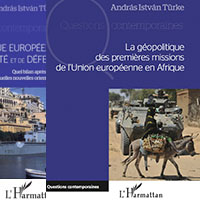
We are looking for sponsors for the English translation of these books, please contact turkeandras(at)gmail(dot)com