
You are here
Feed aggregator
Nach tagelanger Fahndung: Strom-Saboteur in Deutschland festgenommen
Die Suche nach einem Strom-Saboteur beschäftigte die Polizei in mehreren deutschen Bundesländern seit Tagen. Am Dienstag konnte er endlich gefasst werden.
Categories: Swiss News, Union européenne
Shaqiri als Transferargument: Basel verstärkt sich in der Verteidigung
Der FCB hat einen neuen Aussenverteidiger gefunden: Clément Michelin stösst ablösefrei zum FC Basel.
Categories: Swiss News, Union européenne
Kenya moves to register frightened Burundians as tension over foreign traders rises
All foreigners without proper documents in Kenya are urged to register through their embassies.
Categories: Africa, European Union
Adidas au cœur d’une polémique : le choix d’un ancien soldat israélien pour sa campagne fait scandale
Adidas au cœur d’une nouvelle polémique. La marque aux trois bandes fait face à une vague massive d’appels au boycott sur les réseaux sociaux. En […]
L’article Adidas au cœur d’une polémique : le choix d’un ancien soldat israélien pour sa campagne fait scandale est apparu en premier sur .
Categories: Afrique
Der verlorene Mann
Bei der Wahl in Sachsen-Anhalt unterstützen die AfD vor allem viele Männer. Marcel Fratzscher meint, man muss verstehen, warum viele junge Männer die AfD wählen. Erst dann kann man sie zurückgewinnen., Die Sorge über den Rechtsruck unter jungen Männern ist berechtigt: Bei vergangenen Wahlen haben viele von ihnen die AfD gewählt, während junge Frauen deutlich häufiger progressive oder liberale Parteien unterstützen.
Viele erklären das mit toxischer Männlichkeit, Antifeminismus und mangelnder ...
Categories: Afrique, Diplomacy & Defense Think Tank News
Violent carambolage impliquant 11 véhicules à Tizi Ouzou : le bilan final de l’accident dévoilé
Le bilan est lourd au lendemain du violent accident survenu sur la RN12 à Tadmaït, dans la wilaya de Tizi Ouzou. Dix personnes ont perdu […]
L’article Violent carambolage impliquant 11 véhicules à Tizi Ouzou : le bilan final de l’accident dévoilé est apparu en premier sur .
Categories: Afrique
Une délégation de la BAII en visite au Bénin
La Banque Asiatique d'Investissement pour les Infrastructures (BAII/AIIB) renforce sa coopération avec le Bénin. Une importante délégation de l'institution financière séjourne à Cotonou depuis ce lundi 7 septembre 2026, dans le cadre d'une visite de travail.
La délégation a été accueillie par Hugues Oscar Lokossou, ministre délégué auprès du ministre de l'Économie et des Finances, chargé de la mobilisation des ressources extérieures et de la gestion de la dette. Les échanges portent notamment sur les perspectives de coopération entre le Bénin et la BAII.
À travers cette visite, le Bénin entend consolider ses relations avec cette institution financière et explorer de nouvelles possibilités de mobilisation de ressources pour accompagner ses projets de développement et de transformation.
Le séjour de la délégation de la BAII devrait ainsi contribuer à ouvrir de nouvelles perspectives en matière de financement des infrastructures et de réalisation de projets structurants au Bénin.
Categories: Afrique, European Union
International cooperation and contestation in the Trump Era: how can countries exercise agency in a fragmenting order?
Countries now act in an international cooperation architecture whose rules are disputed from several directions at once. One of those directions is the hegemon itself, the US. The paper argues that the Trump administration’s disruption matters because it moves the largest actor from affirming to contesting across several arenas at once. That reshuffles the calculus for every country. This paper asks how countries can exercise agency when the international order itself is fragmenting. The paper surveys the bewildering array of concepts on state agency and proposes a schema built on two continua. The first is the medium or type of agency, meaning material/institutional versus ideational/discursive. The second is orientation to the prevailing order in a specific arena (not in general) as affirming versus contesting. Countries are not fixed in one position. Whether the same state contests the rules depends on its interests in a particular arena. Each potential position is available only to a country that can pay the arena’s entry fee. The entry fee is the resources, broadly defined, a position demands before a country can take it up. The paper sets out the strategic positions available in a fragmenting system. It names a further position, norm imperialism, where material instruments are turned against an ideational object. The implications for different types of country are discussed.
Categories: Diplomacy & Defense Think Tank News, Swiss News
International cooperation and contestation in the Trump Era: how can countries exercise agency in a fragmenting order?
Countries now act in an international cooperation architecture whose rules are disputed from several directions at once. One of those directions is the hegemon itself, the US. The paper argues that the Trump administration’s disruption matters because it moves the largest actor from affirming to contesting across several arenas at once. That reshuffles the calculus for every country. This paper asks how countries can exercise agency when the international order itself is fragmenting. The paper surveys the bewildering array of concepts on state agency and proposes a schema built on two continua. The first is the medium or type of agency, meaning material/institutional versus ideational/discursive. The second is orientation to the prevailing order in a specific arena (not in general) as affirming versus contesting. Countries are not fixed in one position. Whether the same state contests the rules depends on its interests in a particular arena. Each potential position is available only to a country that can pay the arena’s entry fee. The entry fee is the resources, broadly defined, a position demands before a country can take it up. The paper sets out the strategic positions available in a fragmenting system. It names a further position, norm imperialism, where material instruments are turned against an ideational object. The implications for different types of country are discussed.
Categories: Central Europe, Diplomacy & Defense Think Tank News
International cooperation and contestation in the Trump Era: how can countries exercise agency in a fragmenting order?
Countries now act in an international cooperation architecture whose rules are disputed from several directions at once. One of those directions is the hegemon itself, the US. The paper argues that the Trump administration’s disruption matters because it moves the largest actor from affirming to contesting across several arenas at once. That reshuffles the calculus for every country. This paper asks how countries can exercise agency when the international order itself is fragmenting. The paper surveys the bewildering array of concepts on state agency and proposes a schema built on two continua. The first is the medium or type of agency, meaning material/institutional versus ideational/discursive. The second is orientation to the prevailing order in a specific arena (not in general) as affirming versus contesting. Countries are not fixed in one position. Whether the same state contests the rules depends on its interests in a particular arena. Each potential position is available only to a country that can pay the arena’s entry fee. The entry fee is the resources, broadly defined, a position demands before a country can take it up. The paper sets out the strategic positions available in a fragmenting system. It names a further position, norm imperialism, where material instruments are turned against an ideational object. The implications for different types of country are discussed.
Categories: Central Europe, Diplomacy & Defense Think Tank News
La Tour Eiffel fermée en raison d'une manifestation du personnel après le déplacement de certaines employées pour un pèlerinage religieux
Une enquête va être ouverte sur cet incident, qui a « humilié » des employées, selon un représentant syndical.
Categories: Afrique, Europäische Union
FAO and the Global South: Advancing Agrifood Transformation through South-South and Triangular Cooperation
Countries of the Global South are not merely recipients of development support; they are contributors of knowledge, innovation and investment. Credi: Jorge Luis Baños/IPS
By Hua Yang
ROME, Sep 8 2026 (IPS)
The world’s agrifood systems are under mounting pressure from economic uncertainty, climate change and persistent inequalities. Farmers, rural communities and the most vulnerable are bearing the heaviest burden. We must act faster and scale practical, proven solutions.
The United Nations Day for South-South Cooperation celebrates more than solidarity. It recognizes the ideas, innovation and shared commitment emerging from the Global South. It also reminds us that cooperation among developing countries and with their partners is essential to achieving the 2030 Agenda for Sustainable Development. Countries of the Global South are not merely recipients of development support; they are contributors of knowledge, innovation and investment.
Knowledge from the Global South is rooted in practical experience and tested under real-world conditions. Triangular cooperation can amplify its impact by bringing in financing or technical expertise from developed countries, multilateral organizations and other partners - while keeping cooperation led and owned by countries of the South
For more than 40 years, the Food and Agriculture Organization of the United Nations (FAO) has helped countries share expertise and technologies through South-South and Triangular Cooperation (SSTC). This cooperation has strengthened food security and improved livelihoods across the Global South.
SSTC works because countries that have faced similar development challenges can share relevant and adaptable solutions.
Knowledge from the Global South is rooted in practical experience and tested under real-world conditions. Triangular cooperation can amplify its impact by bringing in financing or technical expertise from developed countries, multilateral organizations and other partners – while keeping cooperation led and owned by countries of the South.
Above all, SSTC is built on partnership, not dependency. Every country has knowledge to offer, and FAO has seen that knowledge translated into practical results.
The long-standing partnership between FAO and China is one example. Since the 1990s, more than 1,200 Chinese experts have supported agricultural development in developing countries, sharing field-tested expertise in crop production, aquaculture, livestock and irrigation.
Through the FAO–China South-South Cooperation Programme and related initiatives, countries have strengthened technical capacity, increased agricultural productivity and improved livelihoods. The results show how targeted technical cooperation can deliver benefits far beyond national borders.
Other partnerships are producing results. For 18 years, the Brazil–FAO South-South Cooperation Programme has enabled countries across Latin America and the Caribbean to exchange knowledge. Since 2021, the FAO–Türkiye Partnership Programmes have supported countries in Central Asia.
In Central Asia’s Fergana Valley, FAO has also joined forces with the United Nations Office for South-South Cooperation, with support from the Russian Federation, to help Kyrgyzstan, Tajikistan and Uzbekistan advance climate-smart agriculture. Farmer Field Schools, improved soil and water management, appropriate technologies and value-chain diversification show how SSTC can strengthen farmers’ livelihoods.
These examples reflect a wider transformation. Across the Global South, countries are not only receiving development support; they are contributing knowledge, innovation and investment.
FAO’s role as a trusted convener and technical facilitator is to connect these experiences with countries seeking solutions. That is why we upgraded the SSTC Gateway: to broaden dialogue, gather feedback and share Global South’s innovations, knowledge and experience.
This role has never been more important. FAO’s expanding SSTC portfolio reflects growing demand for this approach.
From rice value chains and digital agriculture to sustainable apiculture and support for Small Island Developing States, SSTC is mobilizing knowledge, resources and partnerships to deliver measurable impact.
Looking ahead, we must ensure that SSTC delivers stronger, measurable results for farmers, rural communities, women, youth and future generations. Women farmers, in particular, have a critical role in transforming agrifood systems.
FAO’s South-South and Triangular Cooperation Division will continue working with Members and partners to bring these solutions forward, adapt them to local contexts and help build agrifood systems that are more efficient, inclusive, resilient and sustainable. As demand for SSTC grows, FAO will expand partnerships, mobilize investment and make proven solutions easier to adapt and scale.
When the Global South leads, the world benefits. When countries learn from one another, invest in one another and shape solutions together, we move closer to better production, better nutrition, a better environment and a better life for all, leaving no one behind.
Excerpt:
Hua Yang is Director, South-South and Triangular Cooperation Division, FAO
Categories: Africa, Határon túli magyar portálok összesített hírei
What 1.5°C Overshoot Means for Small Islands
Rodney Bay Marina, Saint Lucia. Rising seas are among the mounting risks for small island states as the world heads towards an expected overshoot of 1.5°C. Credit: Alison Kentish/IPS
By Alison Kentish
CASTRIES, Saint Lucia, Sep 8 2026 (IPS)
The world is now expected to breach the 1.5 degrees Celsius warming limit that small island states have spent years defending as a threshold for survival.
For people in the Caribbean, Pacific and Indian Ocean, the consequences will not begin only when islands disappear beneath the sea. They include saltwater intrusion into freshwater supplies and agricultural land, coral reef loss, more damaging coastal flooding and mounting pressure on already limited resources for recovery and adaptation.
That is the stark warning emerging from the United Nations Environment Programme’s Limiting Overshoot report, launched on September 2. The report examines a future in which average global temperatures rise beyond 1.5°C above pre-industrial levels before, potentially, being brought back down.
The report concludes that the world is now expected to cross the 1.5°C threshold. What is still uncertain is how far above it temperatures will rise, how long they will remain there and how quickly they can eventually be brought back down.
Dr Shobha Maharaj, a Caribbean scientist and one of the lead authors of the report’s Chapter Four, says the expected breach raises a new set of questions for small island states.
“For years, the goal was to avoid crossing 1.5°C. But this report now says very clearly that we are going to cross it,” she said. “The question now is how deep is this overshoot going to go? How long is it going to last? And how do we live through it while we work to bring temperatures back down to 1.5°C?”
No buffer
The Paris Agreement committed countries to pursue efforts to limit warming to 1.5°C. Small island states were among the strongest advocates for the 1.5°C target, arguing that higher levels of warming would pose an existential threat.
“For small islands, it is because we live closest to the thresholds,” Maharaj said. “In a wealthy, temperate country, an additional half-degree of warming would still carry serious costs. But on a small island, it could determine whether a reef recovers or not, or whether an aquifer stays fresh or turns salty for good.”
“There is no higher ground to move to, no deep treasury to draw on and no second reef when one of them dies,” she added. There is no higher ground to move to, no deep treasury to draw on and no second reef when one of them dies.
The danger is not limited to dramatic disasters, she said. Habitability can erode quietly.
“Saltwater can contaminate groundwater and soil. A kitchen garden that has fed a family for generations may stop producing. High tides can reach roads, homes and public infrastructure even on clear days. When reefs die, communities lose not only fish and tourism income but also natural barriers that weaken waves before they reach the shore.”
“None of this requires an island to vanish,” Maharaj said. “Habitability begins to collapse first, quietly, through water, food and the loss of the everyday things that make a place home. By the time submergence becomes the headline, people have often already been forced to leave.”
The report warns that sea-level rise will continue for centuries and that falling global temperatures would not reverse all the damage accumulated during overshoot. Some ecosystem, biodiversity and glacier losses would persist, meaning a return to 1.5°C would not restore the world that existed before the threshold was crossed.
Small Islands, Different Realities
SIDS are often discussed as a single group, but Maharaj cautioned that their circumstances and options differ.
Pacific atoll states face acute threats because of their extremely low elevation and vulnerable freshwater lenses. Some Pacific islands are also experiencing land subsidence, compounding the effects of rising seas.
Several Caribbean states have higher terrain, but much of their population, infrastructure and economic activity is concentrated along narrow coastal areas. Indian Ocean states face their own combination of risks.
“What we share is a structural predicament, narrow room for retreat, limited finances and economies that are exposed to single shocks,” Maharaj said.
But she warned against transferring solutions indiscriminately between regions.
“The right response in Tuvalu, for example, is not automatically the right response in Barbados or the Maldives.”
Adaptation Buys Time, Not Immunity
For decades, adaptation has been presented as the principal defence for countries already living with climate impacts. But the UNEP report says many existing approaches were designed for gradual, one-directional warming, not temperatures that rise, plateau and may eventually decline.
Strategies fixed to one set of conditions could become ineffective or even increase vulnerability as conditions change. The report calls instead for adaptation that is flexible, forward-looking and capable of evolving throughout the different stages of overshoot.
“Adaptation buys time, not immunity,” Maharaj said.
She said the large gap between adaptation planning and implementation may provide a narrow opportunity to revise projects before they are built for conditions they can no longer withstand.
“We have a lot of plans, but many of them have not yet been implemented,” she said. “That gives us a window, although not a large one, to recalibrate those plans for a post-1.5°C world.”
That shift will require money before disasters strike.
Many developing countries are already trying to adapt, recover from extreme events, transform their economies and reduce emissions while servicing heavy debt. Climate finance, Maharaj said, arrives too slowly and is often supplied through loans that add to that burden.
“A disaster drains public funds into emergency response and reconstruction. That leaves less money to reduce the risks posed by the next event, which then hits a weakened country even harder. Each turn of that wheel reduces the very capacity we need to climb out of it.”
Breaking the cycle will require grants, upfront financing and investment in prevention, rather than repeatedly paying to rebuild after losses.
A Deeper Injustice
Overshoot also raises questions of climate justice, particularly for countries with little historical responsibility for the emissions driving warming.
“The harms concentrated during this period, especially those that turn out to be irreversible, fall hardest on the countries least responsible for the emissions that caused them,” Maharaj said.
Maharaj said contributing to the report carried a particular weight for her as a Caribbean scientist.
“For those of us from these islands, 1.5°C was never simply a number on a chart. It was the line we were told represented survival. It was the line at which we were told survival was still possible,” she said. “Now, helping to write the science of what lies beyond that line is a heavy thing, both personally and professionally.”
Crossing 1.5°C, she said, represents “a profound failure of collective will” but not permission to give up.
“How high the peak rises, how long we remain there and how quickly temperatures are brought back down are all still ours to decide,” Maharaj said. “Every one of those choices will be measured in lives and livelihoods here in our region and across small islands.”
For small islands, limiting the overshoot could mean the difference between mounting losses and holding on to the places people call home.
IPS UN Bureau Report
Related Articles
- Accepting What It Cannot Control, CARICOM Focuses on What It Can
- UN Weather Agency Warns of Escalating Climate Extremes Across Caribbean and Latin America
Excerpt:
The world is expected to breach a temperature threshold long regarded by small island states as a line of survival. A new UNEP report examines what comes next and why every fraction of a degree still matters.
Categories: Africa, Határon túli magyar portálok összesített hírei
Beyond the Death Penalty Debate: Human Dignity and Justice in Japan
Panelists and participants discuss Japan’s death penalty at a symposium examining capital punishment through the lens of human dignity, held on September 5, 2026, at St. Ignatius Church in Yotsuya, Tokyo. Credit: Katsuhiro Asagiri / INPS Japan
By Katsuhiro Asagiri
TOKYO, Japan, Sep 8 2026 (IPS)
A symposium examining Japan’s death penalty through the lens of human dignity was held on September 5 at Joseph Hall of St. Ignatius Church in Yotsuya, Tokyo.
Brochure of the Symposium titled, “Rethinking the Death Penalty: With Human Dignity in View.” Credit: The Association of Religious Leaders and Scholars Considering the Death Penalty
Titled “Rethinking the Death Penalty: With Human Dignity in View,” the symposium was organized by the Association of Religious Leaders and Scholars Considering the Death Penalty and co-organized by the Institute for Death and Life Studies and Social Coexistence.It was supported by eight organizations: the Jesuit Social Center, the Conference on Religion in the Modern World (CORMOS), the Japan Buddhist Federation, the International Institute for the Study of Religions, the Sophia University Institute of Grief Care, the Japanese Committee of the World Conference of Religions for Peace (WCRP), the Soka Gakkai Peace Committee, and the Institute of Engaged Buddhism.
The gathering brought together legal scholars, journalists, a bereaved family member, a former prison officer, younger participants and religious figures, each approaching Japan’s death penalty from a different experience and perspective.
Religious studies scholar Susumu Shimazono stressed that the purpose was not to decide whether capital punishment should be abolished, but to listen and learn.
The questions extended beyond punishment: how to support victims, prevent wrongful convictions and violence, and hold institutions accountable for decisions over life and death.
The international picture is mixed. Amnesty International reported that 145 countries had abolished capital punishment in law or practice by the end of 2025. Yet recorded executions rose to at least 2,707 that year, excluding unverified totals from China, North Korea and Vietnam.
Japan’s Justice Ministry has defended retention by citing public opinion and serious crime. But public support and justification under human rights principles are different questions.
Safeguards Before Irreversible Punishment
Prof. Makoto Ida. Credit: Katsuhiro Asagiri / INPS Japan
Criminal law scholar Ryo Ida questioned whether Japan had adequately examined its system’s legal and constitutional foundations. He highlighted the combination of decades on death row and notification of execution only on the day it takes place.He also distinguished wrongful convictions from sentencing errors: even where guilt is established, overlooked mitigating circumstances may lead to death rather than life imprisonment.
He also expressed his view that hanging constitutes cruel punishment under Japan’s Constitution.
“Immediate abolition of the death penalty is not the only option,” he said.
Stronger safeguards, reviewing execution methods and temporarily suspending executions were possible steps. Ida argued that victims’ demands for punishment could not themselves justify capital punishment, while acknowledging their grief and anger.
Deterrence required equal caution. A 2012 U.S. National Research Council review found that the studies it examined could not establish whether capital punishment increased, reduced or had no effect on homicide rates. That was not proof of no effect.
Ida nevertheless urged that public fears be taken seriously. Reform must address organized crime and reoffending, rather than simply replace one punishment with another.
The Human Cost of Execution
Keiko Horikawa. Credit: Katsuhiro Asagiri / INPS Japan
Nonfiction writer Keiko Horikawa described nearly two decades of investigating the system. Her reporting challenged the assumption that victims’ families speak with one voice: some welcomed death sentences; others wanted offenders to live and confront their crimes.She also recalled interviewing a former judicial research official involved in preparing the Supreme Court ruling underlying the Nagayama standard, the factors courts consider when choosing between death and life imprisonment. He disputed treating those factors as a formula for execution.
Horikawa’s book Kyokaishi (The Prison Chaplain) follows a Buddhist priest who accompanied condemned prisoners. She recalled his words:
“No one has ever been made happy by an execution.”
This was his observation, not a verdict on every bereaved family’s experience. It nevertheless raised a crucial distinction: completing a sentence does not necessarily end the suffering surrounding a crime.
Horikawa called for suspending executions and openly examining victims’ support, prison officers’ psychological burdens, costs and hanging itself.
A Bereaved Sister’s Unanswered Question
Nobuko. Credit: Katsuhiro Asagiri / INPS Japan
Nobuko lost her brother, the director of a psychiatric clinic, in the 2021 arson attack in Osaka’s Kitashinchi district. She subsequently began meeting prisoners and former prisoners to understand rehabilitation and prevent further tragedies.“I want to prevent reoffending and stop more people from experiencing this grief,” she said.
She resisted being assigned to either camp. Some bereaved people want execution; others want offenders to live with their crimes; still others cannot bear to think about the case.
“I think each is an expression of the grief that person carries,” she said.
Nobuko acknowledged that offenders retain human rights. “Recognizing the human rights of offenders does not, in itself, deny the human rights of victims.”
But who addresses the rights taken from those killed, and the needs of families left behind? Support should not depend on whether a family favors capital punishment.
The United Nations’ 1985 declaration on justice for crime victims encompasses access to justice, fair treatment, restitution, compensation and assistance. Punishment alone is not the whole response.
Nobuko asked a further question: “What kind of society would prevent people from becoming offenders who face the death penalty?”
Her conversations with prisoners revealed experiences of abuse and isolation. Understanding those histories does not excuse crime. But punishment after violence cannot substitute for examining whether earlier support might have prevented it.
She has begun creating opportunities for parents to share experiences. That is her choice, not an obligation other bereaved families should be expected to shoulder. Prevention also requires institutions, not merely individual goodwill.
“I am neither for nor against the death penalty,” she said, describing her determination to keep thinking about life, guilt and suffering.
Toshio Sakamoto. Credit: Katsuhiro Asagiri / INPS Japan
Justice Must Allow for CorrectionFormer prison officer Toshio Sakamoto argued that restrictions on outside contact make changes in condemned prisoners difficult for society to see.
He also recalled his long acquaintance with Iwao Hakamada, who spent decades under sentence of death before his acquittal at a retrial in 2024. The case raises questions about interrogation, evidence disclosure and timely remedies.
Trust in justice depends not only on the authority to decide, but on the ability to acknowledge and correct error before irreversible harm occurs.
He also questioned increasingly lengthy life imprisonment. Japan’s life sentences permit parole in law; the issue is how public safety, victims’ concerns and evidence of rehabilitation are assessed in practice.
For Sorane Sakihama, a graduate student from Okinawa, studying in France first challenged her assumption that capital punishment was justice for victims. International exchanges later brought her face to face with people affected by wrongful death sentences.
Invoking the Okinawan expression “Nuchi du takara” — life is the greatest treasure — she connected her opposition to execution with her opposition to war. She emphasized creating spaces where young people can discuss difficult issues without needing settled opinions.
Sorane Sakihama, a graduate student from Okinawa, speaks about how international dialogue and her encounters with people affected by wrongful death sentences shaped her views on capital punishment, during a symposium at St. Ignatius Church in Tokyo on September 5, 2026. Credit: Katsuhiro Asagiri / INPS Japan
From Dialogue to Accountability
SDGs Goal No 16.
Horikawa welcomed the symposium’s new voices and willingness to move beyond fixed positions. Shimazono hoped the dialogue would continue.Sustainable Development Goal 16 does not explicitly require abolition. It does call for reducing violence, protecting children, equal access to justice, accountable institutions and inclusive decision-making.
That provides a practical framework: Are victims receiving sustained support? Can doubtful convictions be effectively reviewed? Are prison staff’s burdens recognized? Is prevention reducing harm? Can citizens obtain the information needed to judge the system?
Disagreement over abolition need not prevent scrutiny of these questions.
Can people change? What does atonement mean? How should society support victims and prevent violence? How much power over life and death should the state possess?
A new dialogue on those questions began in a Tokyo church.
This article is brought to you by INPS Japan in collaboration with Soka Gakkai International in consultative status with UN ECOSOC.
IPS UN Bureau
Categories: Africa, Határon túli magyar portálok összesített hírei
Trump’s “Comprehensive” Gaza Peace Plan a Cover for Genocide
By Anis Chowdhury
SYDNEY, Sep 8 2026 (IPS)
It is nearly a year since the UN Security Council (UNSC) adopted Resolution 2803 on 17 November, 2025, endorsing President Trump’s 20-point framework ostensibly designed to end the war in Gaza and create a roadmap for long-term stability. It is not clear what progress has been made. In August 2026 The Jerusalem Post reported “the IDF continues almost daily strikes in Gaza”, killing more than 1,200 Palestinians since the US-brokered ceasefire deal came into effect, seizing more territory, and continuing to restrict the movement of people and goods into and out of Gaza. Nickolay Mladenov, the UN High Representative on the Board of Peace, wrote in early August 2026 that “two days of strikes across Gaza have killed civilians and destroyed medical supplies that people depend on”. Ironically, this genocidal strike happened only a few days after a US-brokered Hamas disarmament deal, which Trump called, “a monumental step” towards peace and security.
Anis Chowdhury
Genocide unabatedIn May 2026 the Board of Peace claimed in its report to the Security Council that the conditions for Palestinians in Gaza have improved. However, the claim contradicts the findings of the UN Commission of Inquiry, headed by Justice Muralidhar, that “Israeli authorities and security forces have deliberately targeted Palestinian children, resulting in genocide and atrocity crimes in the Gaza Strip and war crimes in the West Bank”.
Earlier in a Conference Room Paper published in September 2025, the Commission established that the Israeli authorities and security forces had committed and were continuing to commit genocidal acts with the specific intent to destroy, in whole or in part, the Palestinian group in Gaza. This is despite the International Court of Justice issuing three binding orders for provisional measures, detailing the catastrophic conditions in Gaza and risks of irreparable prejudice to the rights of the Palestinian group.
Echoing the Commission, speakers at the UNSC on 28 August 2026 warned that Gaza is at a total breaking point, under constant attack with 2 million people still trapped, despite the Trump-negotiated October 2025 ceasefire and the Board’s new peace plan. Athena Rayburn, Executive Director of the Association of International Development Agencies said, “success must be measured by whether the Board of Peace, international stabilization force and National Committee for the Administration of Gaza provide immediate protection for civilians; and in the long term, whether they move Gaza towards the required legal endpoint: The end of Israel’s unlawful presence and realization of the Palestinian people’s right to self-determination”.
Exclusionary Board of (un)Peace
Following the UNSC endorsement, Trump launched “Board of Peace” on the sidelines of the World Economic Forum on 22 January 2026. Trump, the self-assumed Chair of the Board, believed, “This Board has the chance to be one of the most consequential bodies ever created … to end decades of suffering, stop generations of hatred and bloodshed, and forge a beautiful, everlasting, and glorious peace for that region”.
However, many, including senior US lawmakers, view the Board as Trump’s attempt to undermine the United Nations, which he has repeatedly criticised. The Board’s charter makes no reference to either Gaza or the UN even though the original UN mandate for the Board called for it to focus on Gaza’s reconstruction and to aid the 2.2 million Palestinians forcibly displaced by Israeli forces. Instead, according to its charter, the Board would “secure enduring peace in areas affected or threatened by conflict”. The Board’s charter also envisions that it will endure beyond the end of 2027 – the expiry date of the UNSC’s endorsement – as will Trump’s stewardship over it
While Trump could potentially chair the Board for life, its membership is solely by Trump’s invitation and requiring at least US$1bn contribution. Palestine is not a member, but Israel and its prime minister Benjamin Netanyahu – who faces an International Criminal Court (ICC) arrest warrant over alleged war crimes in Gaza – are part of the board. Furthermore, a member of the Trump-appointed Executive Board is also Israel’s appointed representative in the US-led Civil Military Coordination Center tasked with humanitarian relief in Gaza.
Palestinians have been assigned to its lower-tier technocratic committee, while former UK prime minister and “war-criminal”, Tony Blair, Trump’s son-in-law, Jared Kushner, and Trump’s long-time friend and real estate investor, Steve Witkoff, sit on the executive board along with US Secretary of State, Marco Rubio.
How can a so-called Peace Board so intertwined with the genocidal entities be entrusted to alleviate Palestinian suffering? Is it a surprise that the air strikes and other attacks on civilian areas in Gaza have intensified even damaging UN facilities? On 25 August 2026 Israeli forces forcibly entered UNRWA’s Kalandia Training Centre in East Jerusalem and unlawfully seized it, ignoring the fact that it is an inviolable UN premise immune from any form of interference.
Unaccountable and whimsical
Meanwhile, Marco Rubio disclosed during his testimony before the Senate Foreign Relations Committee recently that the Trump administration had decided to transform the Board of Peace from a public international organization made up of member states (akin to the United Nations) into an international nongovernmental organization (INGO). He gave no indication as to how and when that decision was made, violating UNSC resolution 2803 which warranted that the Board would have international legal personality and be subject to international law as a multilateral organisation.
Transforming the Board into an INGO may better conform to the Board’s exclusionary structure, which gives Trump ultimate decision-making authority, including over financial matters. Rubio explicitly said during his testimony that the US Congress can have oversight only on the money that the US puts in while he was vague about the fiduciary arrangement of the Board’s finance. In the meantime, investigative journalism uncovered serious financial irregularities, opacity and conflict of interest involving Kushner, Witkoff and some prominent Israeli entities.
Alarmingly, making the Board an INGO removes member states’ power to steer the Board and to mitigate the Trump administration’s worst impulses. Trump’s inner circle will continue to call the shots, with Kushner saying the Board will be run “like we do [it] in the private sector”, while the Board is being directed by figures on the Israeli and US political right.
UNSC must disendorse (un)Peace Board
The members of the UNSC voted in favour of endorsing Trump’s Comprehensive Plan to End the Gaza Conflict and the Board of Peace as a pragmatic step despite some trepidation due to the plan’s vague terms and lack of a timetable associated with its phases that would culminate in a political horizon for Palestinians. They hoped that Trump, given his relationship with Netanyahu – an alleged war-criminal – would be able to stop him from committing genocide of the Palestinians.
But Trump continues to condone Israel’s ceasefire violations as intensified Israeli attacks kill thousands of innocent Palestinians. Trump and his so-called Board of Peace failed to condemn Israeli National Security Minister Itamar Ben-Gvir who openly called for killing “30 to 40” Palestinians in Gaza nightly. Nor have they condemned Chief Sephardic Rabbi David Yosef who asserted, “there is no such thing as a Palestinian people” and Palestinians have “no rights”, despite a global outcry.
Meanwhile Trump’s Board of Peace dismissed pragmatic approaches to Hamas’ disarmament. Instead, it has promoted ideas of a hyper-developed “new Gaza” paying little heed to Palestinians’ wishes or to their history. These neo-colonial plans undermine any real prospect of self-determination.
In light of the Trump plan’s manifest failures and the Peace Board’s violations of UNSC mandate, including its financial impropriety, UNSC members should urgently force a vote calling for the withdrawal of the Council’s endorsement. Failing to do so would allow Trump and Israel to use the alleged comprehensive peace plan to provide a cover for Israel’s genocide, while the self-styled Board of Peace undermines the United Nations.
Anis Chowdhury, Emeritus Professor, Western Sydney University (Australia). He held senior UN positions in Bangkok and New York and served as Special Assistant to the Chief Advisor for Finance (with the status and rank of State Minister) in the Professor Yunus-led Interim Government. E-mail: anis.z.chowdhury@gmail.com; a.chowdhury@westernsydney.edu.au
IPS UN Bureau
Related Articles
Categories: Africa, Határon túli magyar portálok összesített hírei
Rabby Slo en vie mais dans un état critique
L'artiste chanteur compositeur et interprète béninois, Rabby Slo, de son vrai nom Wilfrid Houwanou est toujours aux soins dans un hôpital aux États-Unis. Il est toujours dans un état critique depuis son accident de circulation.
L'artiste Rabby Slo, le fondateur de l'AfroTchink, est toujours en vie mais dans un état critique. Il a été hospitalisé depuis quelques jours des suites d'un accident de la circulation qui failli lui coûter la vie aux Etats-Unis. Ses proches démentent toute information relative à sa mort.
F. A. A.
Categories: Afrique, European Union
27% des jeunes considèrent l’IA comme un ami : faut-il s’inquiéter ?
Et si votre meilleur confident était une intelligence artificielle ? C’est le cas pour plus d’un jeune sur quatre de la génération Z, selon une […]
L’article 27% des jeunes considèrent l’IA comme un ami : faut-il s’inquiéter ? est apparu en premier sur .
Categories: Afrique
Study - Beyond declarations: Evaluating CFSP alignment methodologies in Türkiye, the Western Balkans and Accession Trio countries - PE 783.626 - Committee on Foreign Affairs
Alignment with the European Union’s (EU) Common Foreign and Security Policy has become a central benchmark of enlargement countries’ strategic orientation and a key indicator of the enlargement process’s credibility. Under Chapter 31 and relevant association agreements, candidates are expected to align their foreign, security and defence policies progressively with those of the EU prior to accession. This requirement has gained renewed political importance following Russia’s invasion of Ukraine, which has heightened the role of sanctions, geopolitical positioning and foreign policy coherence within enlargement. However, past experience shows that formal pre-accession alignment does not always translate into post-accession cohesion, particularly where candidate countries maintain external dependencies or pursue hedging strategies. Current EU monitoring relies heavily on quantitative indicators, such as declaration alignment rates, which often fail to capture implementation and political intent. This study evaluates the existing methodology (2020–2025) and proposes a revised framework combining quantitative and qualitative indicators to provide a more accurate and policy-relevant assessment of Common Foreign and Security Policy alignment.
Source : © European Union, 2026 - EP
Source : © European Union, 2026 - EP
18-35-04...Découvrez les numéros du Digital 20 H
DIGITAL 20H : Avez-vous tenté votre chance ?
Le tirage DIGITAL 20H N°155 a livré son verdict !
Lundi 07 Septembre 2026
Avez-vous joué ?
Avez-vous misé sur vos numéros porte-bonheur ?
RÉSULTAT : 18 • 35 • 04 • 24 • 42
Félicitations aux heureux gagnants !
Pas encore cette fois ? Gardez le sourire.
Rendez-vous à 00H pour le prochain tirage.
Jouez dans les points de vente ou : Tapez *590# ou rendez-vous sur lnbloto.bj
Jouez avec modération et responsabilité. Le jeu doit rester un plaisir.
Categories: Afrique, European Union
Le taux d’analphabétisme dégringole en Algérie : voici les chiffres qui le prouvent
Le directeur de l’Office national d’alphabétisation et d’enseignement des adultes, Hicham Brim, annonce une baisse significative du taux d’analphabétisme en Algérie. Ce taux atteint désormais […]
L’article Le taux d’analphabétisme dégringole en Algérie : voici les chiffres qui le prouvent est apparu en premier sur .
Categories: Afrique
Pages
the old site is here


© 2012-2015 Europa Varietas Foundation © 2015-2020 Europa Varietas Association
www.europavarietas.org | info(@)europavarietas(dot)org | Switzerland
This is a GDPR ready site


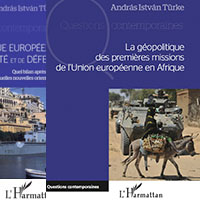
We are looking for sponsors for the English translation of these books, please contact turkeandras(at)gmail(dot)com